



VR Cultural Heritage: Preserving the Past in Virtual Reality
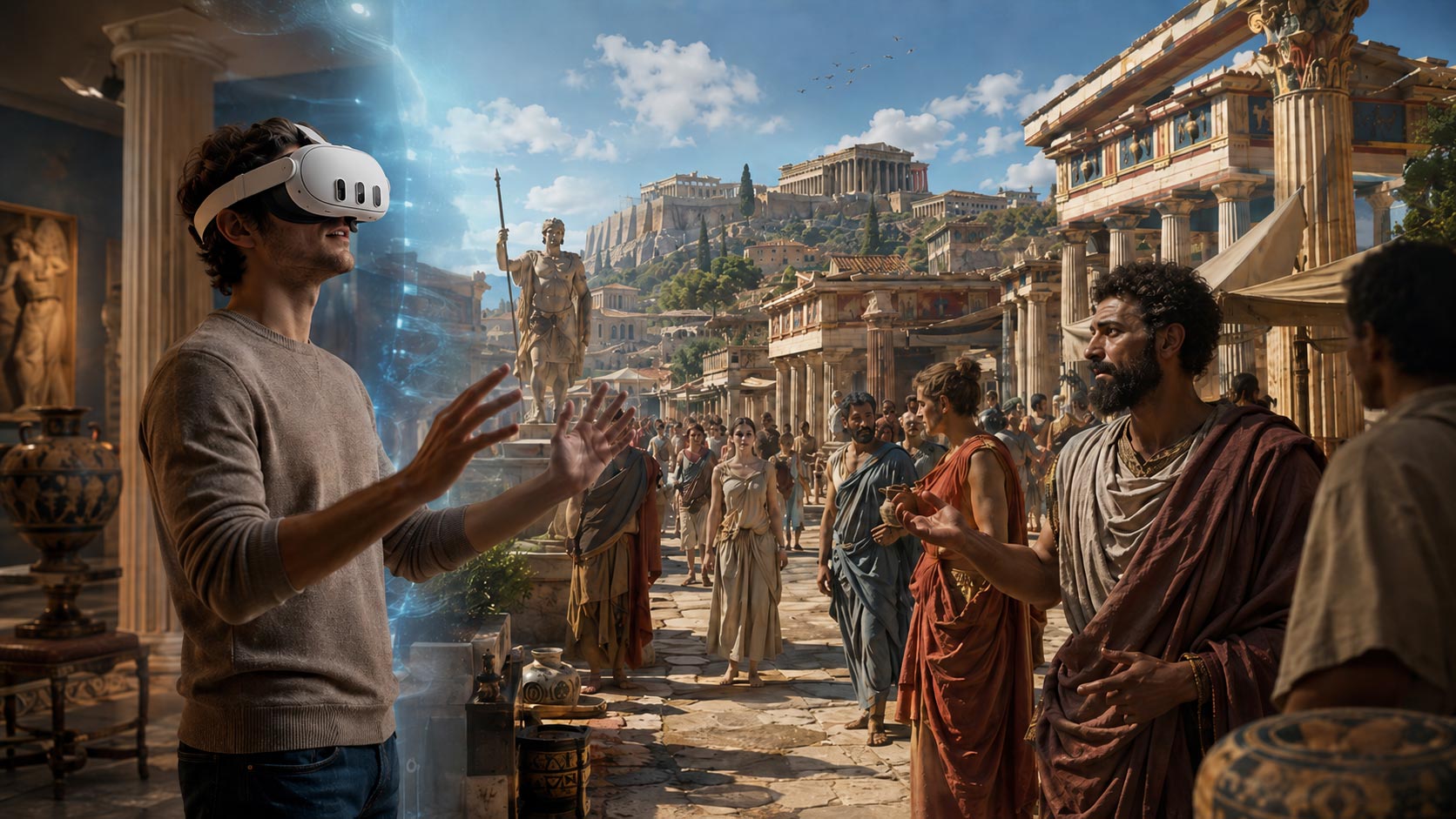
VR Cultural Heritage: How Virtual Reality Is Preserving, Reconstructing, and Experiencing the Past
VR cultural heritage is one of the most meaningful applications of virtual reality technology — not as entertainment, but as a genuine tool for preservation, education, and cultural connection. Through VR, archaeological sites that have been destroyed, altered, or buried can be reconstructed and experienced. Living traditions that exist only in the memory of their practitioners can be documented and transmitted. Historic buildings at risk of physical decay can be preserved digitally at a level of detail that no photograph or architectural survey can match.
For Greece, with its extraordinary density of cultural heritage spanning more than four thousand years of continuous human civilization, VR cultural heritage represents both an extraordinary opportunity and a serious responsibility.

What VR Cultural Heritage Can Achieve
VR cultural heritage encompasses several distinct applications, each with different technical requirements and cultural outcomes.
Archaeological site reconstruction creates VR experiences of sites as they appeared at specific historical periods. The ruins of a Minoan palace, reconstructed to show the original multi-storey structure, the painted frescoes, the functional spaces of palace life — this creates an educational experience of Bronze Age civilization that no museum exhibit, documentary, or textbook page can approach. Visitors to the Heraklion Archaeological Museum who have experienced Knossos in VR bring contextual understanding to the collection that completely transforms how they engage with the artefacts.
Intangible cultural heritage preservation documents practices that exist only in the minds and bodies of their practitioners — traditional crafts, folk music and dance, seasonal rituals, culinary traditions — in VR experiences that can be transmitted to future generations and to communities that have been geographically separated from their heritage by migration.
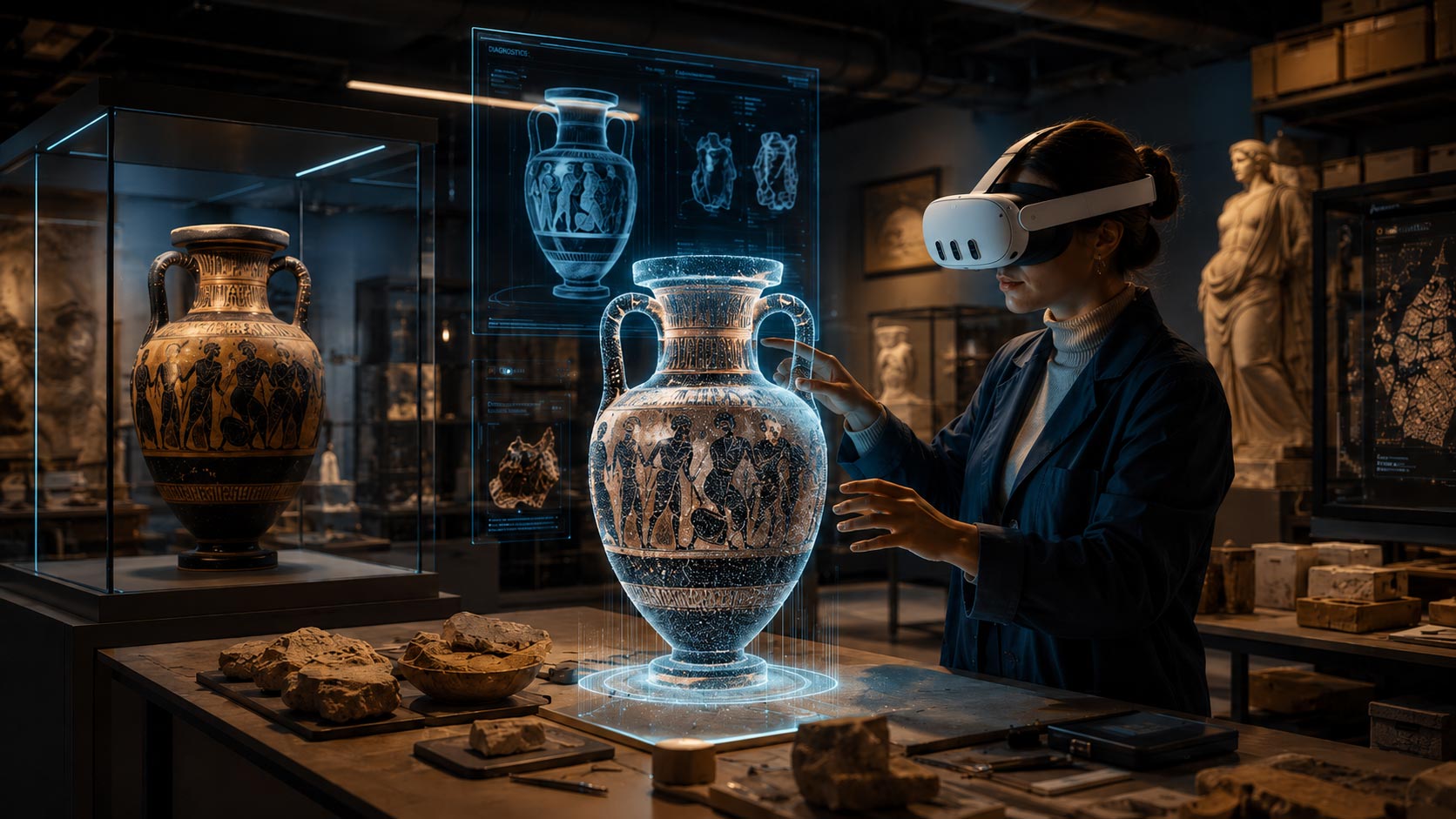
Digital preservation documentation creates ultra-high-resolution 3D records of heritage sites, structures, and objects that serve as archival records. For sites at risk from climate change, conflict, or development pressure, a precise digital twin is an insurance policy against physical loss.
Accessibility transformation makes cultural heritage accessible to visitors who cannot physically access it — remote rural sites, underground spaces, elevated structures, fragile objects that cannot be handled — and to audiences who cannot travel to Greece from abroad.
VR Cultural Heritage in Greece: The Context
Greece occupies an exceptional position in the global cultural heritage landscape. Minoan civilization at Knossos, Akrotiri, Malia, and Zakros. Classical Greek civilization at the Acropolis, Delphi, Olympia, and hundreds of smaller sites. Byzantine civilization from Constantinople to Mystras. Venetian and Ottoman layers across the islands and major cities. More archaeological sites per square kilometre than almost anywhere else on earth.
The practical implications of this density for VR cultural heritage are significant. The research base for archaeological reconstruction is unusually deep — decades of professional excavation, study, and publication have produced high-quality knowledge that can underpin VR reconstruction with confidence. The institutional infrastructure — universities, archaeological services, museums — exists to collaborate on production. And the global audience interested in Greek culture and history is one of the largest of any heritage context in the world.
For Greek cultural institutions, VR heritage projects can serve simultaneously as preservation documentation, educational enhancement, and international cultural marketing — with a single production investment serving multiple purposes.
The Archaeological Accuracy Challenge
VR cultural heritage reconstruction is a fundamentally different enterprise from VR for entertainment or marketing. The standard for accuracy is not “looks convincing” — it is “reflects the current best scholarly understanding of what this site, structure, or practice actually was.”
This creates a production process that is necessarily collaborative with archaeological and historical expertise at every stage. The 3D artists who build the reconstruction need to work from archaeological records, comparative parallels, material evidence, and scholarly literature — and to have their work reviewed by the relevant academic specialists at storyboard, rough model, and final stages.
The question of what to do when the evidence is incomplete or ambiguous is particularly important. Archaeological reconstruction inevitably involves inference and interpretation — we know the footprint of a wall but not always its height, its material, or its roofing system. VR reconstructions that present interpretive choices as established fact misrepresent the archaeological record. The best practice is to make the interpretive choices visible — distinguishing between what the evidence directly supports and what is informed inference.
This scholarly rigour adds time and cost to production. Projects that do not budget for adequate archaeological review produce reconstructions that may look impressive but contain errors that specialists will identify, damaging institutional credibility.
Delivery Formats for VR Cultural Heritage
VR cultural heritage projects are delivered in formats appropriate to the specific institution, audience, and use context.
Headset VR for museum deployment provides the most immersive experience — visitors step into the reconstructed past for 5–15 minutes, guided through a specific historical scenario or given free exploration of the reconstructed site. Suitable for dedicated VR experience centres within major museums.
Browser-based 3D exploration allows anyone with a computer to explore the reconstruction from their own location — a major outreach opportunity for Greek cultural heritage globally. A VR reconstruction of ancient Knossos accessible to a student in Tokyo or a Greek diaspora family in Melbourne is simultaneously a cultural service and a tourism marketing asset.
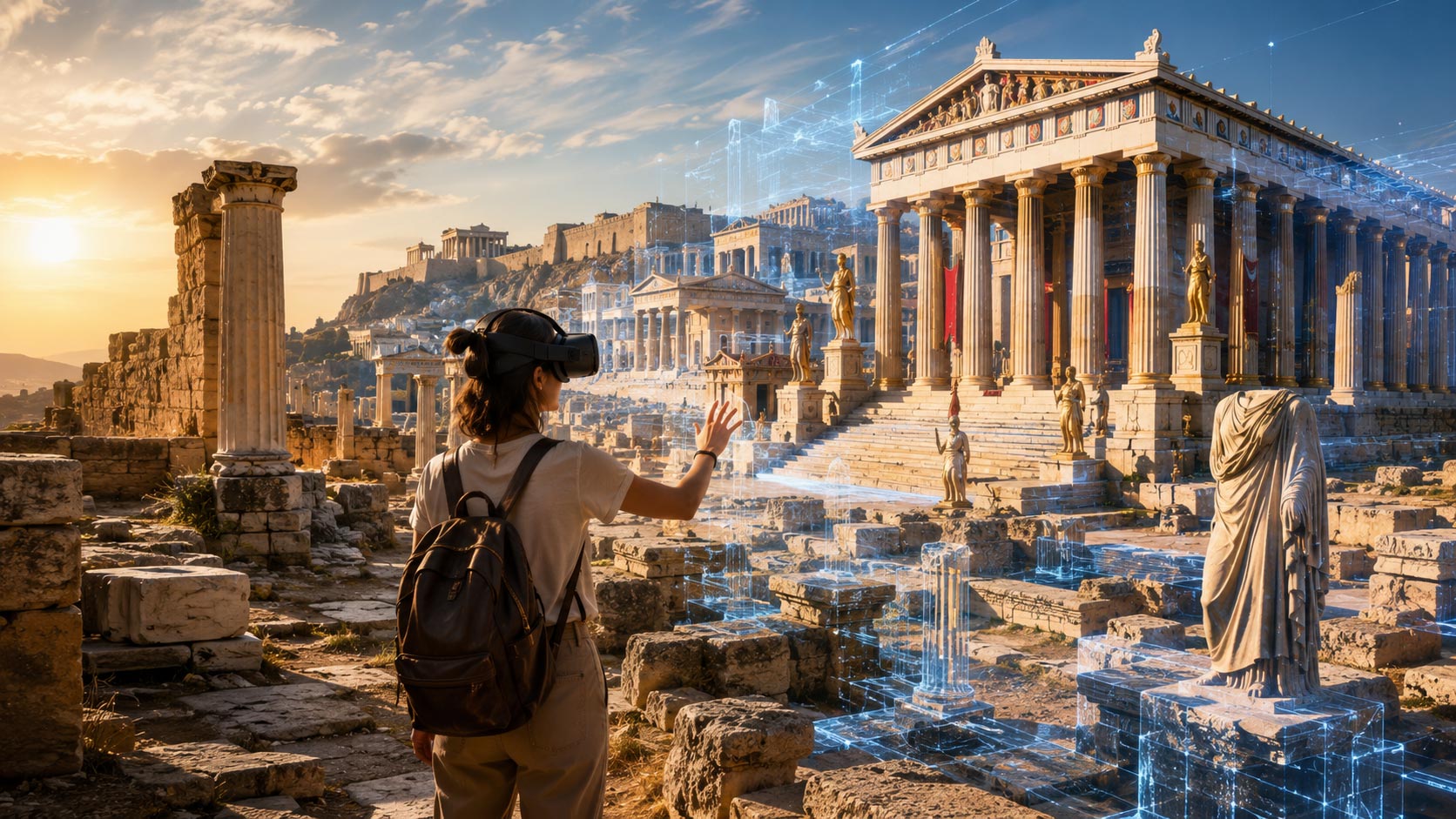
Mobile AR in the field overlays reconstructed elements onto the physical site as it exists today — standing at the actual site of Knossos and seeing the walls rise to their original height through a phone screen. This format produces the strongest learning transfer for physical site visitors.
Documentary and educational video exports — rendered footage from the VR environment for broadcast, online, and educational distribution — extend the reach of the reconstruction investment to audiences who will never use a VR headset.
VR Cultural Heritage Project Cost Ranges
Single building VR reconstruction (archaeological, 5-minute guided experience): €5,000–€10,000.
Site-scale VR reconstruction (full archaeological site, free exploration, 15-minute experience): €8,000–€20,000.
Mobile AR field experience for archaeological site: €5,000–€10,000.
Digital preservation documentation (photogrammetry survey, 3D archive): €5,000–€40,000 depending on site scale.
Our Cultural Heritage Work
Fourthedesign has produced VR and AR cultural heritage experiences including projects at the Heraklion Archaeological Museum and historical reconstructions for cultural institutions across Greece.
See our museum AR projects and our VR Cultural Heritage Projects
