



Photorealistic Renderings Greece | 3D Visualization Guide
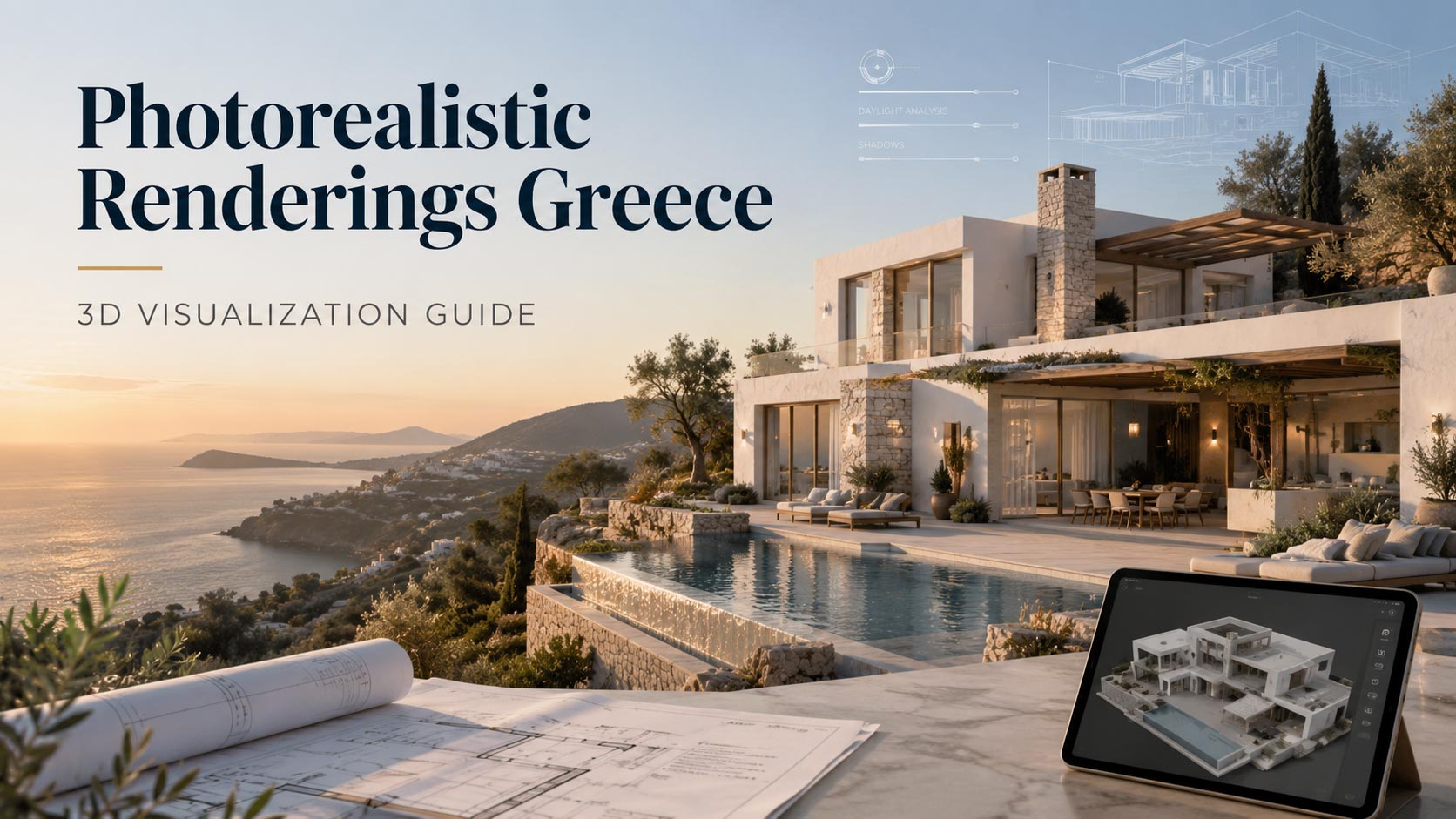
The Power of Photorealistic Renderings in the Greek Market
Imagine stepping into a luxury villa on Santorini before it’s built. Visualizing a heritage site restoration before breaking ground. Or experiencing a cultural monument through immersive 3D technology—all without leaving your home.
This is the reality that photorealistic renderings have brought to Greece.
In a country renowned for architectural beauty, from Cycladic whitewashed houses to Byzantine monasteries, photorealistic 3D visualization has become an indispensable tool for architects, developers, tourism boards, and cultural institutions. Whether you’re marketing beachfront properties, planning heritage restoration, or designing museums, the demand for convincing, immersive visual content has never been higher.
At FOURTHEDESIGN, we’ve spent over two decades perfecting the art of photorealistic rendering. From Crete to Athens, from defense sector projects to luxury real estate, we’ve seen firsthand how high-quality 3D visualization can transform how projects are conceived, approved, and sold.
In this guide, we’ll explore the full landscape of photorealistic renderings in Greece—what they are, why they matter, and how they’re reshaping industries across the country.

What Are Photorealistic Renderings? A Complete Definition
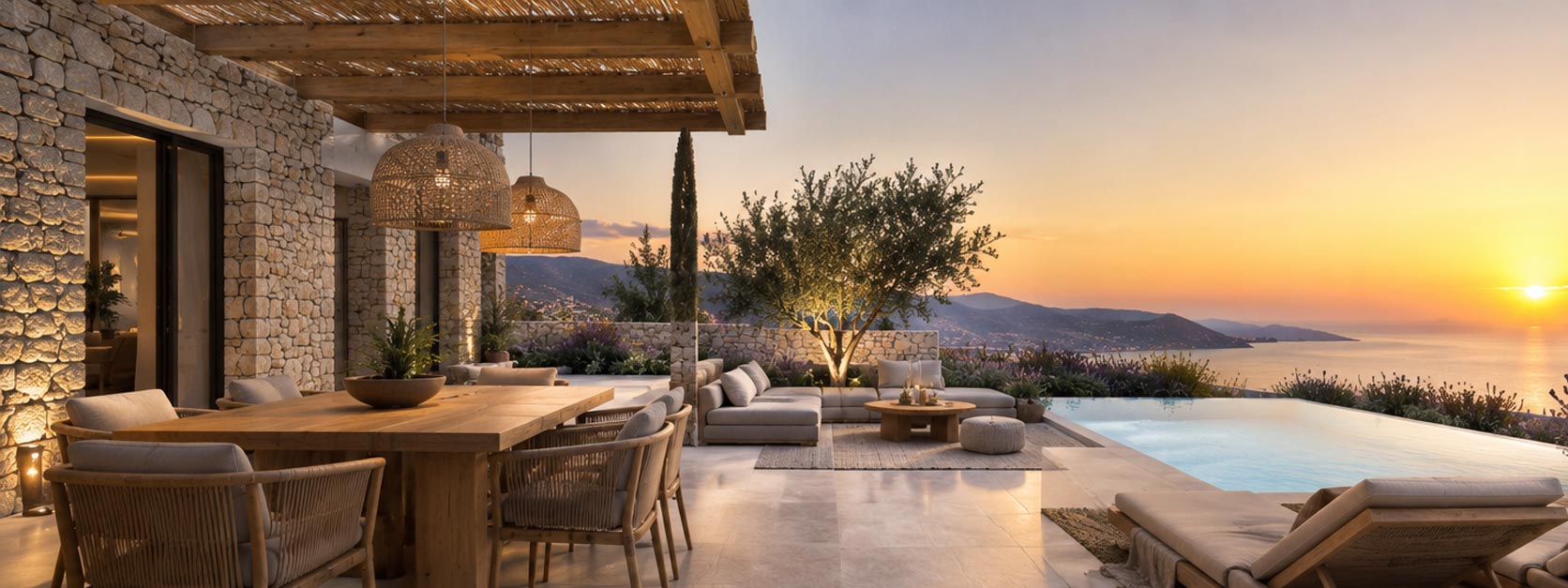
Photorealistic renderings are three-dimensional digital images created using specialized software and advanced rendering techniques that replicate real-world lighting, materials, and environmental conditions. The goal: an image so convincing it’s indistinguishable from high-quality photography.
Unlike simple wireframes or basic 3D models, photorealistic renderings incorporate:
- Advanced Material Simulation: Precise stone, marble, wood, glass, and metal textures
- Physically Accurate Lighting: Sunlight angles based on geographic location and time of year
- Environmental Context: Sky conditions, weather, atmospheric perspective, shadows
- Human Scale Elements: People, furniture, vehicles for spatial context
- Post-Processing Refinement: Color grading, depth of field, atmospheric effects
The difference between a basic 3D model and a photorealistic rendering is comparable to the difference between a sketch and a professional photograph. Both convey information, but only one creates emotional impact and certainty.
Why Greece is the Ideal Market for Photorealistic Renderings
Greece presents unique advantages for visualization technology:
- Architectural Diversity: From modern urban developments to ancient heritage sites, Greece offers endless visualization challenges and opportunities.
- Tourism Industry Expansion: VR and 3D visualization are revolutionizing how cultural sites and accommodations market themselves.
- Real Estate Growth: Luxury property markets in Crete, the Greek islands, and Athens require sophisticated marketing tools.
- EU Funding Requirements: EU-backed heritage and infrastructure projects increasingly demand professional visualization for approvals.
- International Competition: To compete globally, Greek architects and developers need world-class visualization tools.
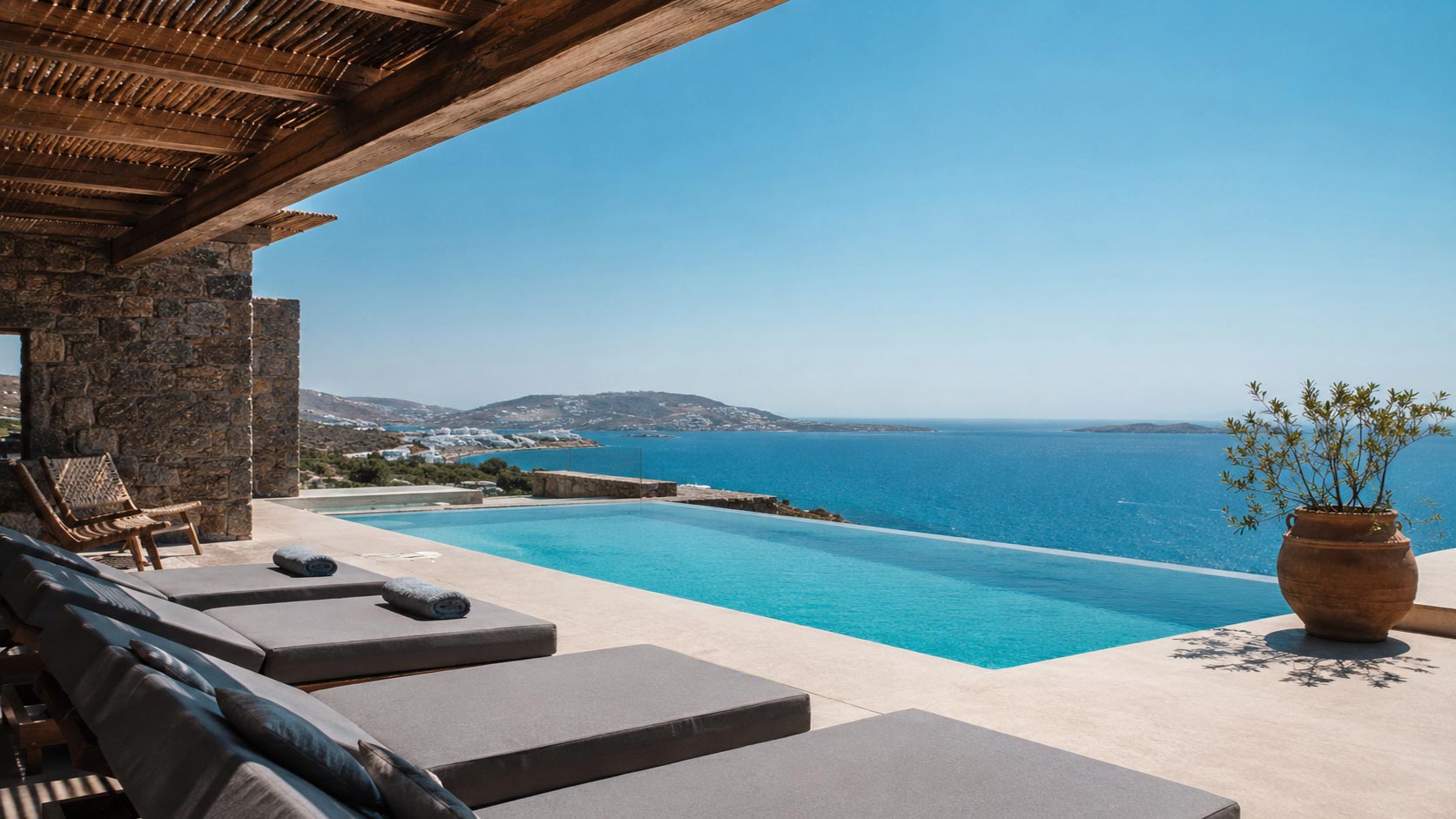
Industry Applications: Where Photorealistic Renderings Drive Real Value
1. Architectural Visualization & Urban Planning
Modern architecture firms across Greece—from Thessaloniki to Heraklion—rely on photorealistic renderings to present designs to clients, municipalities, and investors before construction begins.
Use Cases:
- Commercial building facades and interior designs
- Residential complex master-planning
- Urban renewal projects
- Municipal infrastructure proposals
- Sustainable design demonstrations
When architects can show a photorealistic rendering of how a building will look at sunrise, during evening traffic, or integrated into its neighborhood context, approval timelines shrink and client confidence increases dramatically.
2. Real Estate Marketing & Property Development
The Greek real estate market—particularly in premium segments (Santorini, Mykonos, Athens hilltop villas, Crete coastal properties)—has embraced photorealistic rendering as a marketing essential.
Benefits:
- Pre-construction property sales become 40–60% faster
- Virtual tours with 360° photorealistic views reduce on-site visits
- Customization options visualize buyer preferences (layout variations, finishes, furnishings)
- International marketing reaches buyers who can’t travel to Greece
- Premium positioning justifies higher price points
Real estate developers who rely solely on traditional photography are losing deals to competitors offering immersive, interactive 3D experiences.
3. Heritage Site Restoration & Cultural Tourism
Greece’s cultural wealth—the Acropolis, Minoan palaces, Byzantine monasteries, ancient theaters—attracts 24+ million visitors annually. Yet many sites face restoration challenges, accessibility barriers, and interpretation gaps.
Photorealistic renderings solve these problems:
- Restoration Visualization: Show how a damaged Byzantine church will look after conservation work
- Historical Reconstruction: Visualize ancient sites as they appeared in antiquity
- Accessible Experiences: Immersive VR tours for visitors with mobility limitations
- Educational Content: Museums use renderings to explain historical periods and cultural context
- Funding Proposals: Heritage organizations use striking 3D visualizations to secure EU grants and donations
FOURTHEDESIGN has worked extensively on Cretan cultural heritage projects, creating immersive experiences that bridge past and present.
4. Hospitality & Tourism Experience Design
Greece’s world-famous hospitality industry—luxury resorts, boutique hotels, traditional guesthouses—increasingly uses photorealistic renderings for:
- Resort expansion visualization
- Interior renovation planning
- Immersive booking experiences
- VR previews of rooms and facilities
- Experience marketing for special events
A potential guest who can virtually explore a Cycladic resort’s rooms, pools, and sunset views before booking is far more likely to convert than one viewing static photos.
5. Defense & Infrastructure Sector
Greece’s strategic location has made visualization technology essential for defense planning, port infrastructure, and military simulation environments. Professional photorealistic renderings support:
- Military training simulations
- Port facility planning
- Defense facility visualization
- Infrastructure project proposals
- Risk assessment modeling
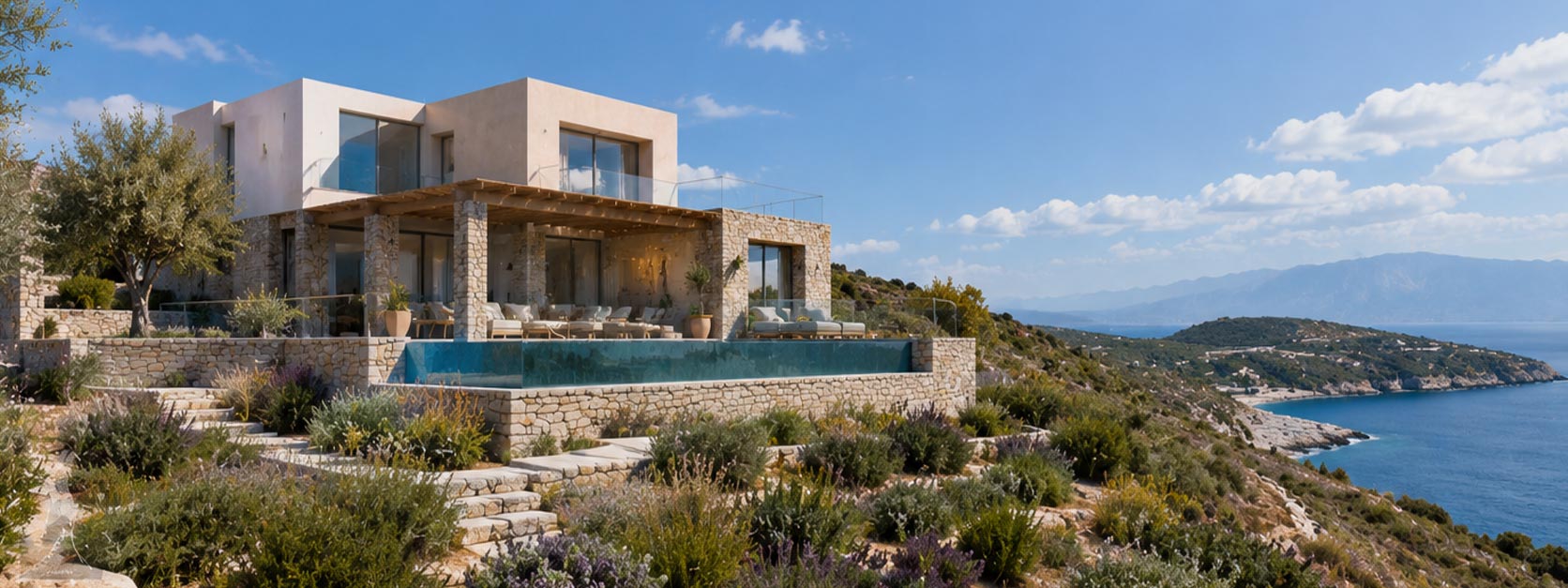
The Technology Behind Photorealistic Rendering: How It Works
Rendering Engines: The Tools of the Trade
Modern photorealistic rendering relies on sophisticated software engines:
Unreal Engine & Lumens Technology
- Real-time ray tracing for dynamic lighting
- Ideal for interactive experiences and VR
- Essential for heritage tourism and gaming applications
V-Ray & 3ds Max
- Industry-standard for architectural visualization
- Exceptional material accuracy and photorealism
- Fast rendering with uncompromised quality
Chaos Group Corona
- Physics-based rendering engine
- Superior material realism, particularly for natural stone and marble (crucial for Greek architectural projects)
Blender (Cycles & EEVEE)
- Open-source, increasingly professional-grade
- Cost-effective without sacrificing quality
- Growing adoption in European studios
The Rendering Workflow
A typical photorealistic rendering project follows this sequence:
- 3D Modeling: Precision geometric creation based on architectural plans or site surveys
- Material Assignment: Accurate texture mapping reflecting real-world materials
- Lighting Setup: Sun angle calculations for geographic location, time of year, and time of day
- Environmental Setup: Sky simulation, weather effects, atmospheric perspective
- Render Passes: Multiple rendering layers for flexibility in post-production
- Composition & Post-Processing: Color grading, contrast enhancement, depth adjustments
- Quality Assurance: Comparison to reference photography and client feedback
For heritage sites, additional steps include historical research, archaeological consultation, and period-accurate reconstruction.
Turnaround Times & Production Complexity
A single photorealistic rendering can take 40–80 hours depending on complexity:
- Simple Product Renders: 20–40 hours
- Architectural Exteriors: 50–100 hours
- Complex Heritage Reconstructions: 150–300 hours
- Full VR Experiences: 500–2,000+ hours
This investment is justified when measured against the value delivered—a single high-quality rendering can secure millions in development investment or increase property sales by 30–50%.
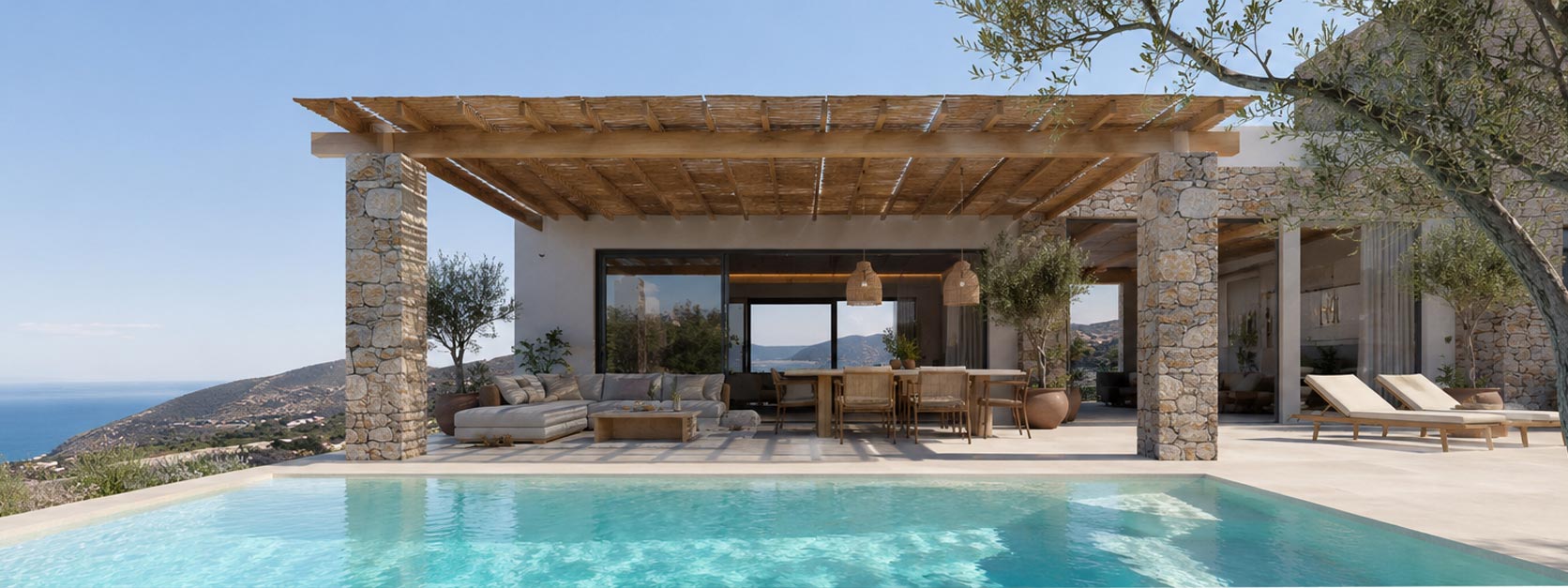
Real-World Impact: Case Studies from Greece
Case Study 1: Luxury Villa Visualization (Crete)
Project: Clifftop residence development, South Crete
Challenge: Developer needed to sell 20 villa units pre-construction to international buyers
Solution: FOURTHEDESIGN created 12 photorealistic renderings showing:
- Exterior views at golden hour and blue hour
- Interior layouts with furnishing options
- Integration with landscape and sea views
- Pool and terrace configurations
Results: 60% of units pre-sold within 8 weeks; renderings featured in international luxury real estate publications.
Case Study 2: Heritage Restoration Proposal (Minoan Palace)
Project: Knossos Palace visitor experience enhancement
Challenge: Cultural institution needed to visualize restoration plans and VR tour concept for EU funding committee
Solution: Photorealistic renderings of:
- Restored room interiors as they appeared 4,000 years ago
- Modern visitor center architecture
- Interactive VR navigation system
Results: €4.2M EU grant secured; project greenlit with strong committee support.
Case Study 3: Urban Regeneration (Athens)
Project: Historic neighborhood mixed-use development
Challenge: City planning department needed to evaluate how new buildings would integrate with existing Neoclassical architecture
Solution: Street-level photorealistic renderings showing:
- Building facades at multiple viewing angles
- Integration with streetscape and pedestrian flow
- Evening lighting scenarios
- Context within historic urban fabric
Results: Municipal approval achieved; developer received favorable zoning modifications.
The Business Case: ROI on Photorealistic Rendering Investment
Direct Financial Impact
For real estate developers, the numbers are compelling:
| Metric | With Renderings | Without Renderings |
|---|---|---|
| Pre-sale conversion rate | 45–60% | 15–25% |
| Time to market | 6–8 weeks | 16–20 weeks |
| Average price per unit | €450,000 | €380,000 |
| Marketing reach | 25+ countries | 3–4 countries |
| Client confidence score | 8.2/10 | 5.1/10 |
A €50,000 investment in high-quality photorealistic renderings typically generates:
- €2–5M in accelerated sales
- 3–4 month faster time-to-market
- 15–20% price premium on marketed units
- International buyer acquisition
Heritage & Tourism ROI
Cultural institutions see value in different metrics:
- Visitor engagement: VR heritage experiences increase dwell time by 40–60%
- Grant success rate: Projects with professional visualizations secure funding 3x more often
- Educational impact: School groups and academic researchers prefer sites with immersive content
- Accessibility: VR experiences democratize access for mobility-impaired visitors
- Global reach: Digital experiences attract international audiences to heritage promotion
Choosing the Right Visualization Partner: What to Look For
Not all rendering studios are created equal. The Greek market has seen explosive growth in 3D visualization services, but quality varies dramatically.
Critical Evaluation Criteria
1. Portfolio & Specialization
- Does the studio have demonstrated expertise in your sector (architecture, real estate, heritage)?
- Can they show examples of projects in similar contexts (Mediterranean architecture, historic sites)?
- Is their work technically proficient and aesthetically compelling?
2. Technical Capabilities
- Do they use industry-standard rendering engines (V-Ray, Corona, Unreal)?
- Can they handle complex material simulation (marble, stone, authentic Greek finishes)?
- Do they offer real-time VR experiences, or just static images?
- Can they produce high-resolution output suitable for printing and international marketing?
3. Local Market Knowledge
- Do they understand Greek architectural traditions and regional aesthetics?
- Can they advise on lighting conditions specific to Greece’s Mediterranean climate?
- Do they have relationships with local architects, developers, and cultural institutions?
- Can they navigate EU funding documentation and requirements?
4. Production Timeline & Flexibility
- Do they communicate realistic turnaround times?
- Can they accommodate revision rounds and design changes?
- Do they offer scalable pricing for single images vs. full VR experiences?
5. Project Management & Communication
- Is there a dedicated project manager for your work?
- Do they provide regular progress updates and intermediate approvals?
- Can they translate technical concepts into client-friendly language?
- Do they maintain long-term relationships with clients?
Red Flags to Avoid
- Studios promoting “quick renders at low cost” (quality always suffers)
- Limited portfolio or examples that appear dated/low-quality
- Unclear pricing or contracts with hidden revision limits
- No demonstrated experience with projects in your industry
- Poor communication or slow response times during consultation
Future Trends: Photorealistic Rendering in Greece (2025–2030)
1. AI-Accelerated Rendering
Machine learning is accelerating render times and reducing production costs. Within 3 years, AI will enable:
- Real-time photorealistic rendering for interactive experiences
- Automatic scene optimization
- Intelligent material and lighting suggestions
2. Volumetric Capture & Photogrammetry
High-precision 3D scanning of existing sites (monuments, buildings) combined with photogrammetry will:
- Reduce modeling time by 40–60%
- Improve accuracy for heritage projects
- Enable precise before/after restoration visualization
3. Cloud-Based Rendering
Distributed rendering platforms will democratize access to high-end visualization:
- Smaller studios can access enterprise-grade rendering power
- Faster turnaround times
- Cost reduction through shared infrastructure
4. Immersive Tourism Experiences
Greece’s tourism sector will increasingly adopt:
- Virtual heritage tours accessible globally
- Metaverse environments recreating cultural sites
- NFT-based digital cultural artifacts
- Augmented reality site experiences using smartphone cameras
5. Real-Time Visualization in Sales & Marketing
Interactive, real-time 3D environments will replace static renderings:
- Buyers customize properties in real-time (layout, finishes, furnishings)
- Architects present designs that respond to client feedback instantly
- Marketing teams create dynamic, personalized experiences
The Future of Tourism & Heritage: VR and Immersive Experiences
Virtual Heritage Tourism: A Global Opportunity
Greece faces a unique tourism opportunity: virtual experiences can expand visitor reach beyond physical site capacities. Consider:
- Acropolis virtual tours experiencing the site as it appeared in classical antiquity
- Underwater archaeology VR exploring sunken Byzantine cities
- Night-time historical reenactments showing ancient ceremonies and daily life
- Multi-language immersive experiences making cultural content accessible to 2+ billion potential global visitors
FOURTHEDESIGN has pioneered this space with projects like the Cretaquarium Mobile Web App—a QR-gated guided tour across 62 tanks with AI-powered narration in five languages, powered by photorealistic 3D environments and interactive species information.
Accessibility & Inclusivity
Photorealistic VR experiences democratize access to cultural heritage:
- Mobility-impaired visitors experience sites without physical barriers
- Visually impaired visitors benefit from audio-described 3D environments
- International audiences access cultural sites in their native language
- Educational institutions bring history to life without travel costs
Common Questions About Photorealistic Renderings (FAQ)
Q: How long does a single photorealistic rendering take to produce?
A: Typically 40–80 hours for a single image, depending on complexity. Architectural exteriors average 60–80 hours; simpler product renders can be completed in 20–40 hours. Heritage reconstructions requiring historical research may take 150–300 hours.
Q: Can photorealistic renderings be used in legal contexts (property marketing, municipal approvals)?
A: Yes, but they must be clearly labeled as visualizations, not photographs. EU regulations and Greek consumer protection laws require transparency. Most professional renderings include disclaimers or are accompanied by comparison images.
Q: What’s the typical cost for a high-quality photorealistic rendering?
A: €1,500–€5,000 per image is standard for professional work. Full VR experiences range from €15,000–€100,000+. Costs vary based on complexity, detail level, and revision rounds.
Q: Can VR rendering experiences work on standard smartphones, or do they require expensive headsets?
A: Both options exist. WebXR technology enables VR experiences on standard smartphones without downloads or special equipment. For professional exhibitions, Meta Quest 3 or similar headsets provide superior immersion.
Q: How do you ensure cultural authenticity in heritage visualizations?
A: Reputable studios (like FOURTHEDESIGN) work with archaeologists, historians, and cultural consultants. We conduct historical research, reference period documentation, and obtain cultural institution approval before finalizing heritage reconstructions.
Why FOURTHEDESIGN Leads Photorealistic Rendering in Greece
Since 2003, FOURTHEDESIGN has been at the forefront of 3D visualization in Greece. Our expertise spans:
- Cultural Heritage: Dozens of museum, monument, and restoration projects across Crete and Greece
- Defense Sector: Advanced simulation and visualization for Greek defense institutions
- Architecture & Real Estate: Luxury villa complexes, urban developments, and resort expansions
- Interactive Media: WebXR, VR experiences, and immersive tourism applications
- Healthcare & Education: Medical visualization and educational content creation
Our competitive advantages:
- ✓ Local Expertise: Based in Heraklion, Crete—deep knowledge of Mediterranean architecture and regional aesthetics
- ✓ Technical Excellence: Latest rendering engines (Unreal Engine, V-Ray, Corona) and real-time VR capabilities
- ✓ Bilingual Delivery: Fluent project management in Greek and English for international clients
- ✓ Cultural Sensitivity: Experience working with heritage institutions ensures authentic, respectful visualizations
- ✓ Full-Stack Capability: From 3D modeling through VR experience design to WordPress integration
- ✓ Proven ROI: Case studies demonstrating measurable business impact for clients
Whether you’re an architect presenting designs to a municipal planning board, a developer marketing pre-construction property, or a cultural institution seeking to expand accessibility and engagement, FOURTHEDESIGN has the expertise and technical capabilities to transform your vision into compelling photorealistic reality.
Conclusion: The Competitive Advantage of Visualization
In today’s Greek market—whether you’re competing for international property buyers, securing EU funding, or expanding tourism reach—photorealistic rendering is no longer a luxury enhancement. It’s a business necessity.
The projects that succeed are those that communicate clearly, build confidence, and create emotional connection with their audience. Photorealistic renderings do all three.
From the clifftop villas of Crete to the historic neighborhoods of Athens, from heritage restoration proposals to immersive tourism experiences, the power of visualization is reshaping how Greece presents itself—architecturally, culturally, and economically.
Ready to transform your vision into photorealistic reality?
Contact FOURTHEDESIGN today for a consultation on how visualization can accelerate your project timeline, secure funding, boost sales, or expand your audience reach.
