How to Choose a VR/AR Development Company in Greece: A Guide for Businesses and Museums
How do you choose a VR/AR development company in Greece for a serious business or museum project? The right partner is not necessarily the company with the most impressive showreel. It is the one that can turn your requirements into a reliable application your audience can actually use.

A WebAR campaign on smartphones, a VR training simulation and an interactive industrial digital twin have very different goals. The best choice depends on your visitors, the equipment, the content, the environment and the expected life of the application. This practical guide helps buyers compare VR, AR, WebAR and interactive 3D proposals without relying on subjective rankings.
VR, AR, WebAR or digital twins: choose a format based on your audience
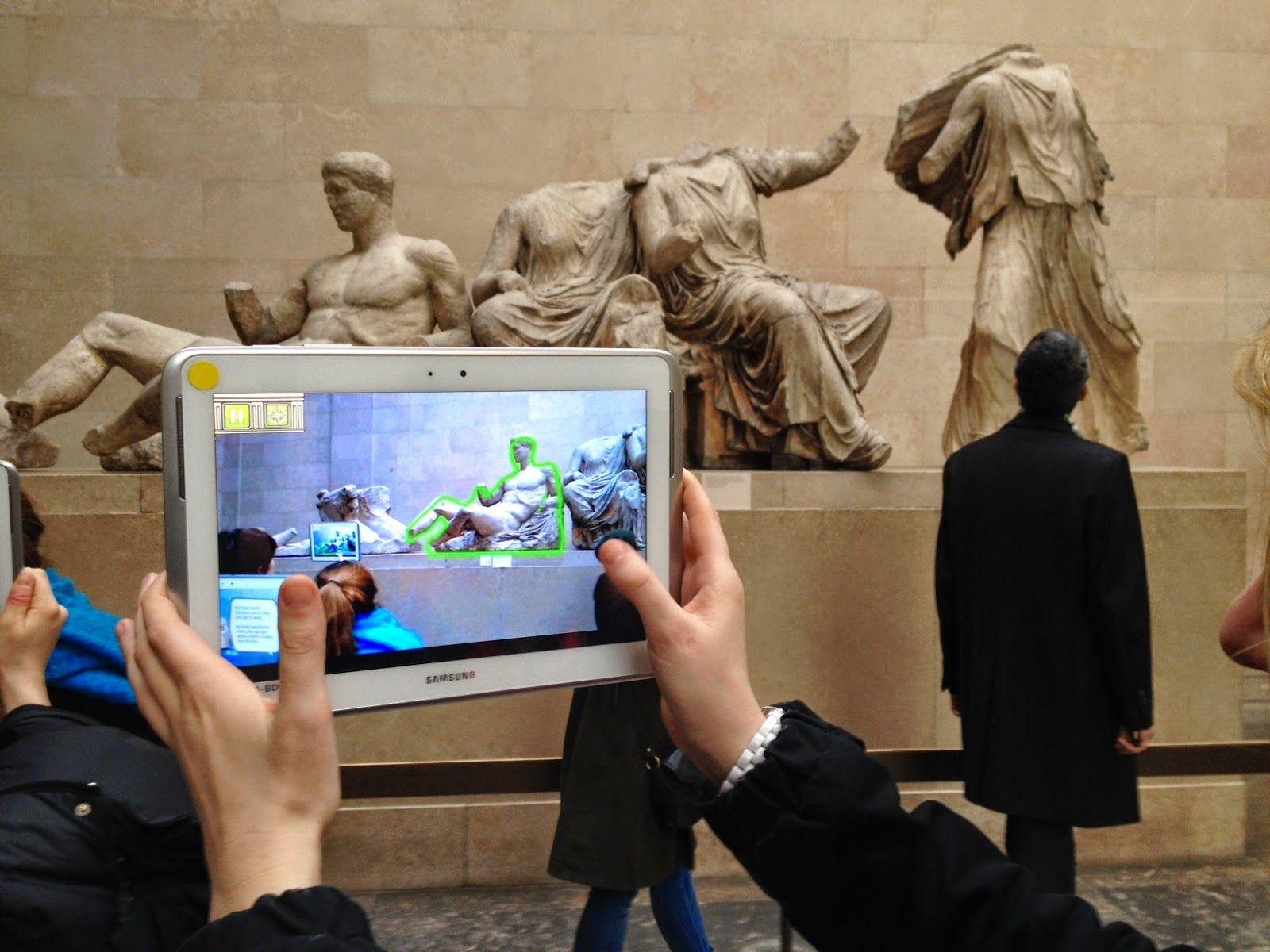
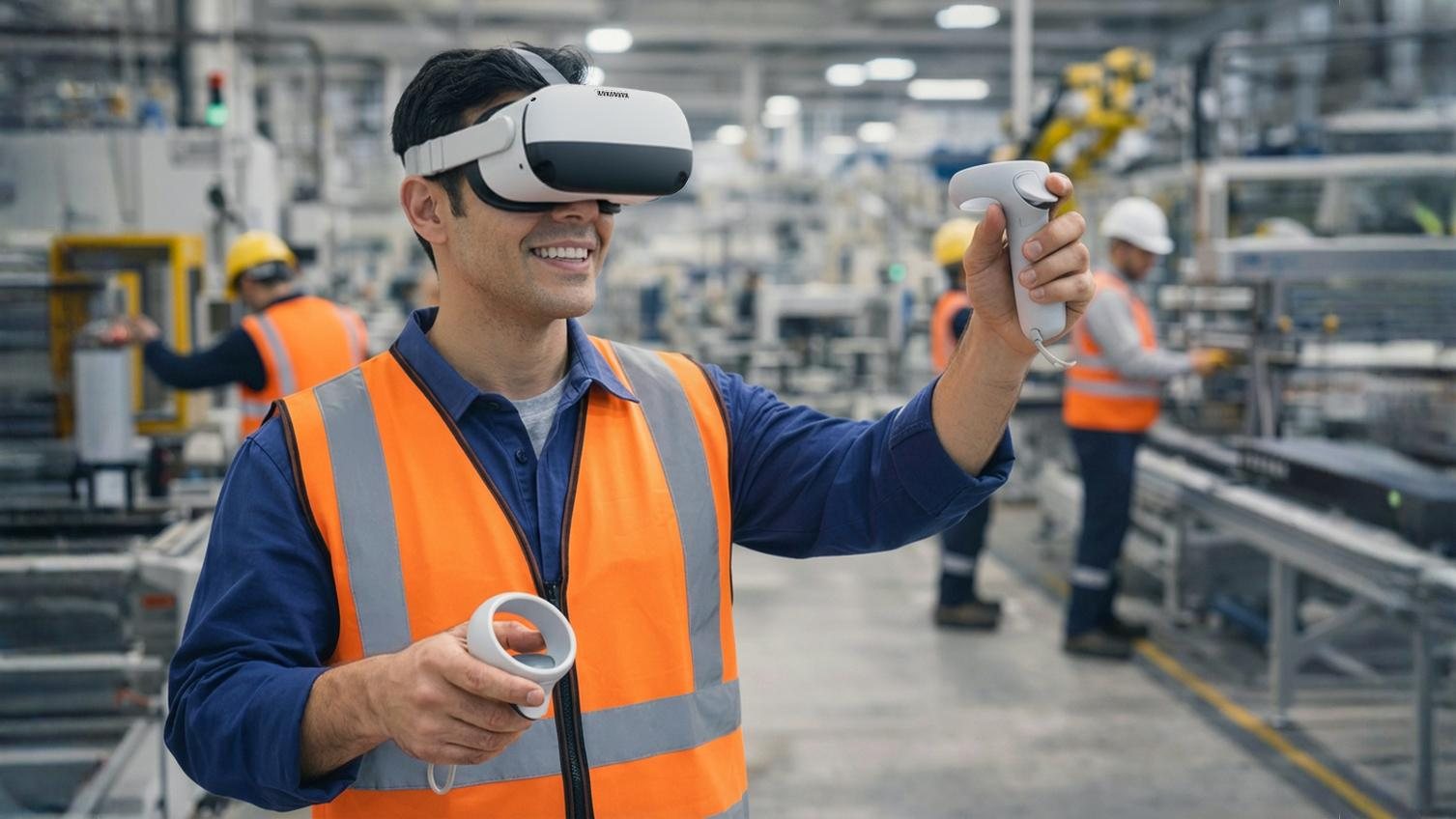
- Virtual Reality (VR) places people inside a digital environment. It is useful for immersive training, historical reconstructions and architectural walkthroughs. Headset comfort, navigation and performance are central design requirements.
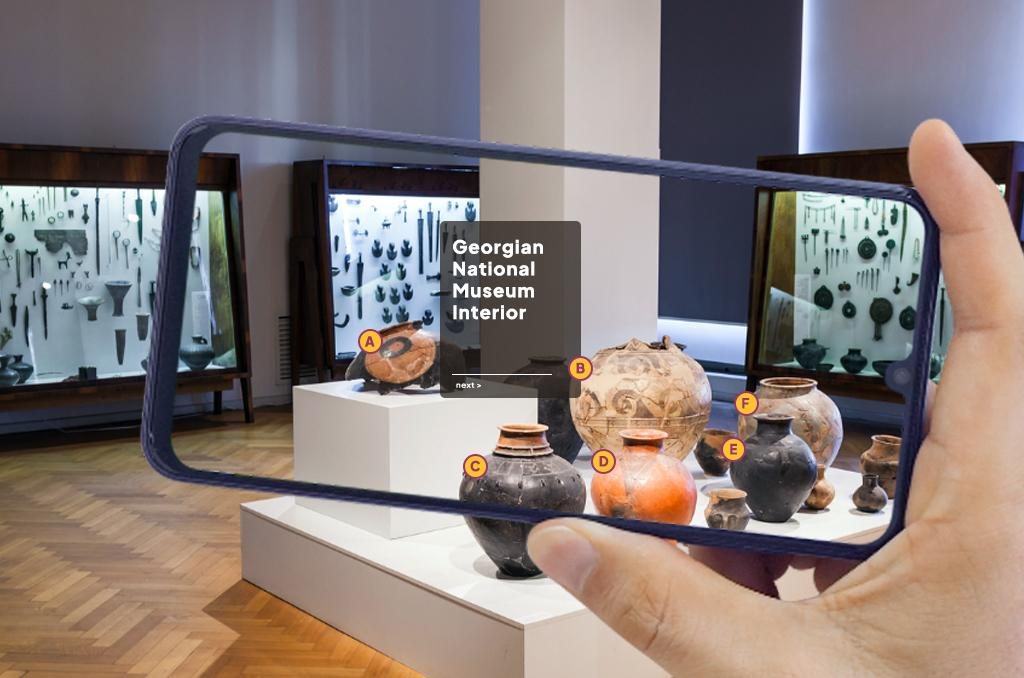
- Augmented Reality (AR) adds virtual objects and information to the real physical setting. Applications include product presentation, visitor interpretation, brand campaigns and interactive characters.
- WebAR can launch suitable AR experiences through a compatible mobile browser, often via QR code without a separate app download. Browser and device compatibility must be verified for the planned features.
- Interactive 3D gives people control of a model or environment via a screen, touchscreen or other interface. A headset is not always the right tool for group presentations.
- Digital twins are digital representations of objects or systems. Clarify whether the requirement is 3D visualisation, simulation or a connection to live operational data: these scopes are not interchangeable.
Ask prospective studios why the technology they propose matches the actual use case. “It will look amazing” is not a sufficient technical reason.
Eight criteria for evaluating a VR/AR development studio in Greece
1. Comparable completed projects
Request real case studies and understand the studio’s role. Creating 3D artwork is not the same as designing user interaction or delivering a functioning application. Ask for a demonstration on the intended hardware wherever possible.
2. Software and 3D production capabilities
Look for a process covering 3D modelling, real-time optimisation, UI/UX, software development, animation, sound and testing. The experience must perform reliably as well as look convincing.
3. Compatibility and deployment
Define the actual devices: Meta Quest, smartphone, tablet, kiosk, desktop or browser. Request a tested compatibility list and a plan for handling future operating-system and device changes.
4. User experience and accessibility
Museum visitors may be trying VR for the first time; professional trainees may need repeatable scenarios and clear step-by-step guidance. Prototype testing and accessible alternatives should be designed from the start.
5. Accurate and reviewed content
Cultural reconstructions should distinguish documented facts from creative interpretation. Training applications should validate procedures with subject-matter experts. Both need a content approval process.
6. Analytics, privacy and integrations
Determine which functions genuinely require user accounts, progress tracking, analytics or online integrations. Avoid collecting unnecessary personal information and define access and maintenance responsibilities.
7. Clear deliverables and ownership
Agree on the deployed URL or application build, included 3D assets, licences, documentation, training, acceptance criteria and source-code terms if applicable. Do not assume that ownership or future reuse is automatically included.
8. Maintenance and post-launch support
For public installations and enterprise tools, specify updates, bug fixing, hardware support and content changes. A compelling demonstration has limited value if nobody can maintain it after launch.
Four Fourthedesign projects that illustrate different solutions

Fourthedesign develops interactive 3D and immersive applications for different industries. The following published case studies show how delivery choices follow the project objective:
- AVOLTA: browser-based AR for brand engagement. A WebAR experience with an interactive 3D mascot lets people customise the character and connect with the client’s platform. Low-friction access on mobile devices is important in this setting.
- C-MineTech: industrial VR training and digital twins. Fourthedesign’s contribution includes immersive VR environments, industrial simulations and digital twin visualisation. The focus shifts to procedure, learning and usable interactions with technical information.
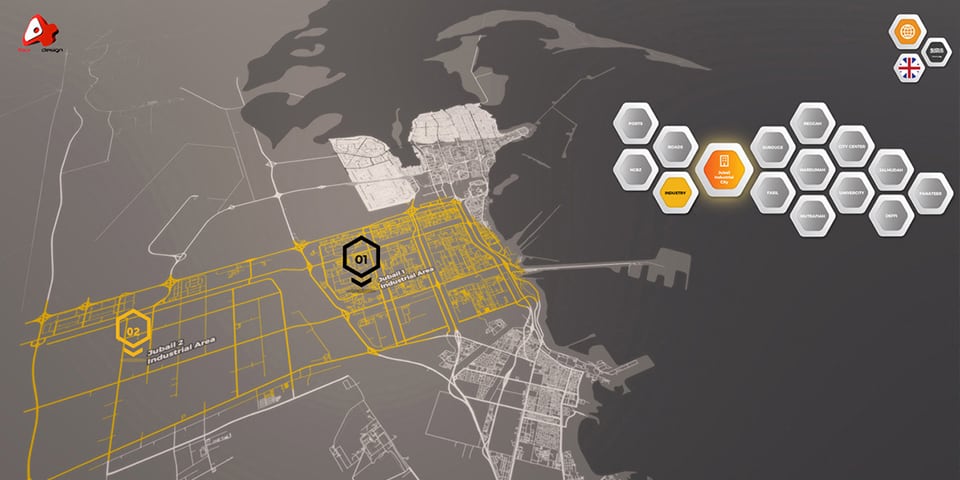
- Jubail, Saudi Arabia: interactive architectural presentation. A real-time 3D touchscreen application supports exploration of a large development through an interactive map and interface. For a shared presentation, a touchscreen may be more practical than a VR headset.
- Modern History of Crete: cultural heritage VR. In this historical VR experience, Fourthedesign worked as a subcontractor providing VR production, 3D environments, character work and animation.
These are descriptions of published project work, not claims that the same technology can be transferred unchanged to every new project.
How to evaluate VR/AR development capabilities in Greece
When selecting a VR or AR development partner, look for verifiable completed projects, clearly defined deliverables, tested device compatibility, content ownership terms and long-term support. The team’s ability to combine 3D visualisation, animation, interaction design and production-quality software is especially important for complex projects.
Fourthedesign publishes examples of WebAR, industrial training, digital twin visualisation, interactive 3D, architectural presentations and cultural heritage experiences. Explore the Fourthedesign case studies and request a comparable demonstration based on the intended devices and audience.
What should your VR or AR development brief include?
- Outcome: what should a user learn, explore or accomplish?
- Audience: museum visitors, customers, employees, students or specialists, including accessibility needs.
- Where and how: on-site installation, event, training room, browser, kiosk, headset or mobile phone.
- Source material: CAD/BIM, 3D files, photographs, product information, training manuals or historical sources.
- Scope: scenes, characters, interactions, languages, locations, user accounts and integrations.
- Acceptance: prototype, target-device testing, agreed performance, documentation and operator training.
- After launch: who handles updates, new content and technical support?
How much does VR/AR development cost? A credible quote requires this scope. Price depends on the quantity and complexity of 3D content, interactions, platform support, integrations, testing and maintenance. Compare proposals against the same brief rather than headline estimates.
Frequently asked questions
What is the best VR/AR development company in Greece?
There is no objective winner across every use case. Compare companies with relevant completed projects, a clear delivery method, tested technology and dependable support.
Can customers access AR using a QR code without downloading an app?
Yes. WebAR supports suitable experiences through compatible mobile browsers. The exact capabilities and device coverage need to be confirmed during planning and testing.
Is VR or AR better for a museum?
VR can immerse visitors in a different place or time; AR can enrich an existing object or location. The better choice depends on the narrative, visitor flow and accessibility needs.
Can we reuse existing CAD and 3D models?
Frequently, but source assets may need conversion, geometry optimisation and new interaction logic before they work effectively in real time.
What is more important than a polished demo?
Actual usability, stable performance on the target devices, documented deliverables, acceptance testing and ongoing maintenance.
Plan your immersive project with Fourthedesign
Fourthedesign combines 3D content creation with immersive software and interaction design. Explore our VR development services and AR development services, or start with the company website to discuss a project brief. Start with the audience and its needs; then select the right technology.

