
Digital Twins Explained: How They Work and Help Businesses
What if a company could examine its factory, equipment or facilities in a digital environment—and explore operational changes before implementing them in the real world? That is one of the most valuable possibilities offered by digital twins. A digital twin is more than a visually impressive 3D model. When designed for a clear purpose, it brings together information from a physical system, a digital representation and analytical tools so that teams can understand conditions and make better-informed decisions.
In manufacturing, this might mean a clearer picture of equipment operation. In a technical facility, it could mean easier access to inspection and maintenance records. For a large building, it could bring scattered information together in one understandable interface. In workforce development, a realistic digital environment can help people practise procedures that would be difficult, costly or unsafe to reproduce on site.

This guide explains what digital twins are, how they differ from ordinary 3D models, which industries can benefit, what implementation involves and how to evaluate their business value. It also shows where Fourthedesign’s real-time 3D and immersive development expertise can contribute.
What Is a Digital Twin?
A digital twin is a digital representation of a real object, process, space or system that is connected to relevant information about its physical counterpart. Depending on the intended use, it can display current conditions, retain historical records, support simulations and help teams make decisions about operations, maintenance or future changes.
The Digital Twin Consortium emphasizes integration with the real world and synchronization at a specified frequency and fidelity. Updates do not always have to arrive every second: the appropriate interval may be real time, every few minutes or less frequently. The necessary detail and update rate follow the business requirement.
Consider an industrial pump. A normal 3D model can show its shape, components and assembly. A functional digital twin could also associate that pump with measurements such as temperature, vibration or operating hours, then provide context for inspection, reporting and maintenance planning. The value comes not merely from the picture but from the connection between the representation and reliable operational information.

Digital Twin vs 3D Model, BIM and Simulation: What Is the Difference?
These terms are often used interchangeably, but they do not describe the same deliverable. Knowing the difference helps an organization specify—and purchase—the right solution.
- 3D model: the digital geometry of an object or space. It may be accurate, interactive and photorealistic without containing any operational information.
- Real-time 3D application: an environment where people can navigate, select elements and interact with visual information. A real-time application does not automatically qualify as a digital twin.
- Building Information Modeling (BIM): a structured way of representing and managing building information, especially during design and construction. BIM data may provide a foundation for a building digital twin, but BIM and digital twins are not synonymous.
- Simulation: a computational experiment used to investigate how something could behave under defined conditions. Simulations can run independently or form one part of a digital twin.
- Digital twin: a system linking an appropriate digital representation to a physical entity or process, with relevant data and, where needed, analytics or simulations.
One important distinction: a digital twin does not always need an elaborate 3D interface. Some are best presented through data visualizations, process models and dashboards. Equally, a sophisticated VR demonstration or property walkthrough can be valuable without being a live, data-connected digital twin. Clear descriptions protect clients from unrealistic expectations.
How Does a Digital Twin Work?
Many practical projects combine four layers:
- The physical system: a machine, production line, building, warehouse, utility network or operational process.
- Data sources: IoT sensors, automation systems, maintenance records, historical measurements, management software, BIM databases or manual logs.
- Digital representation and logic: 3D geometry or other models, relationships between assets, calculations, simulations and rules that interpret the measurements.
- User experience: dashboards, interactive 3D, alerts, reports, mobile applications or, when useful, virtual and augmented reality interfaces.
For example, in a commercial building, temperature measurements and energy consumption can be linked to individual floors or rooms. A facilities manager may then inspect usage patterns, notice unusual readings and compare possible operational scenarios. Whether those conclusions are useful depends on data quality, correct asset mapping and validation of the underlying model.
Artificial intelligence is optional. AI can contribute anomaly detection, forecasting or pattern analysis when adequate data and validation are available, but it is not a defining requirement for a digital twin.
Where Are Digital Twins Used?
1. Manufacturing and Industrial Facilities
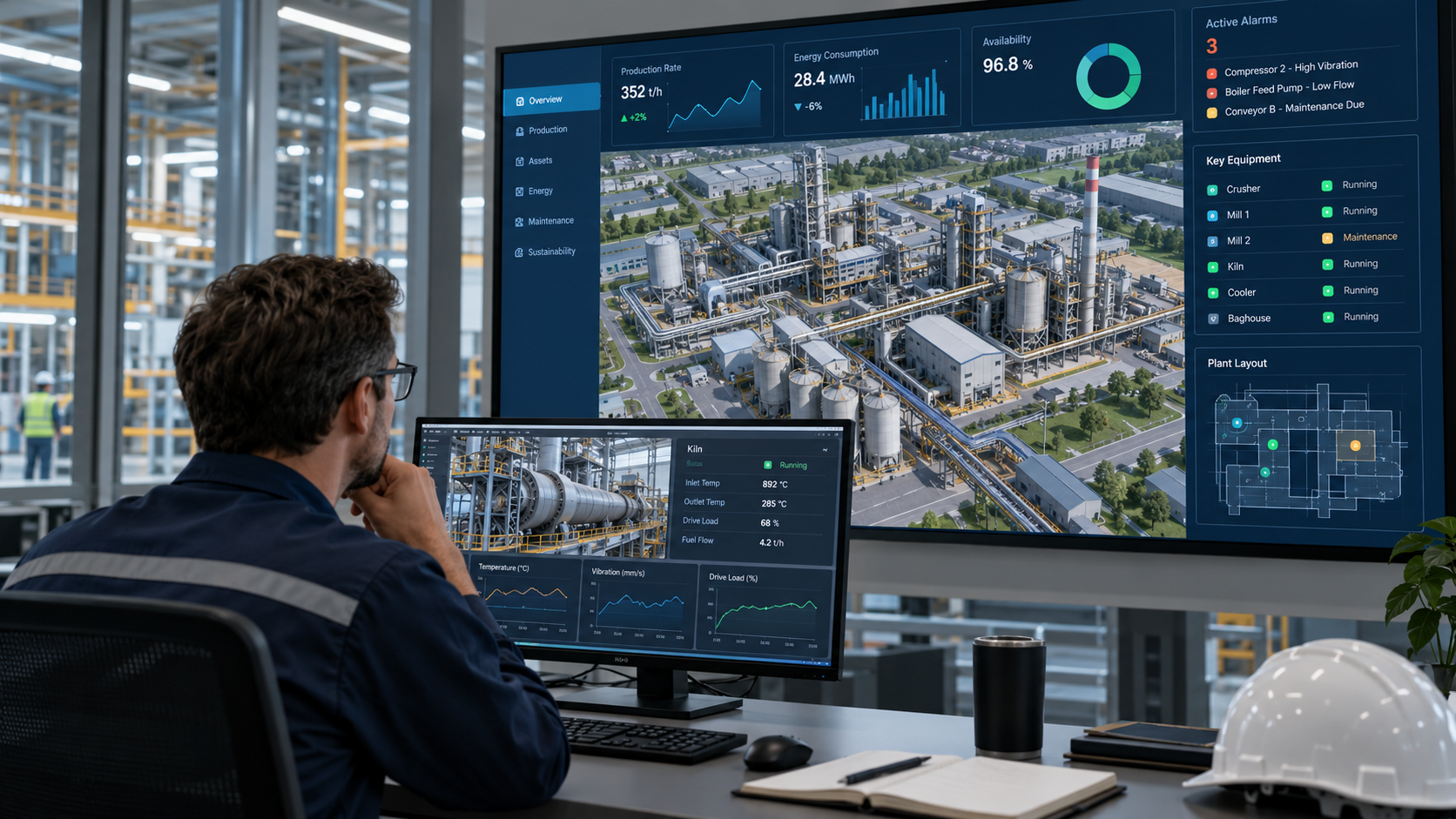
Factories can bring machine status, production information and operational events into a more coherent environment. When properly developed, digital twins can help operators monitor assets, investigate deviations and plan maintenance. With validated models and data, they may also support what-if scenarios before a process change affects actual operations.
The NIST research program on digital twins for advanced manufacturing addresses both the opportunity and the implementation challenges, including interoperability, common specifications, verification and confidence in results. A sophisticated interface is not a substitute for reliable engineering data.
2. Equipment Maintenance and Technical Operations
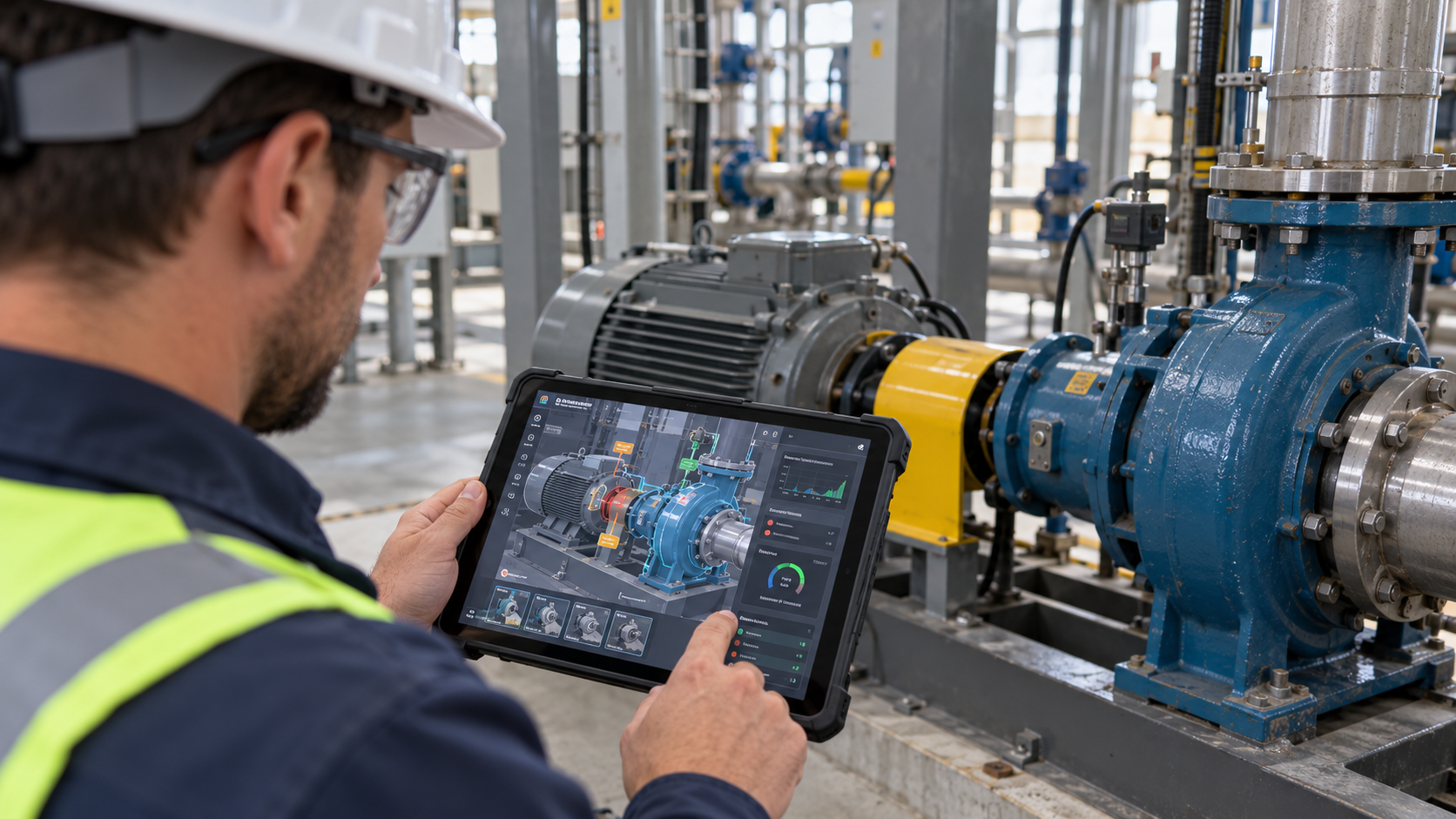
A maintenance technician might select a specific machine component and access drawings, inspection instructions, available measurements and service history. The digital interface becomes a way to retrieve information in its physical context instead of searching through disconnected documents.
More advanced functions, such as predicting a likely failure, require suitable historical measurements, relevant engineering assumptions and performance validation. It is better to begin with dependable equipment identification and accessible records than to promise predictive maintenance before usable data exists.
3. Buildings, Infrastructure and Facility Management
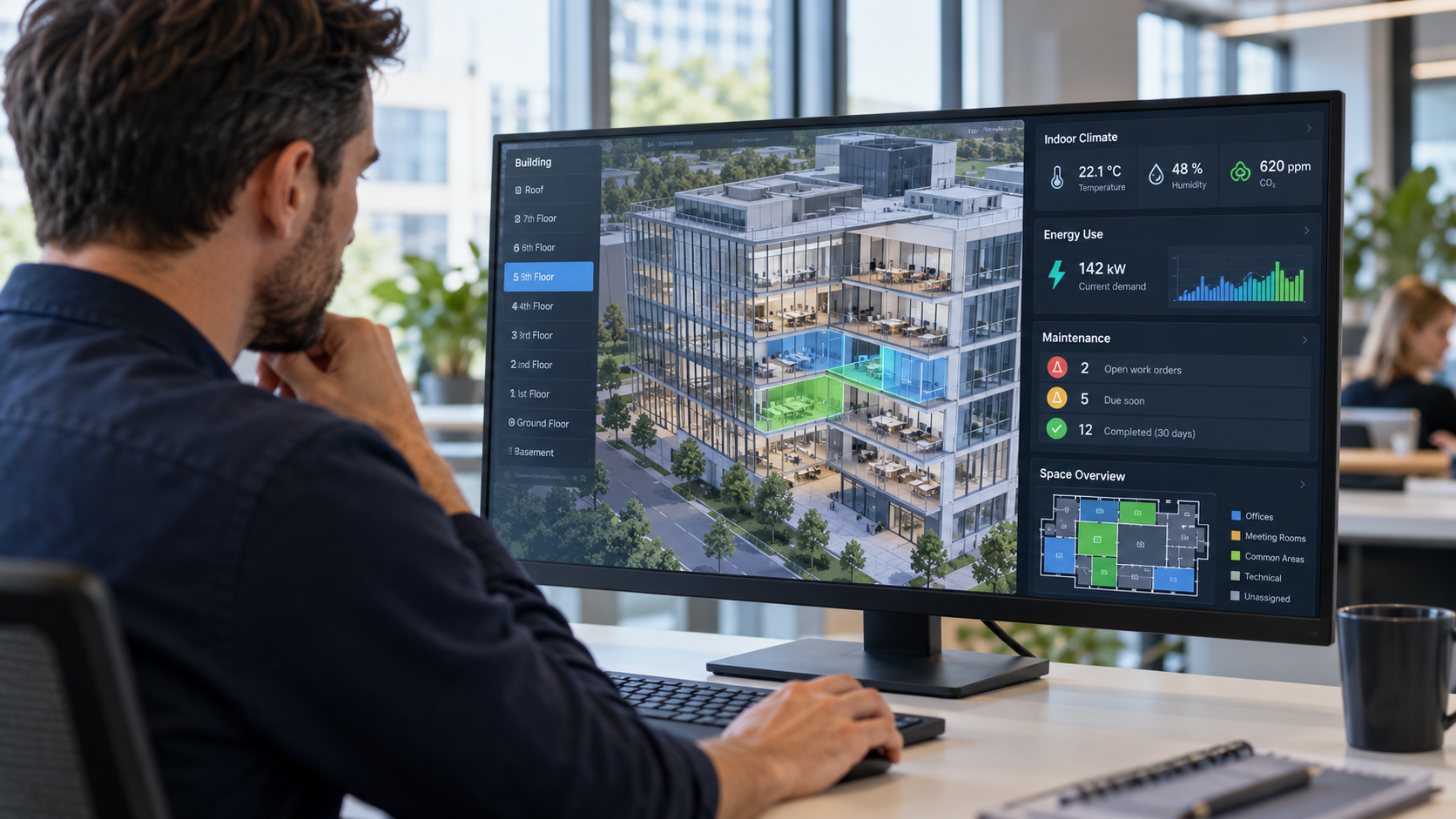
A building digital twin may connect rooms and systems with HVAC information, energy measurements, maintenance schedules and asset documentation. Architectural models and existing BIM files can provide a useful starting point, provided the information is organized for the intended operational use.
Fourthedesign’s work in interactive architectural 3D presentation demonstrates the role of intuitive real-time visualization. Turning that type of environment into an operational digital twin requires further integration with real facilities data and clearly defined functions.
4. Logistics, Warehouses and Material Flows
A warehouse model might represent storage locations, material movements, equipment and the timing of key processes. Connecting it to real operational records could make bottlenecks easier to investigate or help compare alternative layouts and workflows. Useful predictions depend on the completeness of the source data and the quality of the modelling assumptions.
For an initial project, it may be more valuable to visualize material routes and identify where information is missing than to attempt an automated, fully predictive logistics platform from day one.
5. Energy, Environment and Smart Infrastructure
Energy assets and utility systems generate information across many devices and platforms. A digital twin can bring selected measurements into a common representation and support condition monitoring or planning. Environmental applications may combine geospatial data, field sensors and computational models to explore changing conditions.
The scale and update rate must reflect the use case. A regional model that refreshes daily has different engineering requirements from equipment monitoring where operational changes happen in seconds.
6. Workforce Training with VR and AR
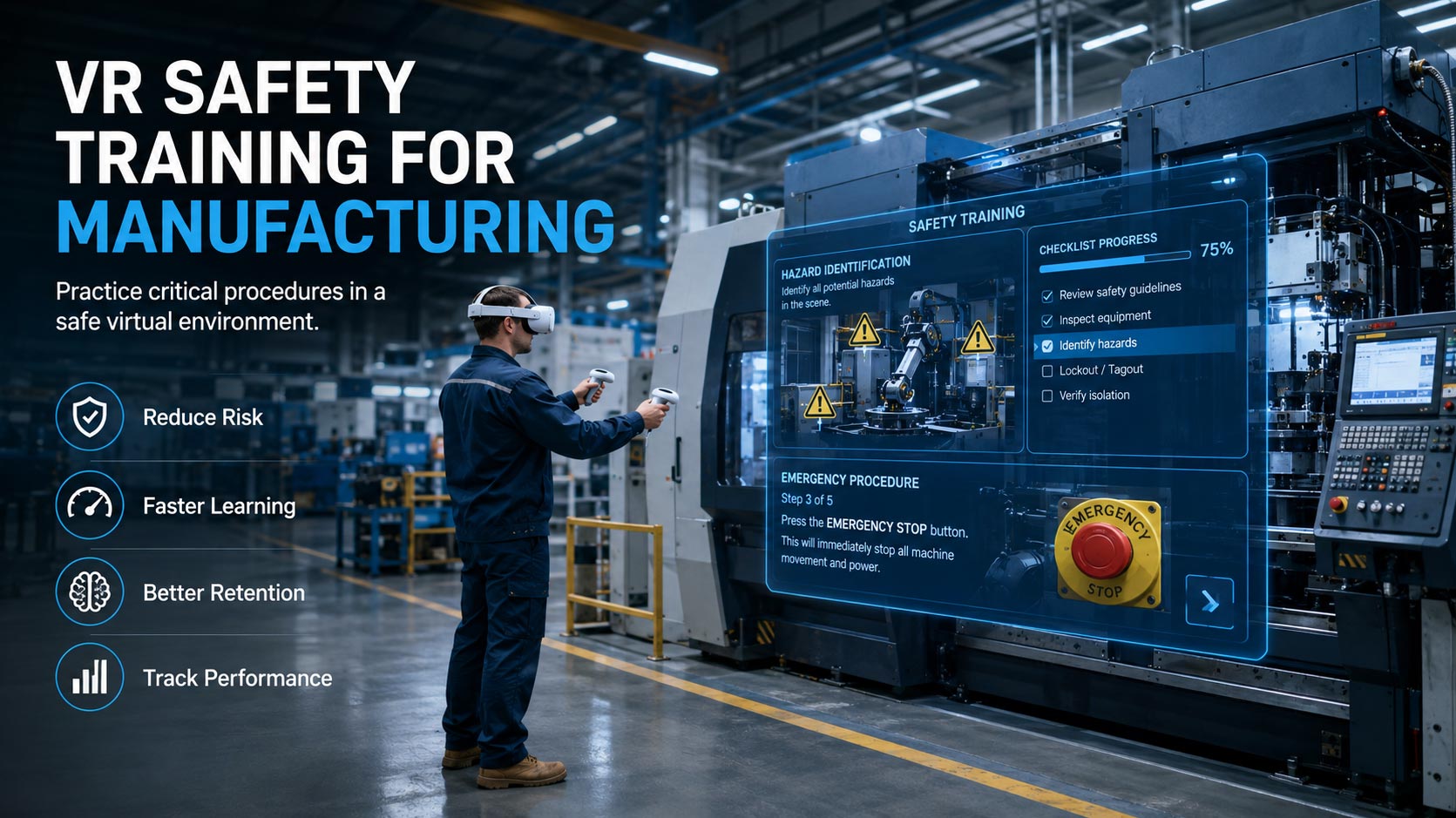
Digitally reconstructed facilities can also support Virtual Reality (VR) training or Augmented Reality (AR) guidance. Workers can practise safe procedures, identify hazards, learn equipment operation and follow inspection steps without disrupting the physical site. When appropriate operational data is connected, some training scenarios may benefit from the additional context supplied by a digital twin.
However, VR training is a distinct solution in its own right. It does not need real-time sensor integration to deliver educational value. For a detailed example of this type of application, see Fourthedesign’s article on VR training for manufacturing.
Fourthedesign Project Example: C-MineTech and Industrial VR Training
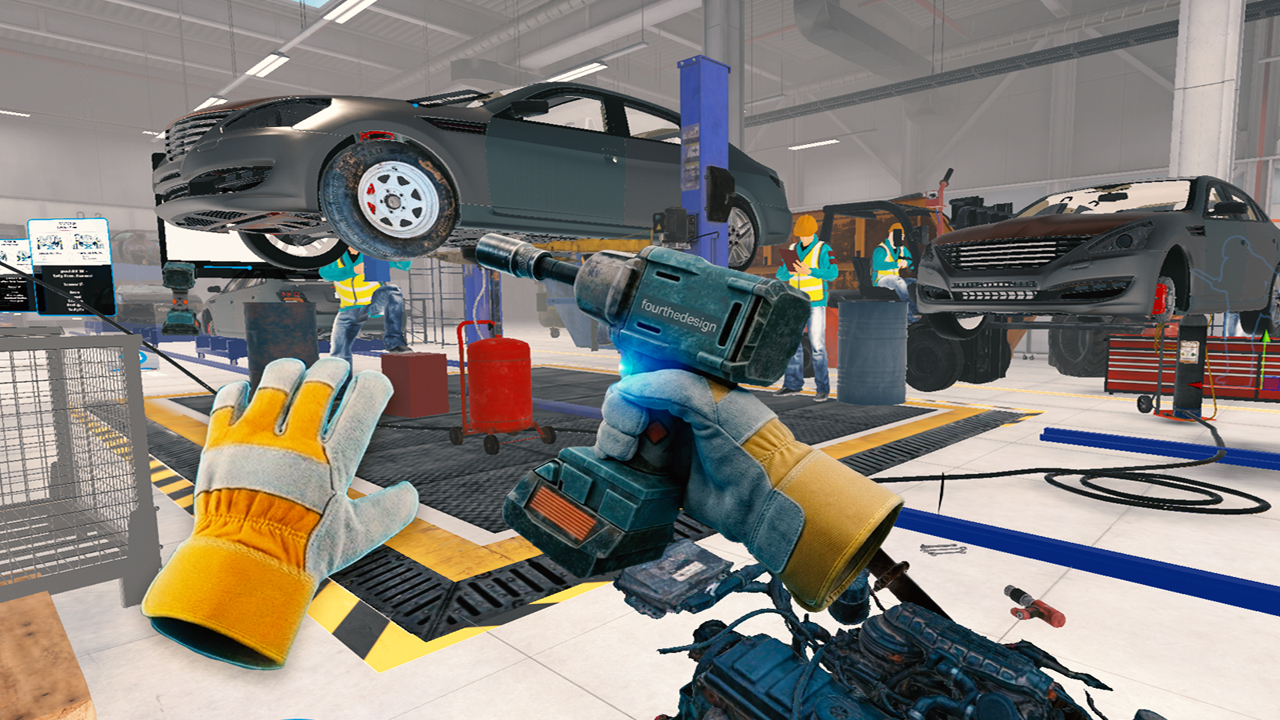
In C-MineTech, Fourthedesign contributes to the development of interactive VR training for industrial dismantling and circular-economy procedures. The scope involves a virtual industrial environment, sequenced training activities, personal protective equipment and interactions intended to help learners become familiar with complex workflows.
This is a real example of Fourthedesign’s expertise in industrial 3D environments and immersive workforce training. It should not, without separate evidence, be described as a continuously synchronized digital twin connected to live plant equipment. Our capabilities in 3D modeling, interaction design and training provide a technical foundation for projects that also require data integration and operational digital twin functionality.
Explore the C-MineTech project case study.
Real-Time 3D, Web Applications and Digital Twins: How They Fit Together
Fourthedesign also develops interactive 3D applications that let users explore buildings, technical installations and large development projects through web browsers, touchscreens and VR headsets. These solutions are useful for presentation, communication, education and detailed spatial exploration.
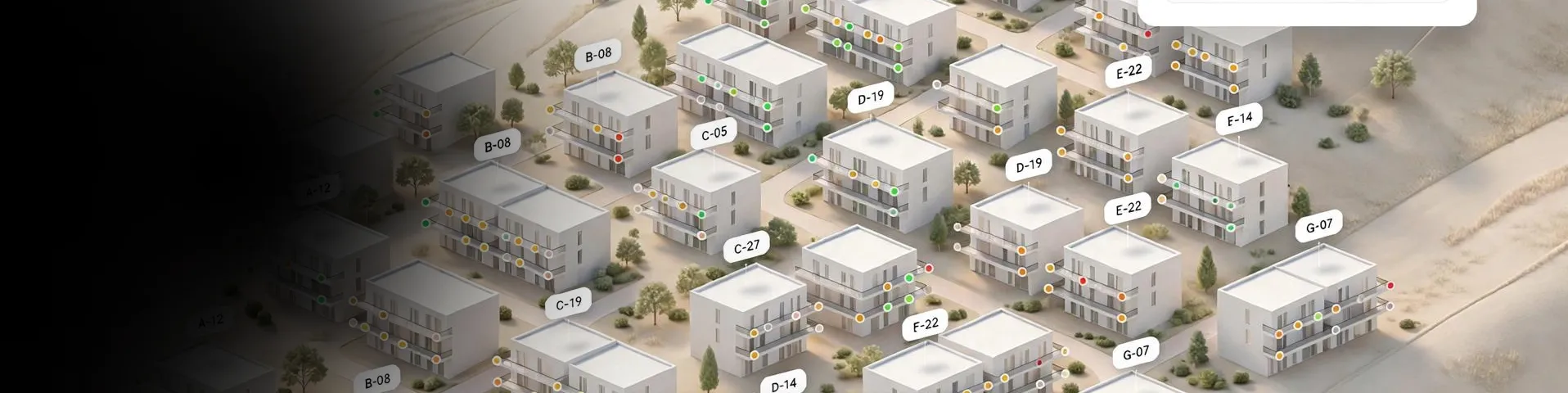
In a digital twin project, a real-time 3D application can become the visual interaction layer. Users might select a machine or a room to open contextual data, documentation or maintenance details. But web-based 3D technology on its own is not proof that a system contains live operational data. That additional connection is a separate requirement, with its own infrastructure, security considerations and acceptance tests.
How Should a Business Start a Digital Twin Project?
A common mistake is beginning with the question, “How can we build an impressive 3D factory?” A more useful starting point is the operational decision or process that the system should improve. A phased approach makes requirements clearer and reduces risk.
- Define the business problem: what should improve—equipment information retrieval, maintenance planning, visibility of facility status, staff training or analysis of operational incidents?
- Choose a limited pilot: one machine, a production line, a building floor or a well-defined process.
- Audit existing data: identify available sensor feeds, CAD/BIM files, asset registers, historical records and access rights.
- Develop the appropriate representation: use the level of 3D or analytical detail required for the task, rather than modeling everything at maximum complexity.
- Connect and validate data: test ingestion, asset mapping, update rates and accuracy, initially using controlled read-only access where practical.
- Design the interface: dashboards, web-based 3D, mobile workflows or immersive displays according to the people who will use them.
- Evaluate the pilot: compare outcomes with agreed baseline measurements, not subjective impressions alone.
- Scale responsibly: extend the system only when users and results demonstrate value.
This approach helps avoid building a costly digital showcase that looks attractive but offers little operational benefit. A limited, measurable success is usually a stronger starting point than an all-encompassing platform specification.
Where Does the Data Come From? Do You Need New Sensors?
Not necessarily. Before ordering new hardware, examine sources already present in the organization: PLC or SCADA systems, maintenance management software, building management systems, production databases, energy meters, technical documents and APIs. In some cases, regularly imported structured records are enough to test whether the proposed digital twin concept will be useful.
Industrial-system connections must be designed with the facility’s engineering, cybersecurity and operational teams. A digital twin should not interfere with critical processes simply to collect information, and a prototype should not be able to send uncontrolled commands to production equipment.
Cybersecurity, Data Reliability and Validation
Digital twins may expose sensitive information about facilities, assets, operations or infrastructure. Security should be part of the architecture from the outset. Typical measures include appropriate access controls, secure interfaces, audit logging, backups, separation of development and production systems, and carefully controlled integration with client networks.
Data quality is just as important as visual quality. Faulty sensors, delayed readings or incorrect asset mappings can create convincing yet misleading displays. Predictions should state their assumptions and limits, particularly when outcomes influence safety or maintenance decisions. The goal is to help qualified users make better decisions, not to hide uncertainty behind an attractive dashboard.
In manufacturing, the ISO 23247 framework is a useful reference for digital twin architecture and concepts. It does not replace the safety, security and technical requirements of a particular installation.
How Much Does It Cost to Develop a Digital Twin?
There is no universal price for digital twin development. A small pilot connecting a few equipment assets to existing records has very different requirements from a factory-wide platform with multiple automation systems, historical data, computational simulations, user roles and long-term support.
Major cost drivers typically include:
- The size and complexity of the physical system.
- The availability and quality of existing 3D, CAD, BIM or scanning data.
- The number, stability and security requirements of data connections.
- How frequently information must update and how long it must be retained.
- Requirements for dashboards, alerts, simulations, reporting, VR or AR interfaces.
- Hosting, data storage, deployment, testing, training and ongoing maintenance.
A useful proposal therefore separates the pilot, possible future extensions and annual operating costs. This is more informative than a broad quote for “a digital twin” without specifications, and it allows the client to decide which functions justify their cost.
How Can You Measure Digital Twin ROI?
The return on investment should come from measurable operational outcomes rather than unsupported claims about percentage savings. Before development begins, agree on meaningful indicators: time spent retrieving technical information, staff training time, equipment downtime, time to diagnose a fault or hours spent compiling reports.
For example, if technicians currently spend time locating drawings, manuals and maintenance history, a unified interface might reduce that search effort. The potential benefit can be estimated from time saved × how often the task occurs × relevant operating cost. Development, hosting, maintenance and support costs must then be deducted to assess the actual business case.
If reliable baseline figures or useful data are not yet available, the better first step may be data organization, interactive 3D documentation or a limited pilot rather than a full digital twin platform.
Why Work with Fourthedesign?
Fourthedesign brings together expertise in real-time 3D visualization, interactive applications, VR/AR experiences and accessible interfaces for complex information. Those capabilities become especially valuable when digital twin data must be understandable to plant operators, maintenance technicians, facility managers or training teams.
Depending on the project, we can contribute interactive interface design, 3D asset production and optimization, browser-based visualization, training experiences and application-level integration with appropriate data sources. More specialized connections to industrial equipment and operational systems may require collaboration with the client’s engineers and relevant technology partners. The exact scope and technical architecture should be agreed during discovery.
The objective is not merely to create a digital copy. It is to build a system that supports a specific task, can be evaluated against practical goals and has a sensible path for future development. Explore our interactive VR and AR development services and the C-MineTech project for related capabilities.
Frequently Asked Questions About Digital Twins
What is a digital twin in simple terms?
It is a digital representation of a physical system connected to appropriate real-world information. It helps people understand conditions, investigate issues and, where models allow, test possible scenarios.
Is a digital twin the same as a 3D model?
No. A 3D model represents appearance or geometry. A digital twin also needs a defined relationship with the physical entity or process, relevant data and an operational purpose.
Do digital twins always require IoT sensors?
No. Existing management systems, technical databases and recorded information may be sufficient for some uses. Sensors are useful when new or more frequent physical measurements are needed.
Can a digital twin run in a web browser?
Yes. A browser-based application can present dashboards and interactive 3D, while connected services handle data storage, processing and integration in the background.
Is virtual reality required?
No. VR can help with spatial understanding, inspection or immersive training, but many effective digital twins are operated through conventional dashboards and web interfaces.
Can an older factory use digital twin technology?
Potentially. The first step is to examine the condition of existing documentation, equipment records and data sources. A small pilot can identify whether additional instrumentation or integration is necessary.
How long does digital twin development take?
Timelines depend on scope, available models, data readiness, integration complexity and acceptance testing. A narrowly defined pilot should not be compared with a multi-site enterprise deployment.
Does a digital twin need artificial intelligence?
No. AI is optional. It should be added when it addresses a clear requirement and the available data supports reliable, validated results.
Planning a Digital Twin for Your Organization?
Whether you need to visualize a factory, build an interactive facility interface, connect 3D assets with operational information or develop VR training, Fourthedesign can help define the most practical first step. Tell us about the physical system, the data you already have and the outcome you want to achieve. We can then explore a realistic pilot scope and the right technologies for your team.
Contact Fourthedesign about digital twin visualization, interactive 3D and VR/AR applications.

