



VR Training for the Circular Economy: Inside C-MineTech Project
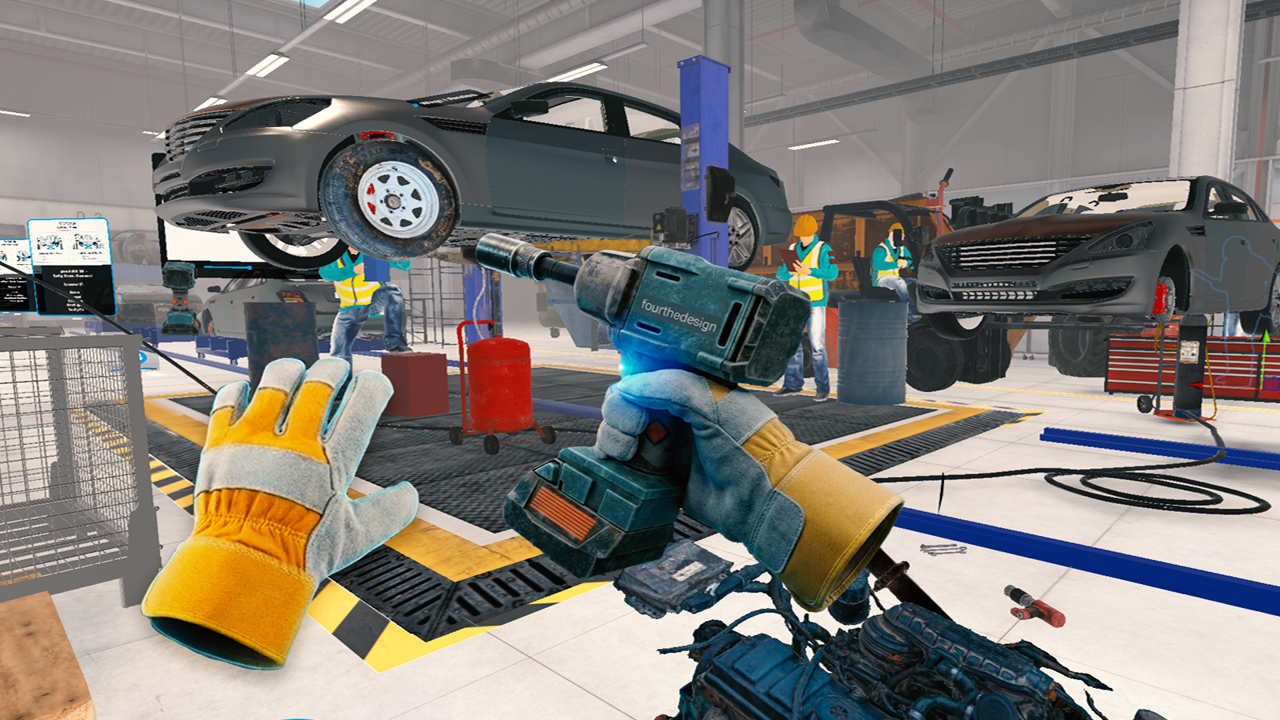
Case study – Immersive industrial training
C-MineTech: VR training for the circular economy
Immersive VR education within a European partnership, exploring vehicle dismantling, material recovery and circular-economy practices.
Funding programme
EIT RawMaterials
Year
2025-2026
Industry
Industrial training · Raw materials · Circular economy
Role
Fourthedesign – immersive VR partner
Services
Digital twin visualization
Interactive industrial simulations
Scenario-based learning
UI design
The challenge
You can describe an industrial process. You can’t classroom-teach the feel of it.
Training workers in raw materials processing and circular economy practices is hard to do well. The environments are complex, the equipment is expensive, and the risks of learning on the job are real. Traditional classroom instruction and video-based e-learning fall short because they describe processes but can’t simulate them.
C-MineTech is a European consortium project supported by EIT RawMaterials. Its training programme explores vehicle dismantling, material recovery and circular-economy practices through Virtual Reality and Digital Twin technologies.
As a project partner, Fourthedesign designs and integrates immersive VR learning experiences and interactive 3D simulations, working alongside the consortium’s curriculum and technical partners.
Our role
We built the systems that make it a training tool, not a showcase.
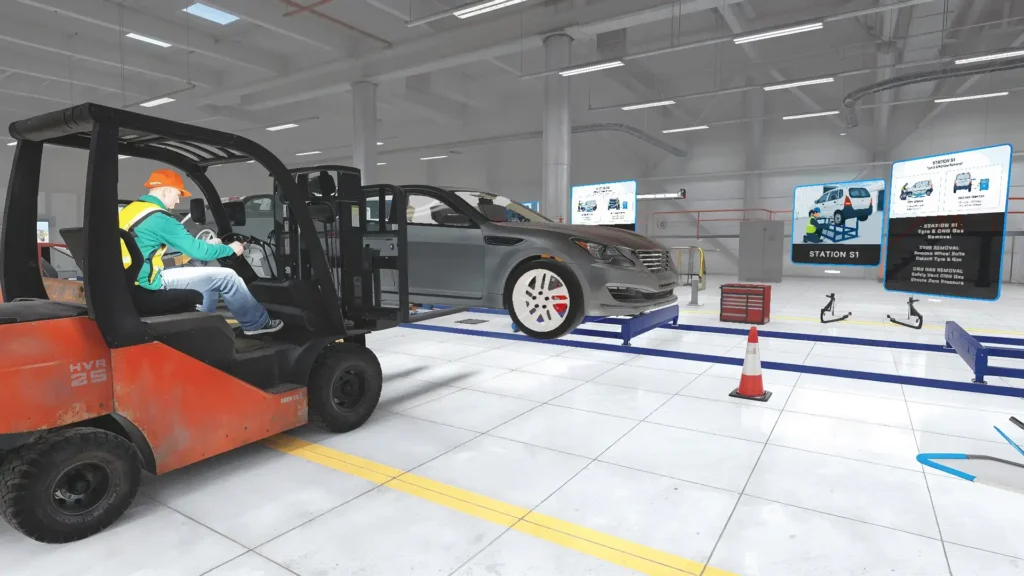
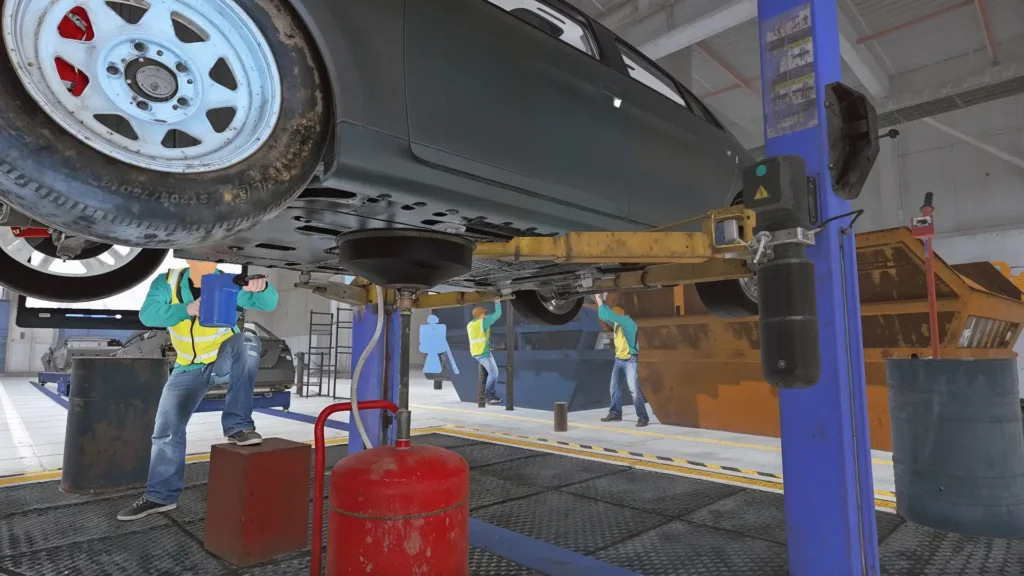
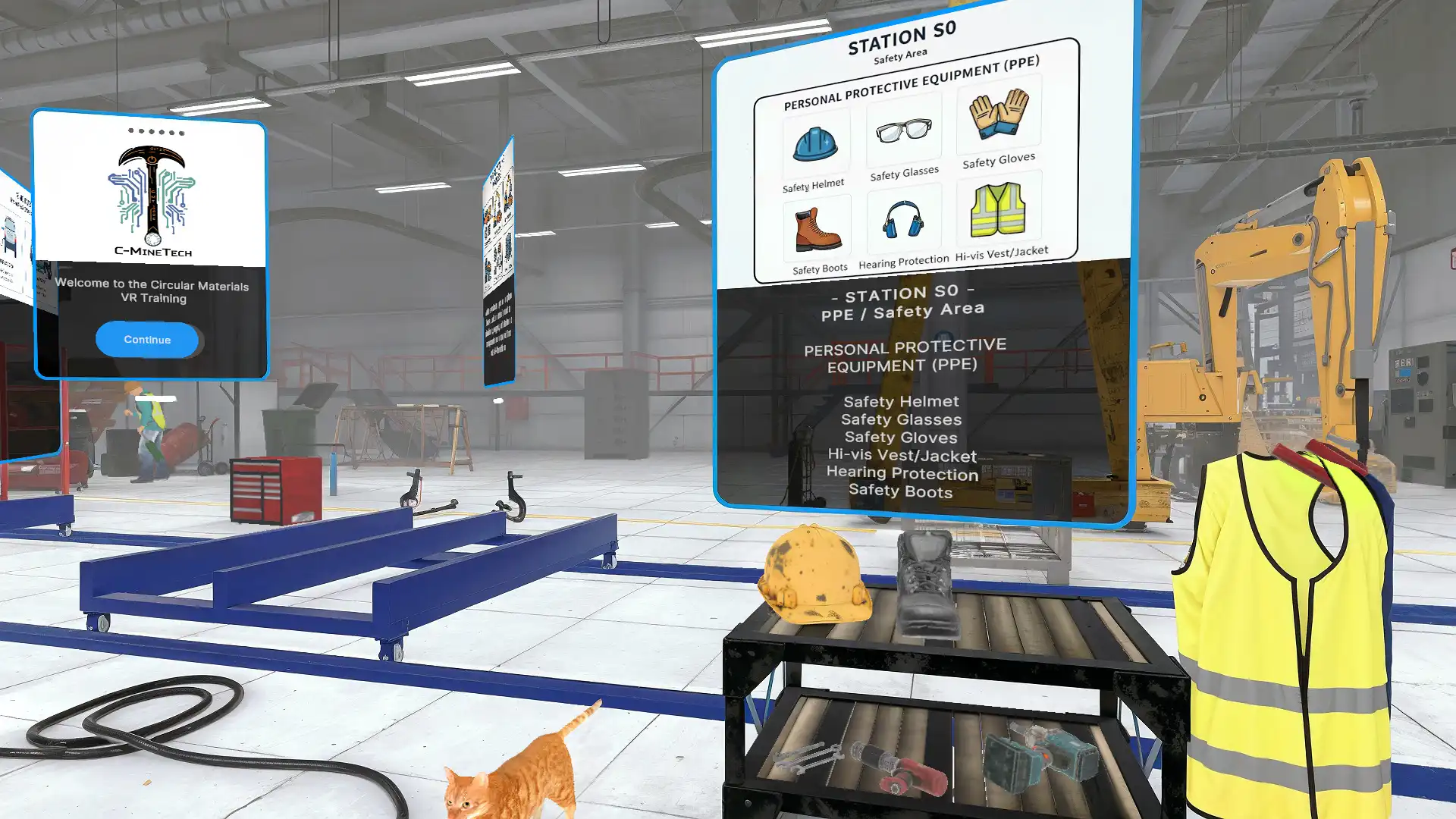
Real-time VR training environments
Interactive virtual training environments focused on vehicle dismantling, component recovery and raw-material reuse. They translate circular-economy workflows into spatial learning experiences.
Interactive industrial simulations
The training approach uses guided digital interactions to help learners understand industrial procedures instead of relying only on passive video or classroom instruction. Scenario details and learning feedback are refined through the project’s curriculum and pilots.
Digital twin visualization systems
Digital Twin concepts provide a way to visualize equipment, parts and material flows associated with dismantling processes. The educational aim is to connect the virtual training content with real industrial practices.
Scenario-based learning architecture
The training material is structured around industrial workflows and practical competencies. C-MineTech also includes pilot testing and evaluation, using participant feedback to refine the curriculum and its VR simulations.
Immersive training can make complex learning more repeatable and accessible.
01
Reduce training risk
Trainees can practice complex procedures before entering a real industrial environment, reducing exposure to hazards during the learning phase.
02
Repeat difficult scenarios
Failure states, emergency responses, and rare operational conditions can be repeated as many times as needed without interrupting real production.
03
Standardize knowledge
Every trainee receives the same structured experience, with the same tasks, safety cues, evaluation flow, and performance feedback.
04
Measure performance
Pilot exercises and participant feedback can help educators identify confusing steps and improve training material. Claims about faster onboarding or fewer real-world errors require measured evidence.
Training architecture
From first orientation to complex operational scenarios.
Orientation
Users enter the virtual facility, learn movement, controls, safety zones, and basic interaction with industrial equipment.
Process understanding
Key steps of raw material handling, processing, and circular economy workflows are explained through guided interaction.
Task execution
Trainees perform actions inside the simulation, follow instructions, operate equipment, and complete structured learning goals.
Failure response
Users respond to errors, warnings, unsafe actions, and abnormal conditions in a controlled and repeatable environment.
Evaluation
The system records progress and provides feedback, helping instructors evaluate readiness and identify training gaps.
Business value
A platform designed for real deployment, not a one-off demo.
C-MineTech demonstrates how immersive training can support industrial upskilling at scale. The same core platform can host multiple modules, scenarios, facility types, and training goals.
For organizations working in raw materials, energy, manufacturing, recycling, or industrial safety, this approach creates a practical bridge between classroom learning and field experience.
VR headset, PCVR, desktop kiosk
Tasks, decisions, feedback, scoring
Five partners from three countries
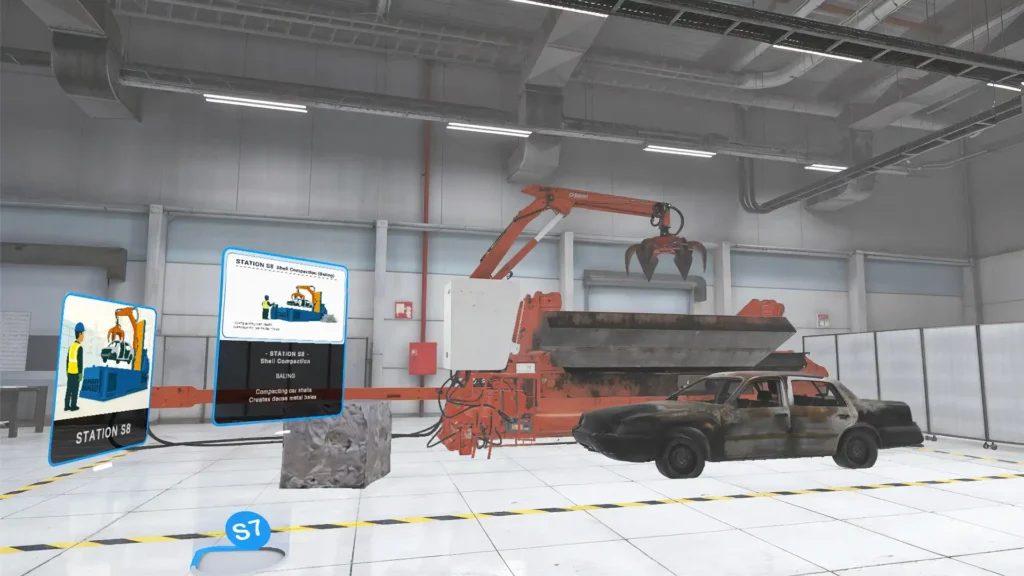
Technical stack
Immersive VR and Digital Twin learning tools for circular-economy education.
The result
An immersive VR and Digital Twin training experience developed within the C-MineTech European partnership, focused on industrial material recovery and circular-economy learning.
What this demonstrates
Industrial training is one of the strongest business cases for VR.
Immersive learning can support repeated practice and clearer explanations of industrial processes. C-MineTech demonstrates a practical direction for VR education; quantified outcomes such as lower error rates, shorter training time or return on investment require separate evaluation.
For manufacturers, energy companies, mining operations, or any industry managing complex training needs, this project is a reference point for what’s possible.
Fourthedesign is a VR/AR and immersive technology studio based in Heraklion, Crete, Greece. We develop real-time training simulations, digital twin systems, and interactive 3D experiences for industry, education, and culture. Official C-MineTech project and partners · Fourthedesign VR/AR development.
Project questions
C-MineTech VR Training: Project Questions
What does the C-MineTech project explore?
C-MineTech investigates training for dismantling and recovering materials from vehicles within a circular-economy context, using immersive VR and digital visualization.
What is Fourthedesign's role?
Fourthedesign contributes immersive VR development, interactive 3D content and visual training scenarios as a technology partner in the European consortium.
Is C-MineTech a commercial off-the-shelf training product?
It is presented here as a European project and training-development reference, not as a claim that every proposed feature is commercially deployed.

