



Medical VR 3D Modeling & Animation for Roche cobas
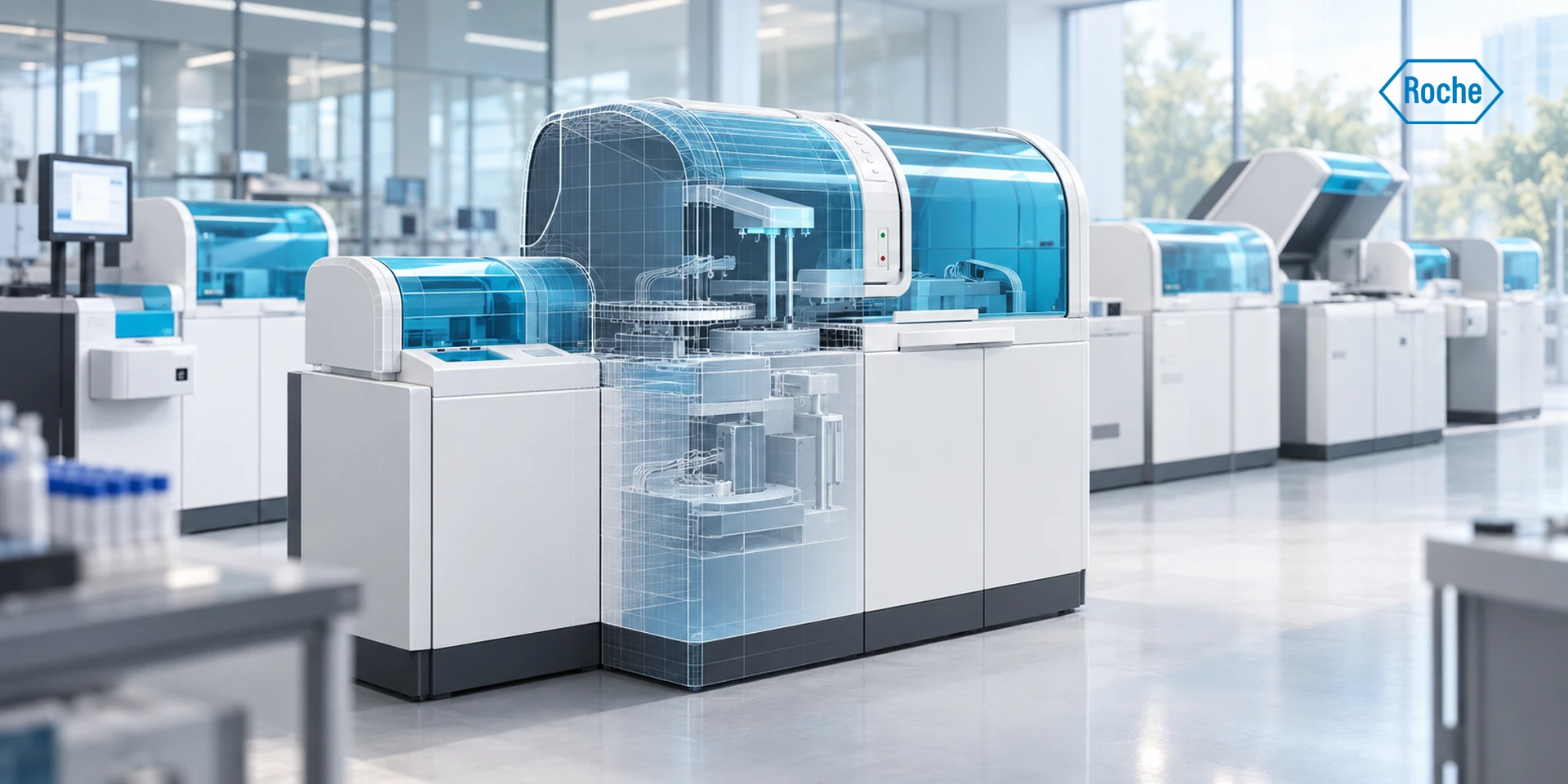
High-Fidelity 3D Modeling for Medical VR
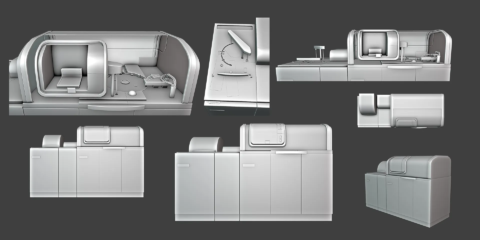
For this Medical VR project, Fourthedesign created a collection of detailed 3D models and animations of Roche cobas diagnostic systems for Roche / OramaVR.
The project required the digital reconstruction of complex laboratory equipment using primarily photographic reference material. The challenge was to preserve the characteristic design, proportions and recognizable details of the real equipment while creating efficient assets suitable for an interactive, real-time VR environment.

The result combines high-fidelity 3D modeling, medical visualization, animation and real-time optimization within a workflow designed specifically for immersive applications.
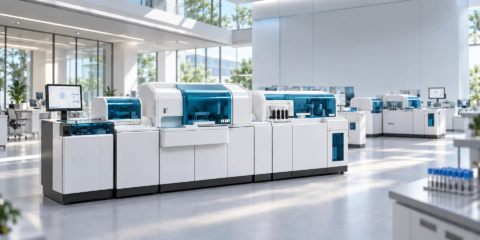
3D Modeling from Photographic References
Recreating sophisticated medical and laboratory equipment without relying on a complete production CAD workflow requires careful visual analysis.
Our team studied the available photographic references to accurately reproduce each system’s dimensions and proportions, exterior panels, transparent covers, user interfaces, openings and mechanical elements.
The equipment was then reconstructed step by step in 3D. Particular attention was given to the elements that make each Roche cobas system immediately recognizable, especially when viewed at close range inside a VR headset.
This process allowed us to transform photographic information into production-ready digital models while maintaining a balance between visual accuracy and real-time performance.
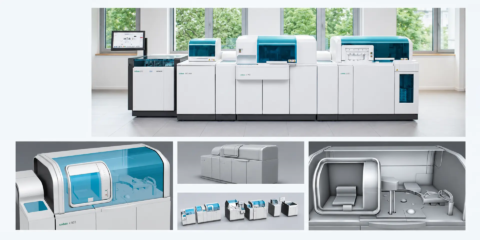
Roche cobas Diagnostic Systems in 3D
The project included different systems and modules from the Roche cobas product family, including cobas c 303, cobas c 503, cobas ISE, cobas e 402, cobas e 801 and cobas pro / Hitachi system components.
Each piece of equipment required a slightly different modeling approach. Large exterior surfaces had to remain clean and precise, while selected areas required additional geometric detail to support close-up viewing, animation and interaction.
Special attention was given to the characteristic housings, transparent blue elements, access panels, control areas and mechanical components of the diagnostic systems.
More Than Exterior Visualization
Where required by the application, the 3D modeling extended beyond the external housing of the equipment.
Selected internal areas and individual mechanical components were recreated so that the virtual system could reveal elements that are normally hidden from view.
This is one of the key advantages of 3D medical visualization and Virtual Reality. Users are not limited to observing equipment from the outside. A digital model can expose, isolate or animate individual parts in ways that would be difficult to demonstrate using the physical machine alone.
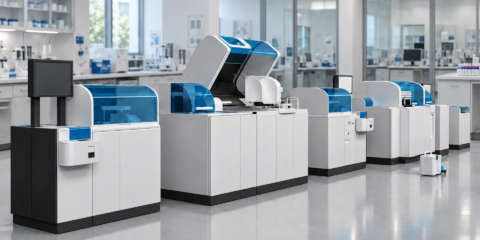
3D Animation & Interactive Visualization
The project went beyond static 3D modeling. Selected parts of the equipment were prepared for mechanical animation and interactive visualization.
Components were separated and organized according to their physical function, allowing covers, panels and individual mechanisms to move in a believable way.
Instead of visually morphing one state into another, moving parts can follow their actual mechanical structure. This helps maintain the feeling that the equipment is a physical machine rather than simply a graphical representation.
Inside a Medical VR application, these animations can also be connected to user interaction. A button, pointer or interactive control can trigger a specific movement or process, allowing the user to actively explore the equipment.
Optimized for Real-Time Medical VR
A highly detailed model created for traditional rendering is not automatically suitable for Virtual Reality.
VR applications require detailed scenes to remain responsive while the user moves around and interacts with the environment. For this reason, the final Roche assets were developed and optimized with real-time performance in mind.
Geometry, topology, materials and textures were carefully managed to retain the visual quality and identity of the real diagnostic systems without carrying unnecessary complexity into the VR application.
This approach makes it possible for users to move around the equipment, inspect individual areas and interact with animated components while maintaining an immersive real-time experience.
Medical 3D Visualization Meets Immersive Technology
Medical and laboratory equipment presents a unique challenge for immersive visualization. Users can view objects at real-world scale, approach them closely and examine components from angles that may never appear in a conventional animation or product presentation.
This makes accurate scale, clean geometry, convincing materials and carefully designed interaction especially important.
At Fourthedesign, we combine 3D medical visualization, product modeling, animation, Virtual Reality and real-time development to create immersive experiences for healthcare, medical technology, pharmaceutical applications, professional training and product visualization.
From Physical Equipment to Interactive VR Assets
The Roche / OramaVR project demonstrates how complex diagnostic equipment can be transformed into detailed digital assets designed specifically for an immersive environment.
Starting from photographic references, the production process covered 3D reconstruction, material creation, optimization, mechanical animation and preparation for real-time VR integration.
The result is a collection of detailed Roche cobas digital models ready to support immersive visualization, interactive demonstrations and Medical VR applications.
Planning a Medical VR, healthcare visualization or interactive training project?
Contact Fourthedesign to discuss your next immersive application.
