



VR Applications: 10 Examples for Training, Tourism, Real Estate and Healthcare
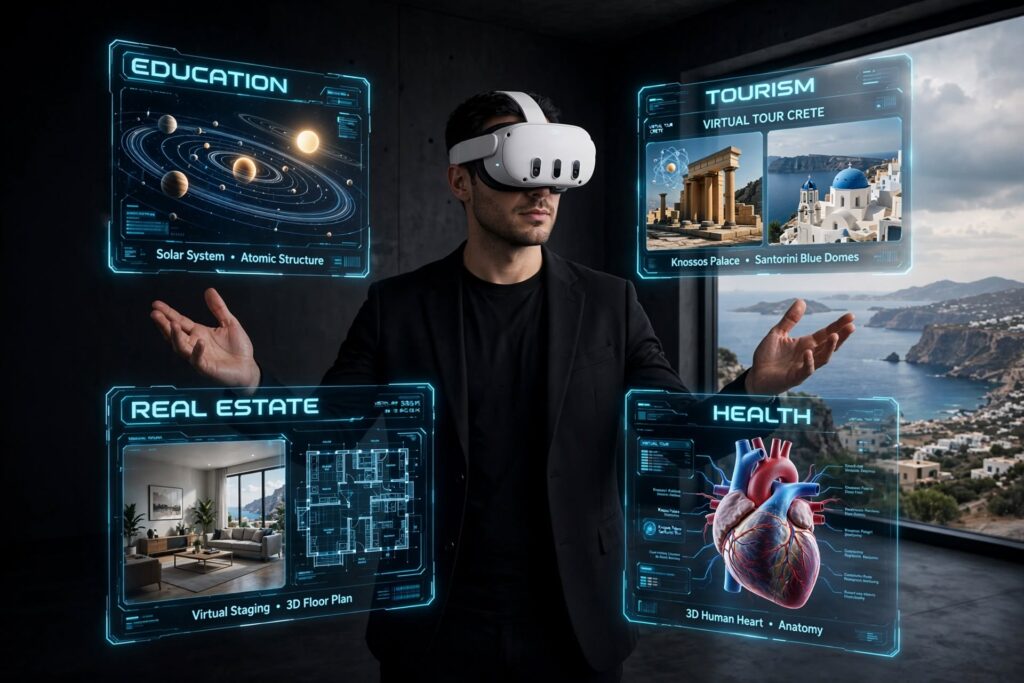
VR applications can do much more than provide a virtual tour. Discover 10 practical examples in training, maritime, construction, real estate, culture, healthcare, and sales.
 VR applications become valuable when they take advantage of what virtual reality naturally does well: creating a sense of space, enabling interaction, and transporting the user into an environment that is not physically available at that moment. This is why the same technology can be used across completely different industries, from maritime and construction to real estate, museums, and healthcare.
Fourthedesign’s VR solutions include training and simulations, medical VR, smart museum experiences, architectural applications, and virtual tours. If you are looking for an idea for your own project, the ten examples below are useful not as a simple “feature list,” but as different problems that can be solved through immersive design.
1. VR Training for Technical Procedures
The user performs a procedure step by step using virtual equipment. The app can initially work as a guided tutorial and later as an assessment tool. This type of application is ideal for maintenance, operation, inspection, and other tasks where the correct sequence and selection of tools are important.
2. Safety Simulation and Hazard Recognition
Instead of creating a real-world risk for training purposes, VR can simulate hazards, alarms, and emergency situations. Users can practice recognizing risks and making the correct decisions. The application can also vary the conditions so that users learn to respond rather than simply memorize a sequence.
3. VR Applications for Maritime
VR training for the maritime industry can help users become familiar with spaces, procedures, and operational scenarios before real-world practical training. It is especially useful when physical access is not always easy and when training needs to be repeated without affecting the operation of the vessel or its equipment.
4. VR for Construction and Worksites
In construction, a virtual worksite can be used for safety induction, hazard awareness, and procedural training. Users learn in a safe environment before applying their knowledge in a real location where active work, machinery, and physical restrictions are present.
5. Architecture and Real Estate Presentation
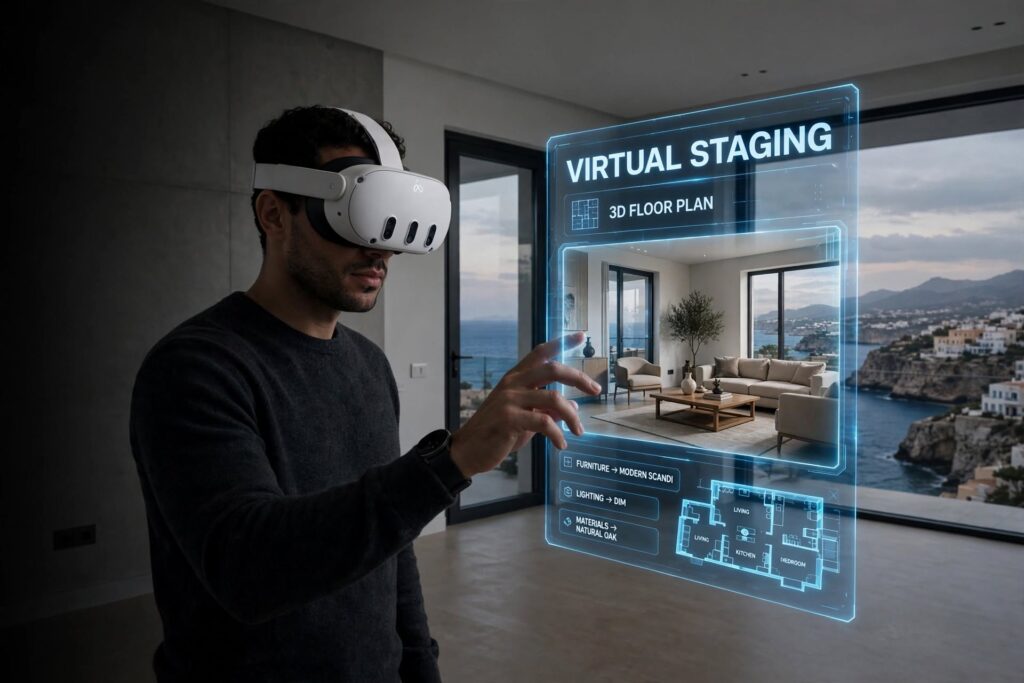
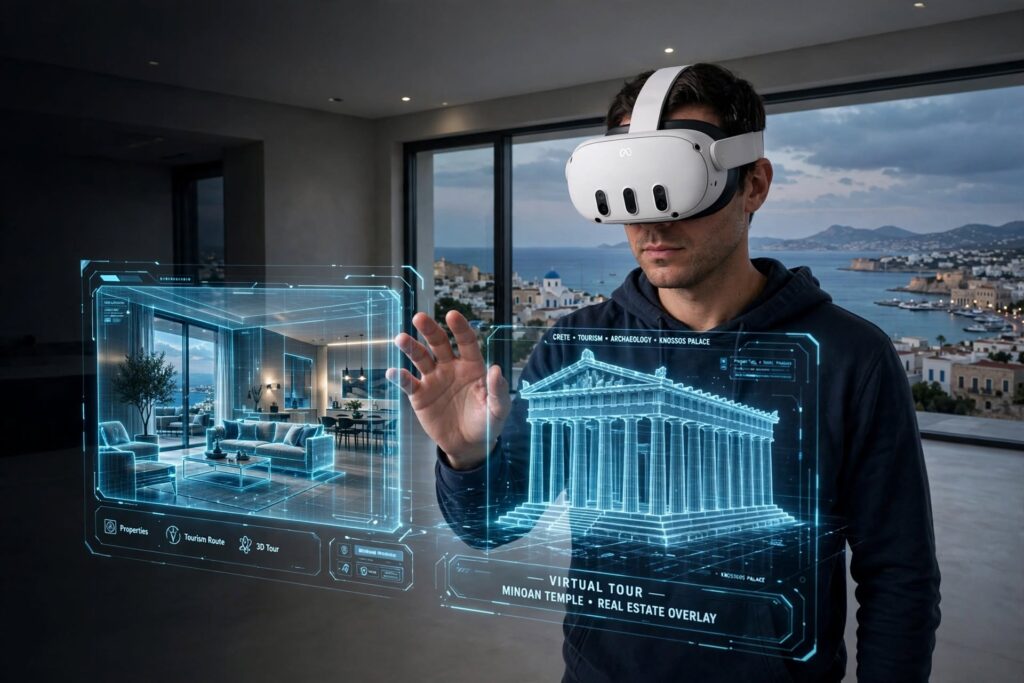
A buyer or stakeholder can explore a space before it is constructed. In architecture and real estate, VR provides something that a traditional render cannot fully reproduce: a true sense of scale and presence. Users can also be given options for materials, lighting, or different configurations.
6. Museums and Cultural Heritage
In museums and cultural spaces, VR can reconstruct historical periods, present objects within their original context, or provide access to locations that are not normally accessible to visitors. Digital applications for culture and tourism work best when technology strengthens the storytelling rather than becoming the main focus itself.
7. Tourism Experiences and Virtual Previews
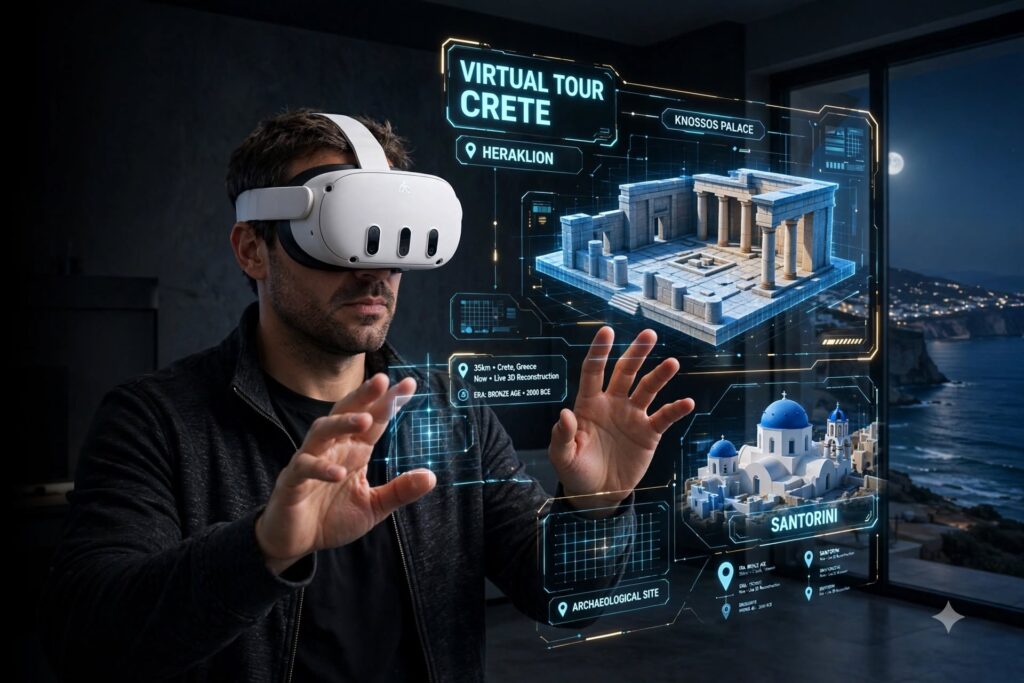
A destination can use VR as a preview, as a standalone experience, or as a way to provide access to people who cannot physically visit the location. The content can be based on 3D reconstruction, 360° media, or a combination of techniques, depending on the level of interaction required.
8. Medical and Healthcare Visualization
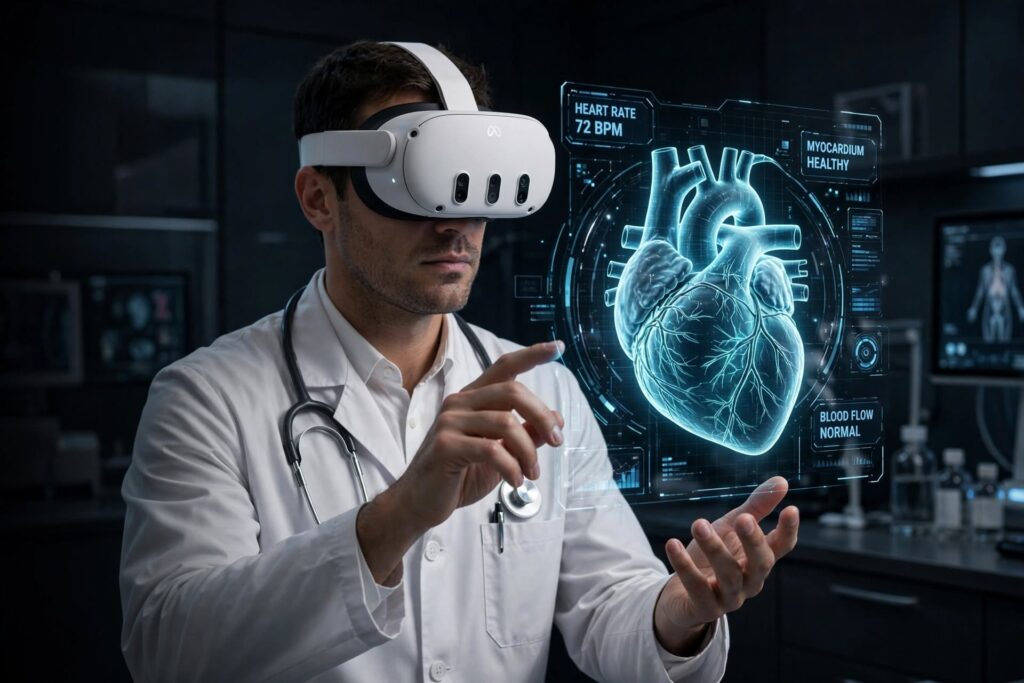
In healthcare, VR applications can support visualization, training, and the presentation of complex information. Fourthedesign provides 3D and interactive solutions for healthcare and medicine, where accuracy, clarity, and collaboration with subject matter experts are central parts of the production process.
9. Product Demos and B2B Sales
An industrial product can be presented at full scale without physically transporting it. Customers can explore internal components, different versions, and animated demonstrations of how the product works. This is particularly useful at exhibitions, showrooms, and sales meetings where a photograph or video is not enough to clearly explain the product’s structure and functionality.
10. Onboarding and Virtual Familiarization with Facilities
New employees can explore facilities, learn routes, and understand key safety points before entering the real environment. The experience can be combined with quizzes or tasks so that it becomes more than a simple virtual tour. In distributed organizations, the same application can provide consistent onboarding for teams in different locations.
How Do We Choose Which VR Application Is Worth Developing First?
The best first application usually has three characteristics: it solves a real problem, has a clearly defined audience, and can be evaluated. If a scenario is used frequently, is expensive to reproduce, or provides high value per user, it is usually a strong candidate. If the idea exists only because “everyone is talking about VR,” then it probably needs a little more clarification before production begins.
It is also useful to identify what makes VR necessary for the project. Is it the sense of space? Scale? Hand interaction? The ability to make mistakes safely? The ability to experience something that does not yet exist? If there is no clear answer, a Web 3D experience, animation, or another interactive solution may be a better choice.
From an Idea to a Viable VR Project
The process begins with a brief and a prototype. The 3D assets, interaction logic, sound, and testing are then organized. The deployment method should also be selected early in the process: standalone headset, PC VR, event installation, or another configuration. This decision affects both the performance budget and the available functionality.
To explore different approaches through real interactive projects, you can visit Fourthedesign’s VR/AR applications portfolio. Comparing different use cases helps identify what is genuinely important for your project and separates essential functionality from features that simply sound interesting.
A Quick Checklist Before Requesting a Quote
- Who is the user, and what should they be able to do inside the application?
- What problem does it solve, and how is the same task currently performed?
- Are CAD files, BIM data, 3D models, manuals, or other existing materials available?
- Where will the experience be used, and how many users will use it?
- Does the application require scoring, analytics, multiple languages, or integration with other systems?
- Which functionality is essential for the first release, and which features can be added later?
With these answers, the conversation about VR becomes much more specific. The project can be priced based on actual functionality, divided into development stages, and tested with the right users. And that is usually the point where the headset stops being the main topic — which, ironically, is often a good sign that the application has been designed properly.
| CTA Have you identified which of the VR applications above best fits your needs? Contact Fourthedesign to discuss your use case, prototype, and recommended technical approach. |
Frequently Asked Questions
What is the most common professional use of VR?
There is no single answer that applies to every industry, but training, simulation, spatial presentations, and product experiences are among the most practical categories because they directly take advantage of presence and interaction.
Can a VR application be used both at an event and in an office?
Yes, although it may require a different mode or deployment configuration. At an event, fast onboarding and quick session resets are priorities, while an office or training environment can support longer sessions and more extensive content.
Can the same 3D content be reused elsewhere?
Often, yes. With the right production pipeline, assets can be adapted for animation, real-time presentations, AR, or other applications, depending on licensing rights, technical requirements, and the required level of optimization.

