



Industrial VR Training: Costs, Benefits & Real-World Applications
How much does industrial VR training cost, what benefits can businesses realistically expect, and when is it worth investing in a custom simulation? Manufacturers and technical organisations need effective employee training, but physical machinery is expensive to access, operational downtime has a cost, and some situations cannot be recreated safely. This guide covers development budgets, hardware, measurable business benefits, deployment, return on investment and real industrial applications.

At Fourthedesign, we develop interactive 3D experiences for professional settings. Our work includes VR training for manufacturing, real-time applications and technical visualisation. For companies evaluating VR, the most important decision is not the headset brand: it is which training problem the system will solve.
What Is Industrial VR Training?
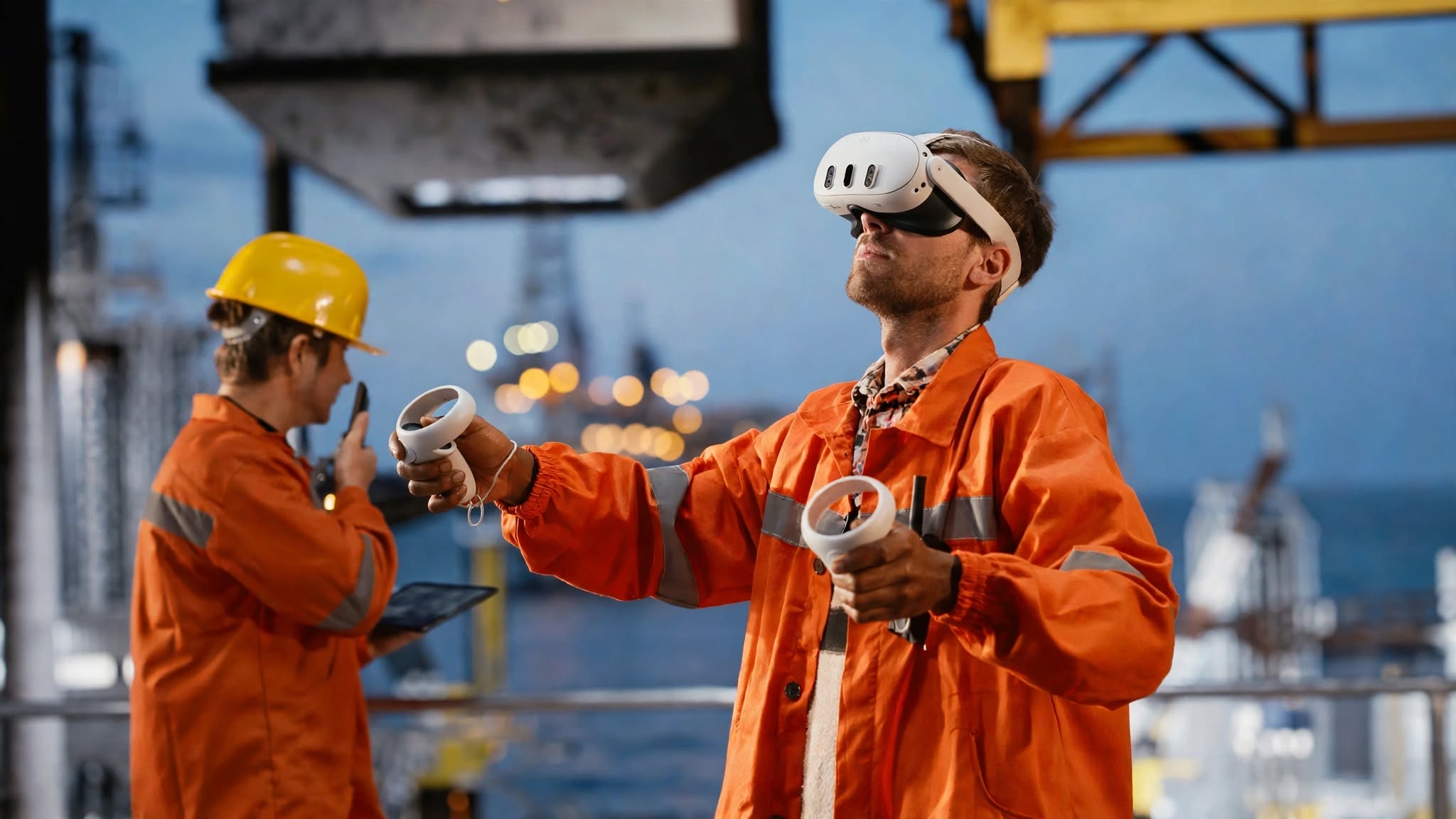
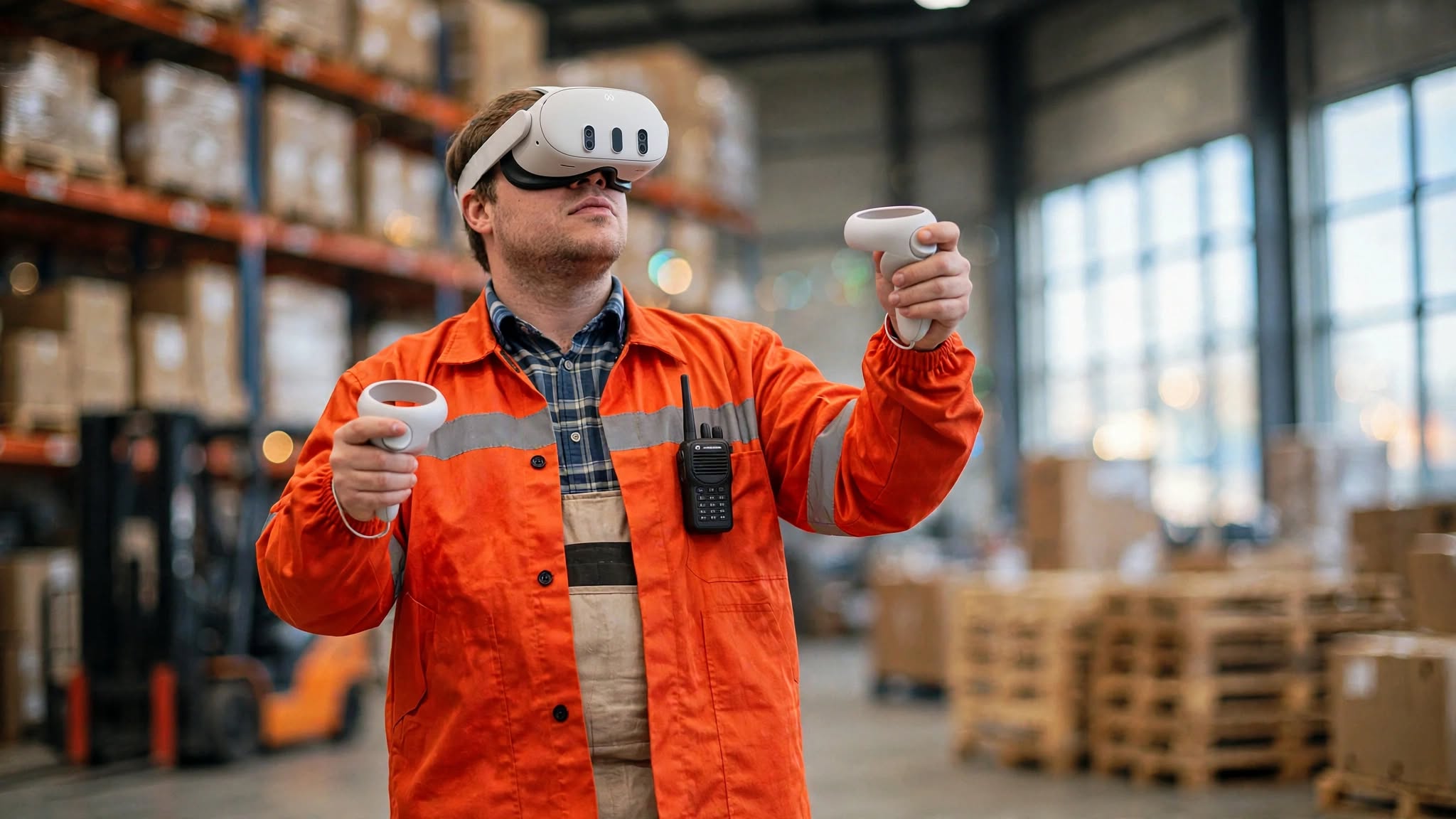
Industrial VR training places a learner inside an interactive three-dimensional environment representing selected tasks, machinery or workspaces. Instead of only watching a video, a trainee can identify components, inspect equipment, choose an action, follow instructions and receive feedback. Depending on the design, scenarios may assess procedure order, hazard recognition, decision-making or familiarity with a production area.
A virtual factory does not have to reproduce every physical detail to be useful. The fidelity required depends on learning objectives: component identification needs clearly readable geometry; a detailed process simulation may require more precise behaviours. A training system should be developed together with the client’s qualified technical and health-and-safety specialists. It cannot by itself replace mandatory practical training, professional supervision or regulatory certification.
How Much Does Industrial VR Training Cost?
There is no universal price for a custom VR training application. The scope of interactions, number of environments, source data quality, hardware requirements, reporting functions and ongoing support all change the budget. A single focused exercise is not comparable with a platform connecting several facilities, instructors and employees.
| Indicative scope | Development budget | Typical features |
|---|---|---|
| Focused pilot or prototype | €5,000–€30,000 | One environment and one training loop |
| Multi-scenario custom application | €20,000–€80,000 | Multiple tasks, feedback, optional basic assessment |
| Enterprise training platform | €50,000–€250,000+ | Multiple roles, administration, analytics and integrations |
These are broad illustrative planning ranges, not an official Fourthedesign price list or a binding quote. Hardware, content changes, deployment and maintenance may be additional. Actual pricing requires a defined scope.
What drives the development budget?
- 3D content: a simplified workspace is easier to build than a faithful replica of a full production facility. CAD and BIM files may help, but often require conversion and real-time optimisation.
- Training interactions: selecting a component, following an approved sequence and simulating complex mechanical states represent very different levels of effort.
- Number of scenarios: reusable systems can reduce the cost of later modules, but every new exercise still requires design, testing and validation.
- Number of users: multiplayer requires networking, session management, synchronisation and additional testing.
- Reporting: user accounts, instructor dashboards, LMS connectivity, data protection and analytics add scope.
- Hardware support: developing for one standalone headset is different from maintaining several VR hardware configurations.
Total cost of ownership matters more than the initial quote
A serious VR investment budget should also include headsets, charging and storage, facilitator time, device management, training-room space, support and periodic content updates. When the application represents specific machinery or procedures, the organisation must plan for updates when those procedures change. The lower upfront quote is not always the lowest long-term operating cost.
Six Business Benefits of Industrial VR Training
1. Rehearse without disrupting production
Selected familiarisation and procedural exercises can run independently of a physical machine. An employee can learn component locations or workflow order before using equipment under supervision. This can help avoid scheduling every introductory exercise around production availability.
2. Offer repeatable, consistent exercises
Every trainee can encounter the same approved task and receive comparable feedback. A well-structured learning path may start with a guided mode and gradually remove prompts as competence develops.
3. Explore unusual situations safely
Immersive scenarios can represent unusual conditions, warning signals and risk indicators without deliberately creating hazards in the workplace. Safety-related content requires review by qualified HSE experts and must not teach unauthorised intervention.
4. Improve spatial understanding
When equipment and operational areas are complex, immersive 3D may make their relationships easier to understand than flat drawings alone. Learners can explore a process from different viewpoints and connect instructions to the relevant locations.
5. Provide structured assessment
When appropriate, software can record completion, decisions, missed actions, requested assistance and repeat attempts. These records can help instructors target feedback. A virtual score is not proof of real-world competence, so important skills still require suitable practical assessment.
6. Scale training across sites
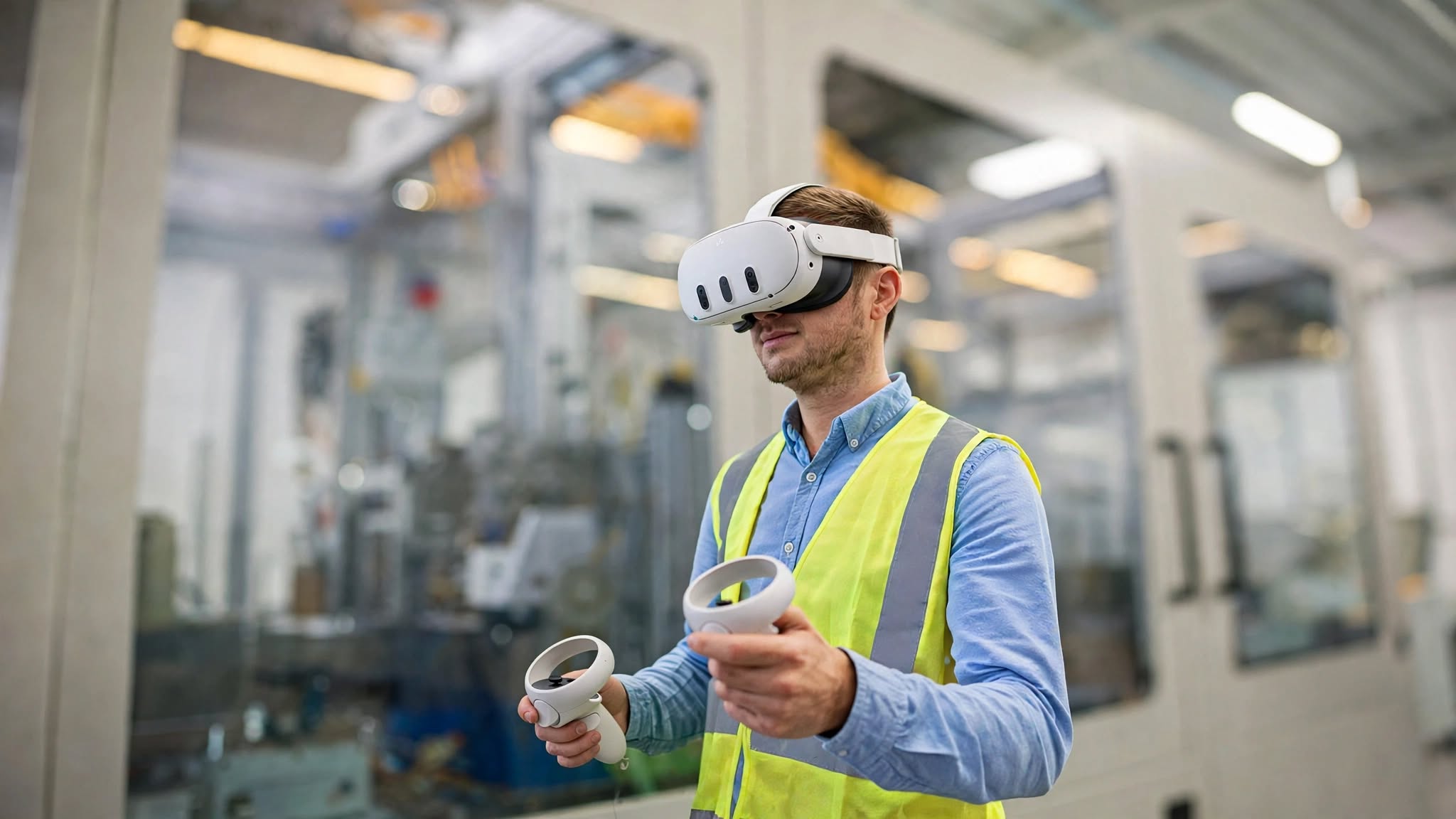
A common VR application can be deployed at multiple locations with local instructors and approved site-specific variants. This may be useful for organisations with distributed workforces, provided device maintenance and support are properly planned.
Real-World Industrial VR Training Applications
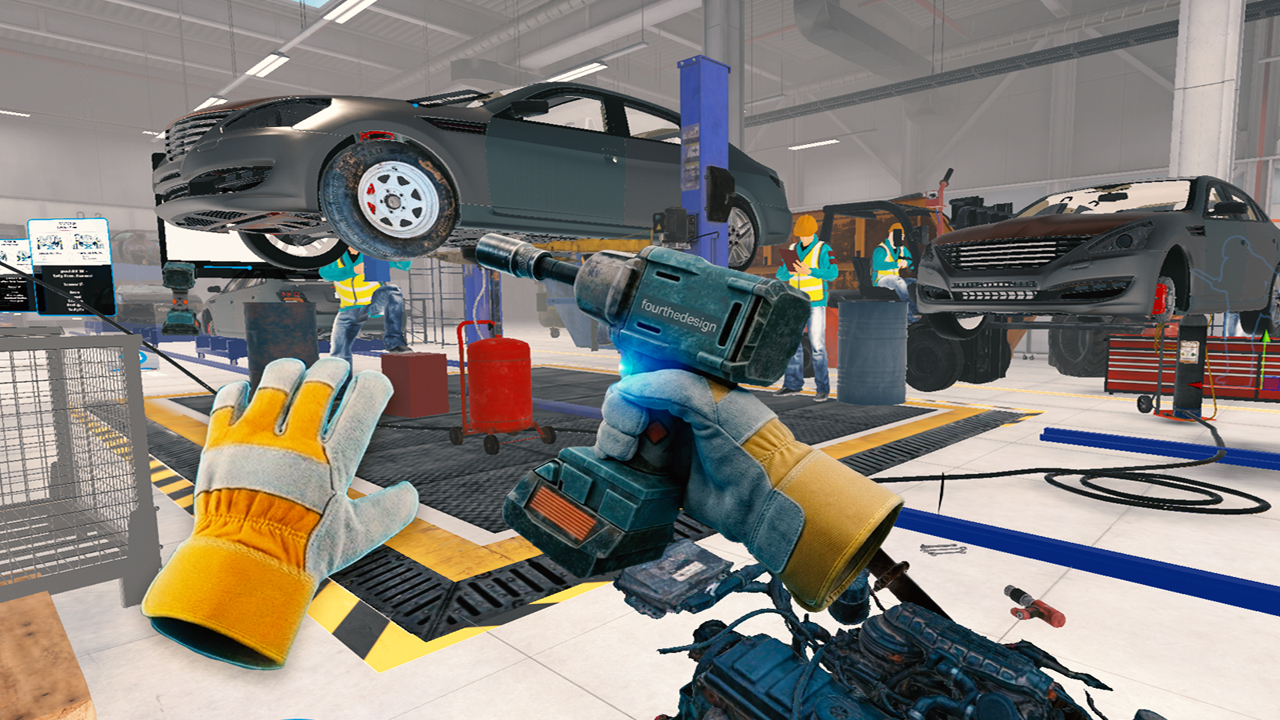
Manufacturing and assembly: practise component identification, process sequencing and workstation orientation before supervised hands-on work.
Maintenance familiarisation: explore the structure of machinery, recognise components and understand an approved inspection workflow. The simulation should not imply that remote visual learning qualifies someone for complex interventions.
Workplace safety: develop hazard-recognition exercises or decisions related to approved emergency procedures. For a more specialised guide, see VR safety training for industry.
Industrial onboarding: orient new staff to equipment zones, access routes and process relationships before entering a real facility.
Mining, dismantling and recycling: introduce materials handling, equipment relationships and circular-economy workflows through interactive simulations.
Collaborative exercises: when training outcomes genuinely depend on coordination, multiple users may rehearse different roles in a shared virtual environment. Multiplayer is an optional system requirement, not a default feature.
C-MineTech: A Real Industrial Learning Project
One relevant Fourthedesign example is C-MineTech, an EIT RawMaterials-supported initiative involving digital training connected with materials recovery and the circular economy. Fourthedesign contributes immersive VR learning experiences and interactive industrial simulations. The project shows how technical processes can be transformed into spatial learning activities rather than presented only as passive media.
C-MineTech should not be presented as proof that Fourthedesign has implemented every safety or maintenance scenario listed above, or that a specific return on investment has already been measured. Its relevance is the real experience of representing industrial workflows through immersive learning.
Read the official C-MineTech project overview and explore Fourthedesign’s industrial VR portfolio case study.
Industrial VR, Digital Twins and Interactive 3D: Which Do You Need?
These terms describe related but different solutions. VR training concerns the immersive learning experience. An interactive 3D simulation responds to user actions or programmed conditions and may run on a headset or a conventional screen. A digital twin generally goes further by connecting a digital representation with relevant data from a physical asset or process. A highly realistic virtual factory is not automatically a digital twin.
A company needing one procedural VR module may not require live operational data. Another company seeking equipment monitoring may need a browser-based system instead of headsets. For a closer comparison, see our Digital Twin Development and Interactive 3D services.
What Hardware Is Needed?
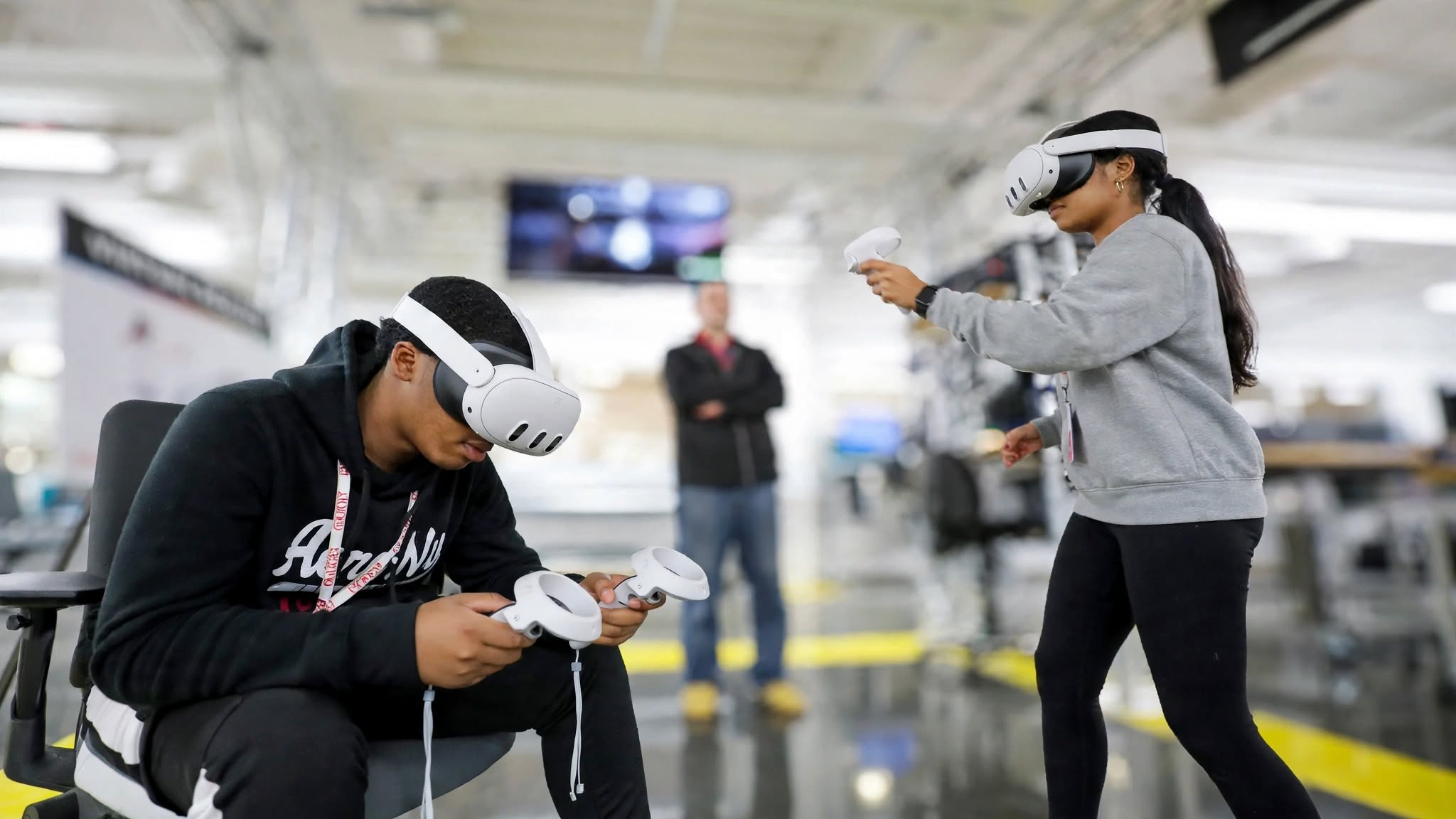
Standalone headsets can simplify training-station deployment because the application runs on a compatible device without a dedicated rendering computer. Scenes still need careful optimisation to maintain comfort and performance. PC-powered VR may be appropriate for demanding industrial models or additional computation, but requires more hardware and setup.
The practical package can include a facilitator display, safe training space, charging and hygiene accessories, storage, deployment procedures and device-support arrangements. The correct headset is the one that can run the agreed training objectives reliably—not necessarily the most expensive model.
How to Estimate ROI for Industrial VR Training
Return on investment should be based on verified operational savings, training effectiveness and actual usage. A training session completed faster does not automatically save money if the saved time cannot be used productively or avoid an expense.
Hypothetical example: an organisation trains 120 employees each year and estimates a potential two-hour reduction in training time per employee. At a fully loaded training-related cost of €30 per hour, the potential labour benefit is 120 × 2 × €30 = €7,200 annually. If the project also avoids €3,000 of instructor travel and carries €2,000 in annual running costs, the illustrative annual net benefit is €8,200. Against a €24,000 initial investment, simple payback would be approximately 2.9 years.
These figures are mathematical assumptions for illustration, not results from a Fourthedesign or C-MineTech deployment. They should not be used as a forecast without validating learning outcomes, costs, support needs and the real operational value of saved time.
What should a pilot measure?
Set baseline training duration, completion and error rates, instructor effort, learner feedback and real-world competency results. Evaluate the VR pilot against the existing method using comparable participants and tasks. Review motion comfort and accessibility. Longer-term outcomes such as incident reduction require careful interpretation.
A Practical Roadmap: From Pilot to Deployment
- Define the problem: identify one operational training issue and the target learners.
- Agree on learning objectives: involve trainers, engineers and HSE specialists early.
- Design interactions: decide which actions matter and how outcomes will be assessed.
- Prototype on real hardware: validate readability, performance, control methods and comfort.
- Test with learners: compare the pilot with the existing training approach.
- Deploy and support: document hardware procedures, software distribution and content updates.
Pilot-first development reduces uncertainty. It also helps teams decide whether to expand to additional machines, facilities, departments or multiplayer tasks.
When Is Industrial VR Training Worth the Investment?
VR is worth considering when knowledge depends on spatial understanding, repetition is valuable, physical training resources are constrained or the relevant situations are difficult to recreate. It is less attractive when a simple document or short demonstration can achieve the same outcome, or when essential physical skills cannot be assessed in the proposed virtual environment.
Frequently Asked Questions
Can VR replace practical machinery training?
Not automatically. VR can support familiarisation and procedural rehearsal, but supervised equipment practice, certification and legal requirements must be assessed separately.
Can industrial VR training run offline?
Some standalone applications can run without continuous connectivity after installation. Central reporting, content delivery and multiplayer may require network access.
How long does development take?
A focused prototype may take weeks, while a more complex enterprise training platform can take several months. Timing depends on content readiness, interactions, testing and approvals.
Can existing CAD models be reused?
Often yes, though geometry usually needs conversion, optimisation and additional interaction work before it performs reliably in real-time VR.
Will the application integrate with our LMS?
Integration may be possible, but it depends on the LMS, data requirements, identity management and agreed technical scope. It should be assessed before development.
Conclusion: Build Around a Training Problem, Not a Headset
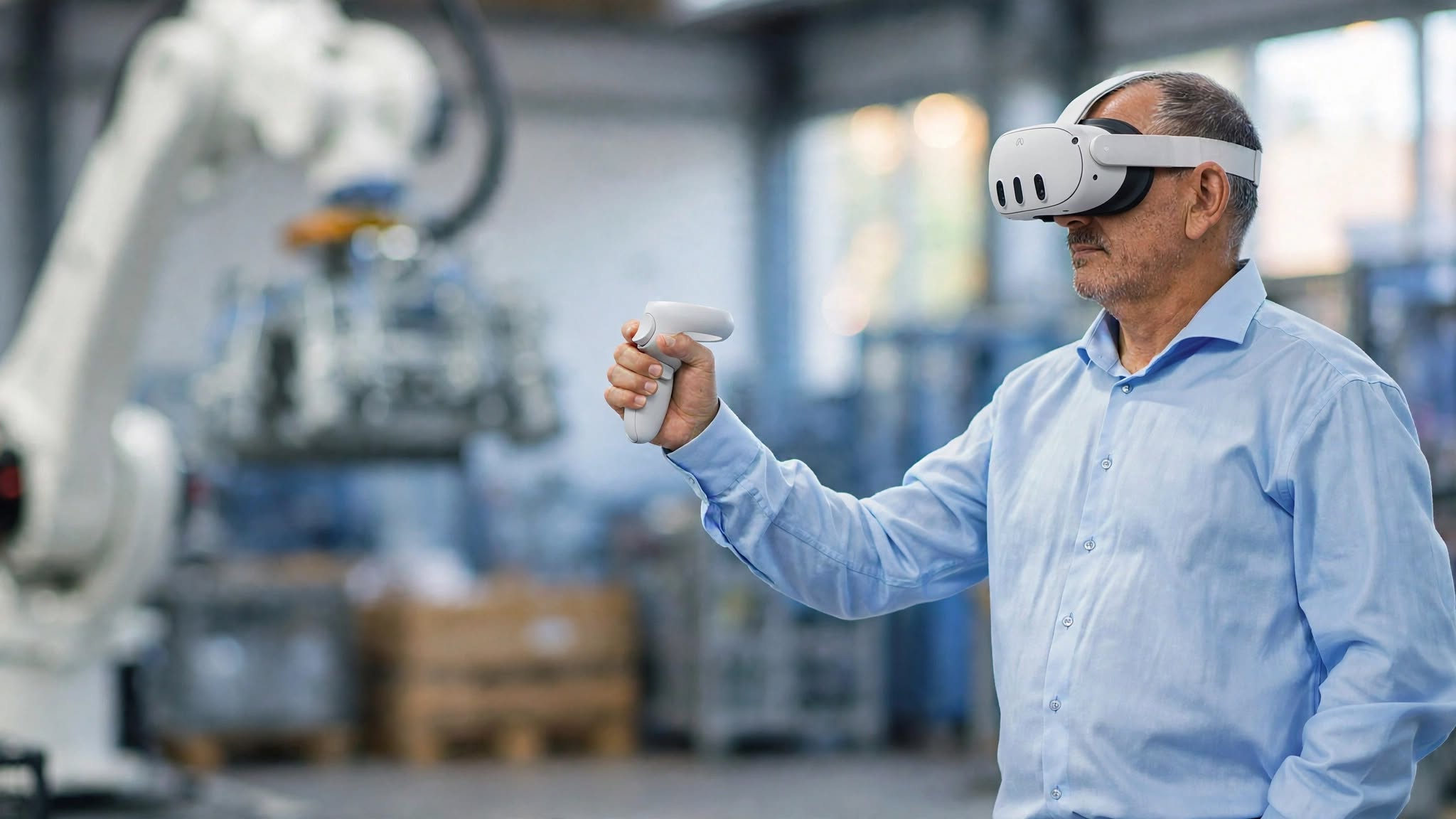
Industrial VR training can provide controlled rehearsal, repeatable scenarios and interactive ways to understand technical processes. Its business value depends on a defined learning goal, suitable simulation fidelity, realistic costs and measurable results. Rather than commission an entire enterprise platform immediately, start with one valuable use case, validate it with learners and expand only when the evidence supports doing so.
Fourthedesign combines VR and AR application development with interactive 3D production and relevant industrial project experience. We can discuss the technical scope of a custom training simulation and determine whether VR is a suitable fit.
Planning Industrial VR Training for Your Company?
Selected research and project sources: PwC VR training research (enterprise soft-skills context), C-MineTech official project information. Published research and illustrative calculations are not guarantees of industrial training outcomes.

