



VR Cultural Heritage Experience
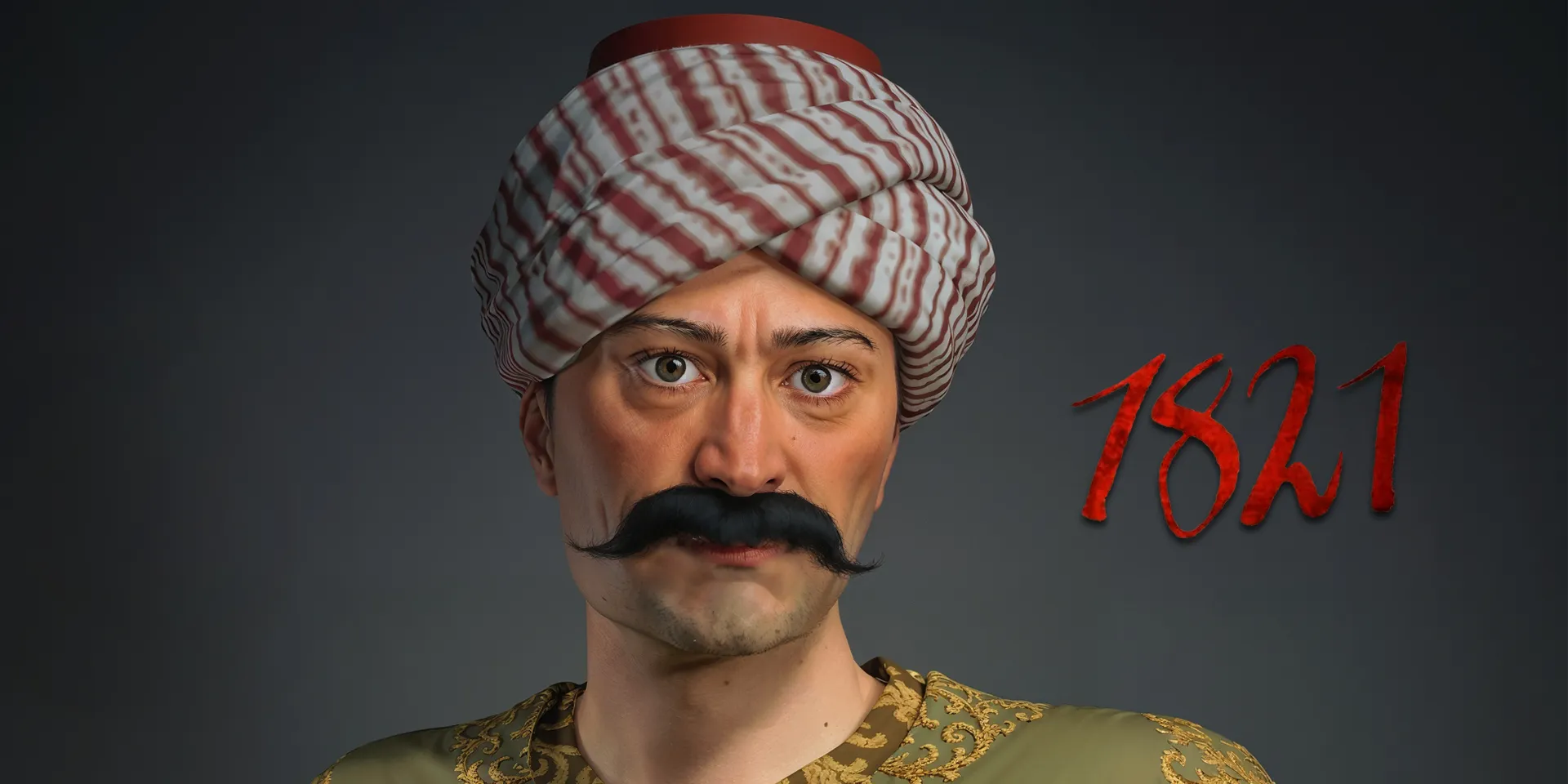
Case study – VR cultural heritage
A four-scene immersive journey through Cretan history, combining historical environments, animated characters, synchronized narration, and real-time VR storytelling.
Client
Aegean Solutions
Year
2026
Industry
Cultural heritage · Education · Museums
Platform
Meta Quest · PCVR
Services
3D level design
Character design
3D animation
3D modeling
Storyboard design
The challenge
Text panels and photographs cannot fully communicate the emotional weight of history.
Communicating Greek history, especially events as emotionally and politically complex as the Cretan resistance of 1866, is no easy task. Traditional museum material can explain the facts, but it rarely gives visitors the feeling of standing inside the moment.
Aegean Solutions approached Fourthedesign with a clear objective: build a VR experience that would place visitors inside the history, not just in front of it.
The brief called for multiple distinct historical environments, each anchored by a leading character who would deliver authentic narration from within the exact setting and period in which the event took place. The experience had to be reliable for museum and cultural exhibition use, smooth on headsets, engaging for a broad audience, and visually faithful to the historical record.
Our approach
Four environments, four stories, each anchored by a character.
Narrative anchoring
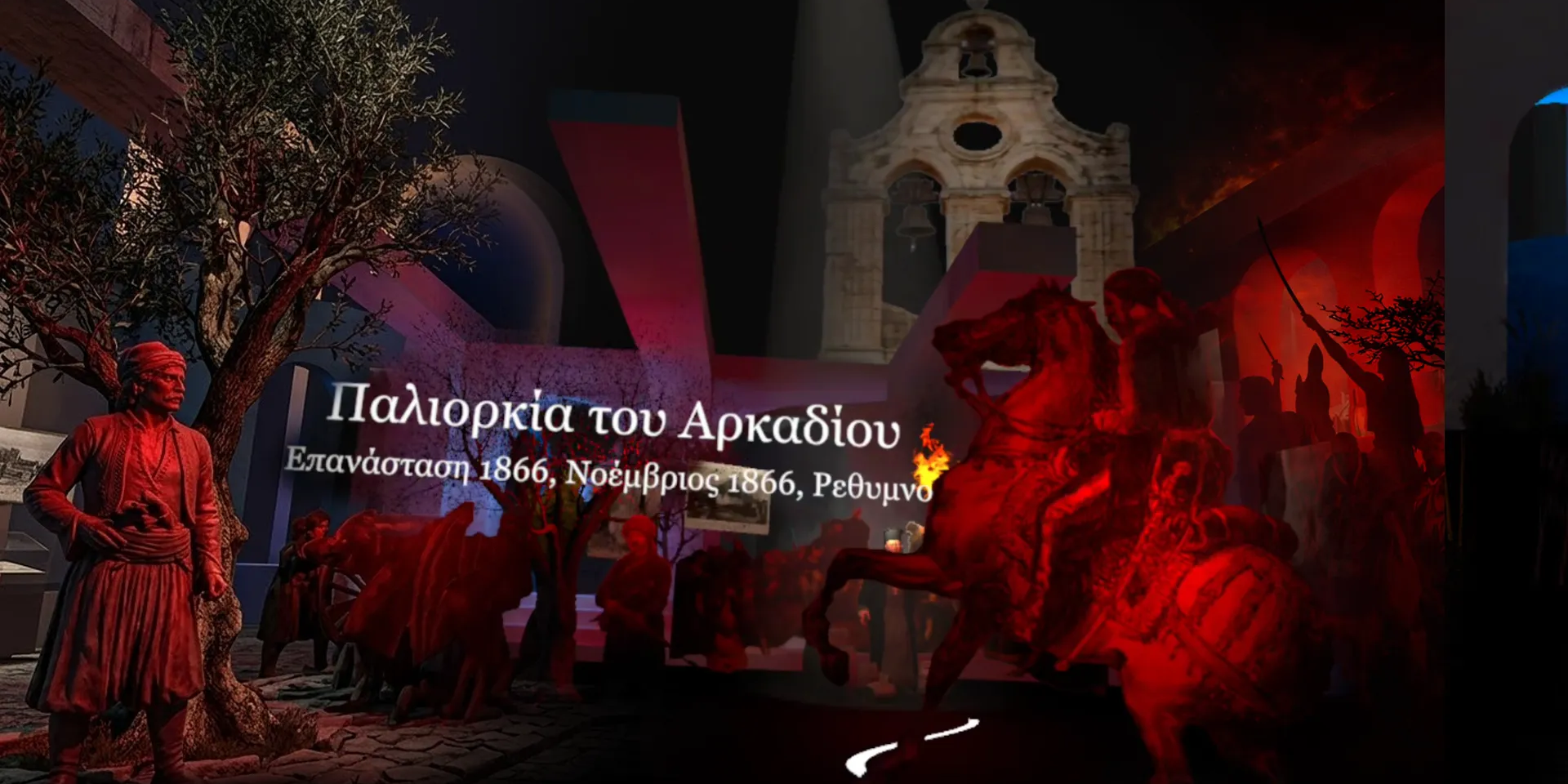
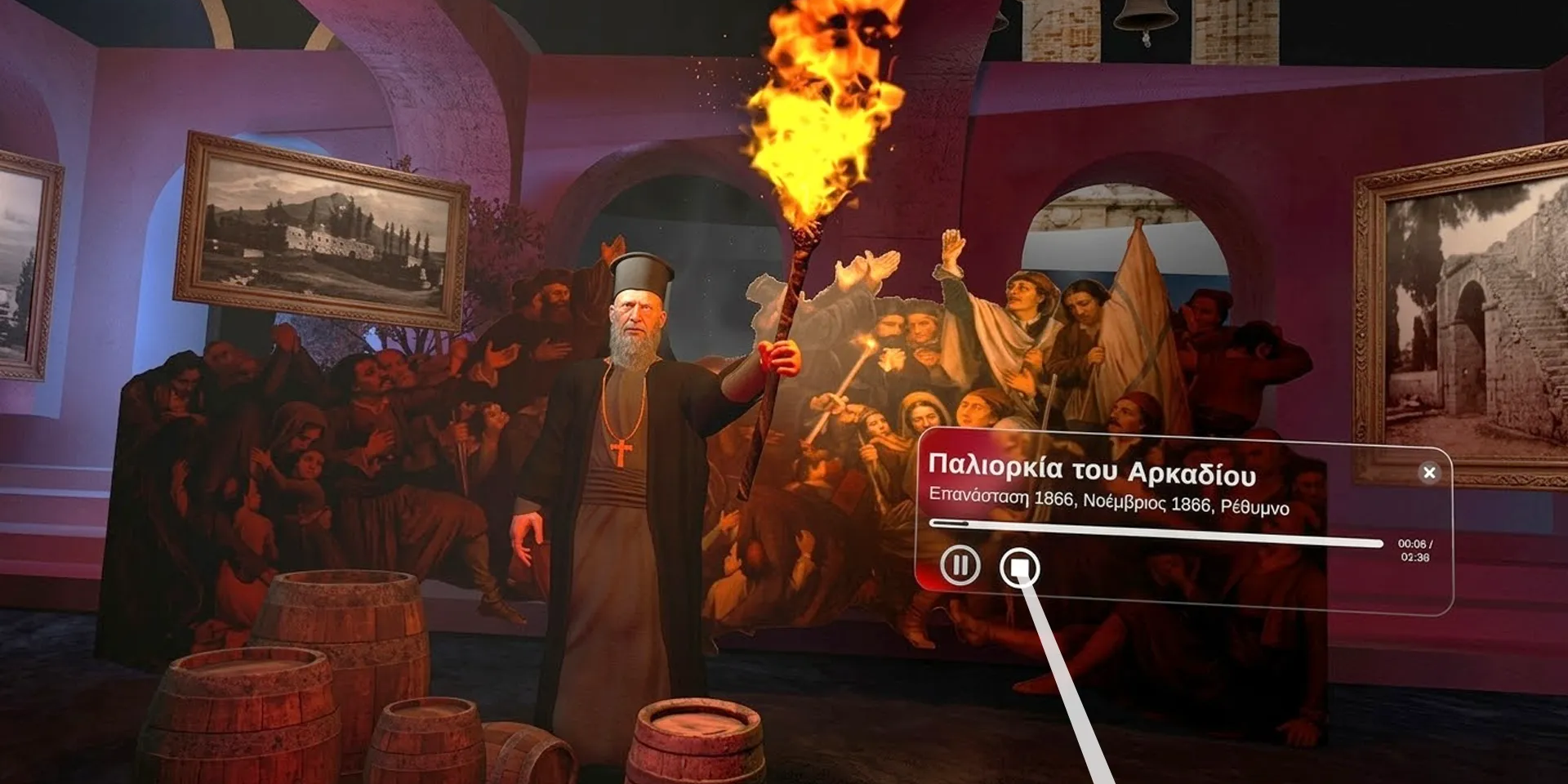
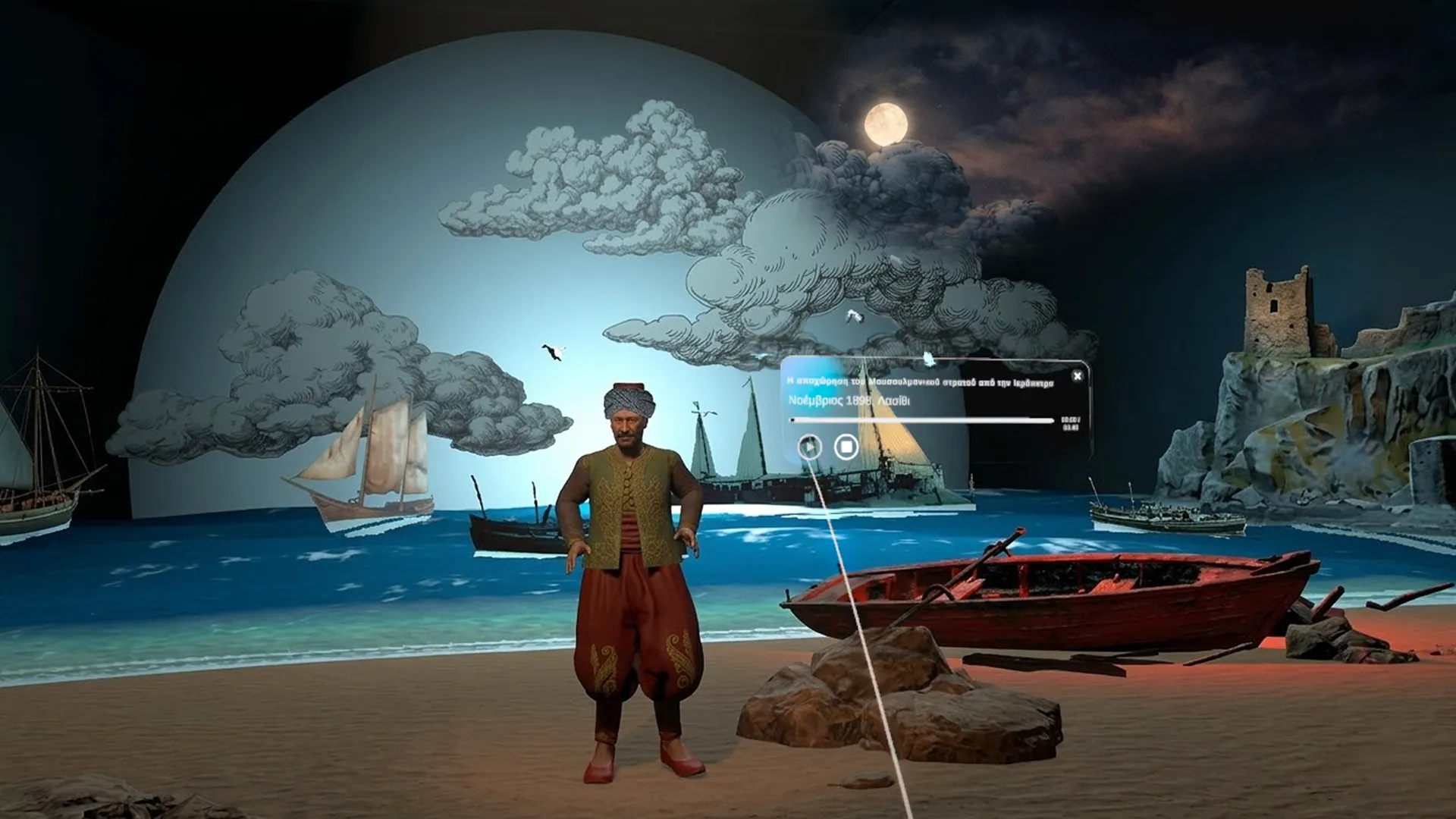
Rather than relying on a single narrator or abstract timeline, every environment immerses the user in a specific historical moment. A protagonist character speaks from within the scene, helping visitors understand history through direct presence.
Historical scene design
Each scene was designed with a distinct visual identity, period-aware architecture, lighting, costumes, and environmental composition, creating a theatrical but historically grounded VR experience.
Character-led storytelling
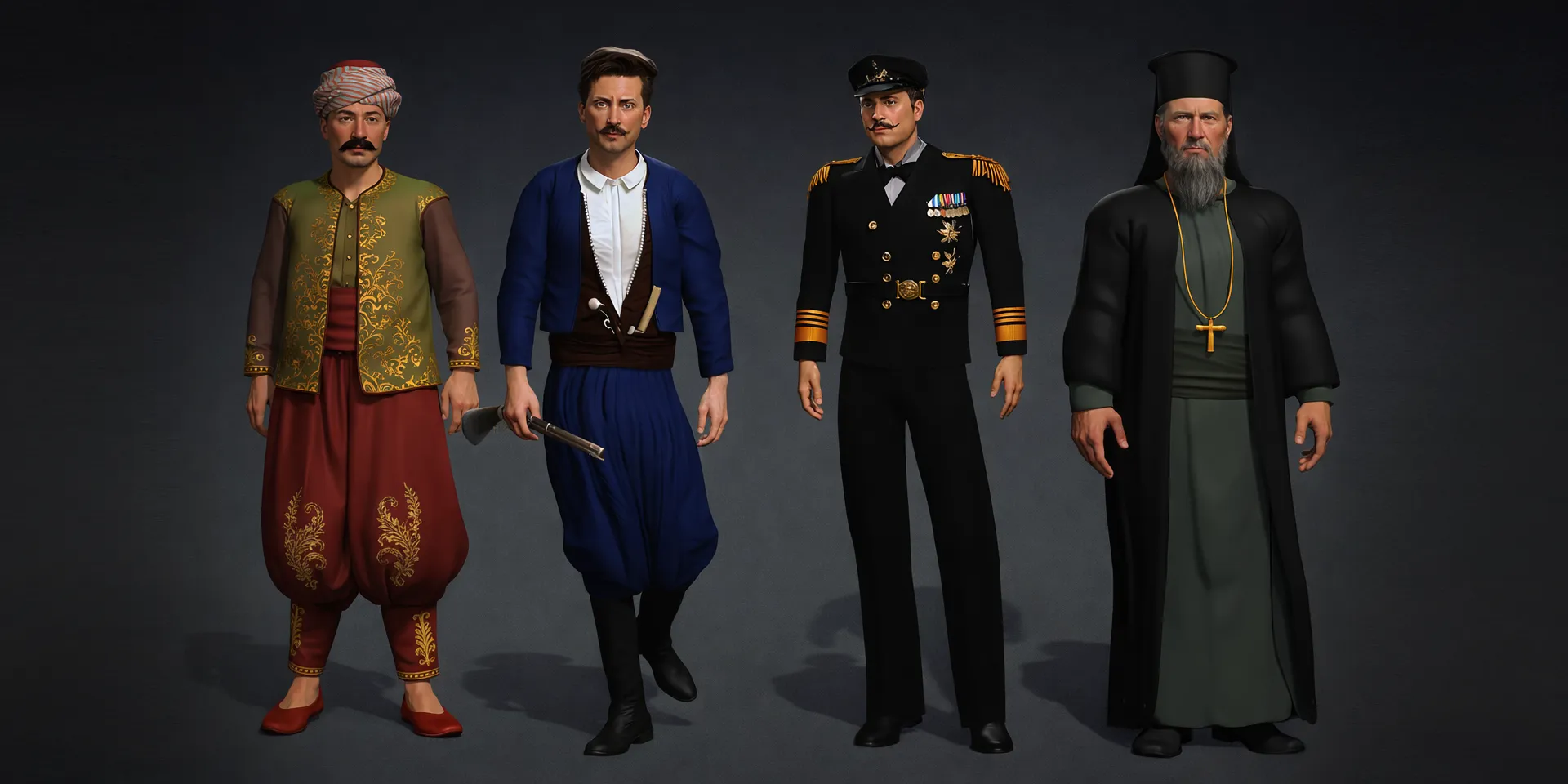
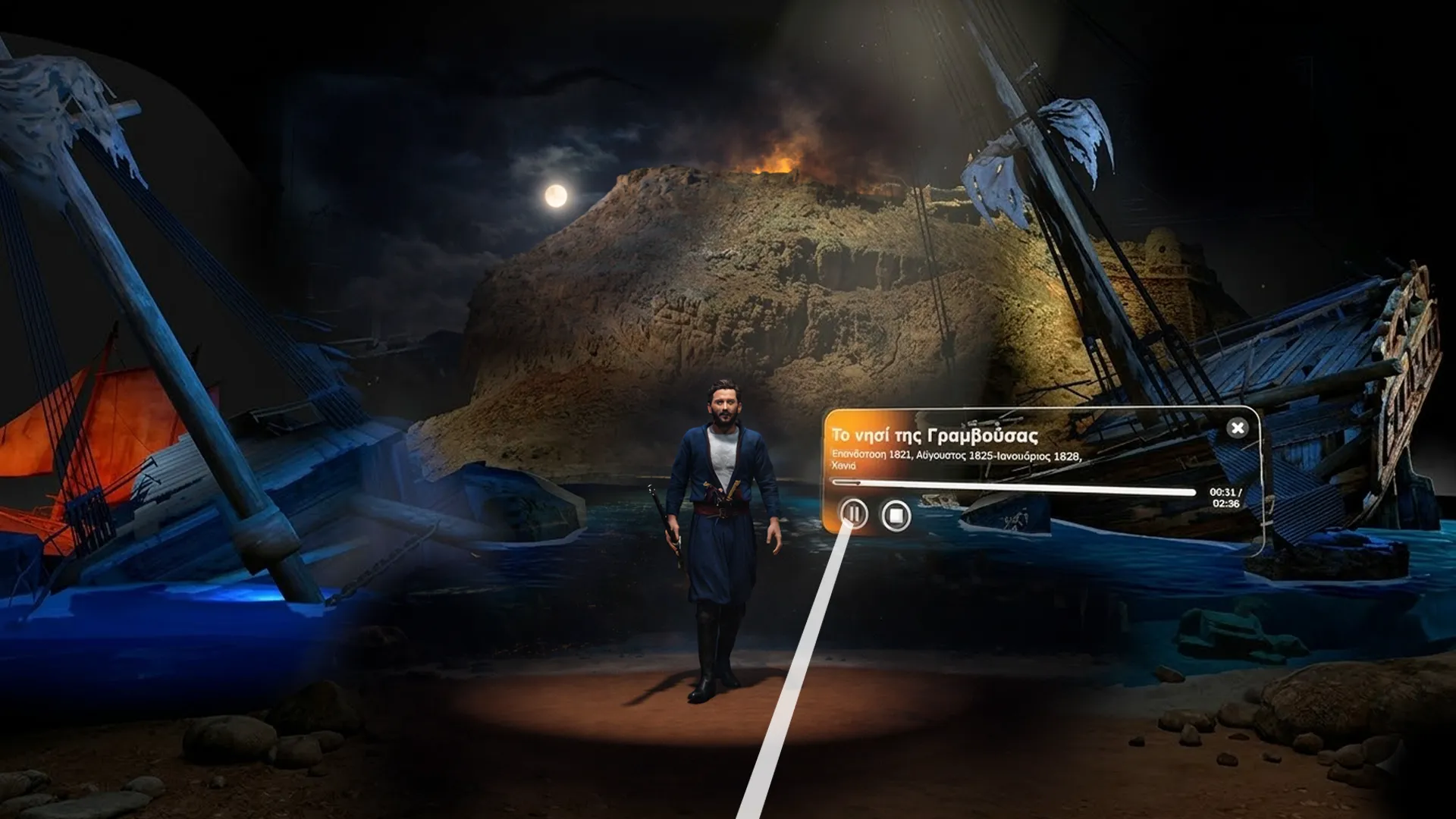
Four main 3D characters were modeled, rigged, and animated to deliver narration from the perspective of key historical figures connected to each event.
Museum-ready VR performance
The environments were optimized for headset deployment using real-time techniques such as LOD systems, batching, and draw-call reduction to maintain stable performance.
Immersive heritage turns historical information into lived experience.
01
Make history felt
Visitors are no longer only reading about a historical moment. They stand inside a reconstruction, hear the narration, and experience the scene spatially.
02
Support museum engagement
The experience gives institutions a powerful tool for schools, guided visits, cultural exhibitions, and public heritage programs.
03
Bring characters to life
Rigged and animated 3D characters help visitors connect with history through human presence, voice, gesture, and storytelling.
04
Adapt to exhibitions
Each historical scene can stand alone or become part of a guided sequence, making the system flexible for different cultural formats.
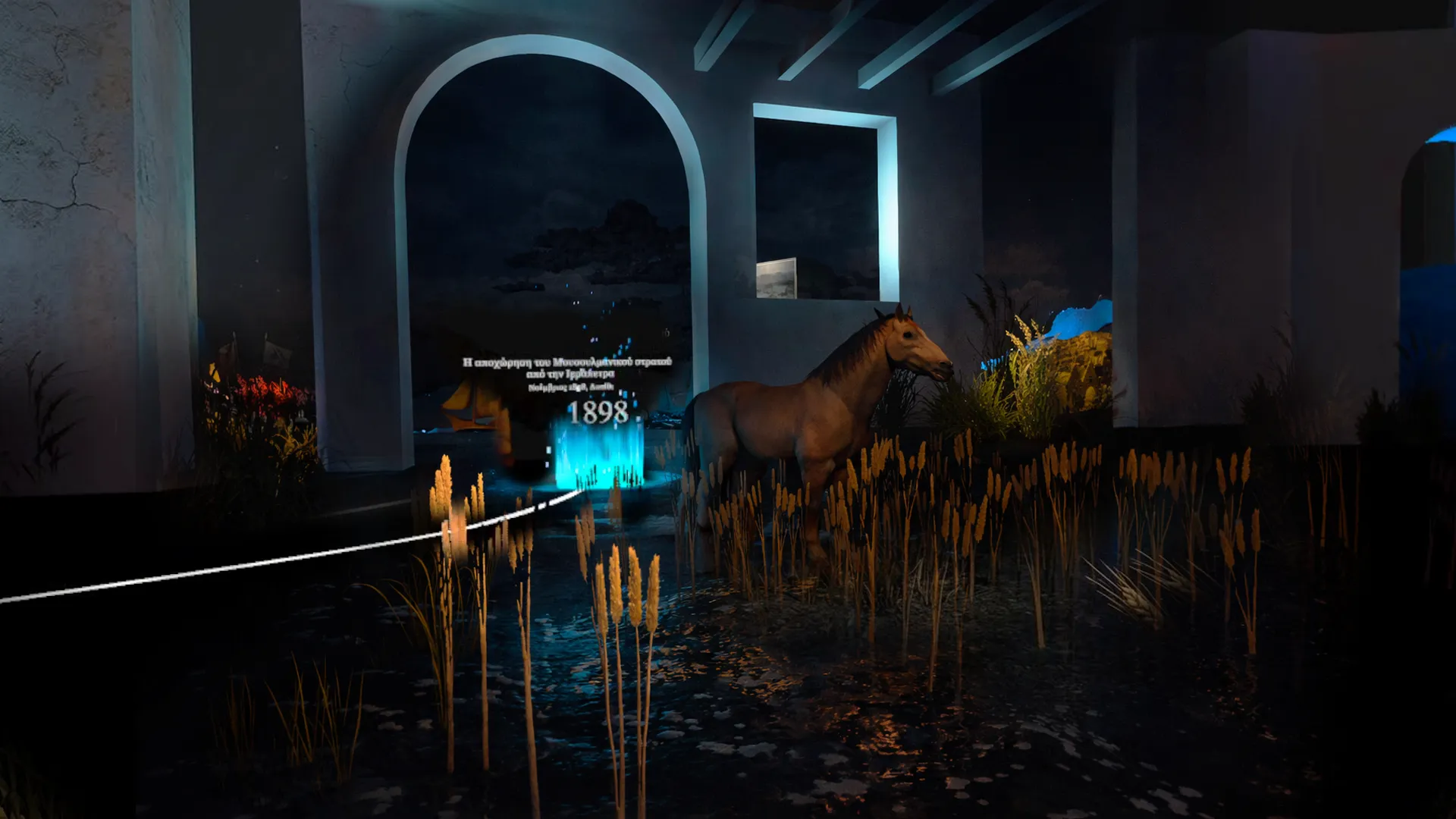
Experience flow
From introductory scene to four immersive historical chapters.
01
Introduction
The experience begins with a central introductory scene, where voice-over frames the four key historical chapters of the VR journey.
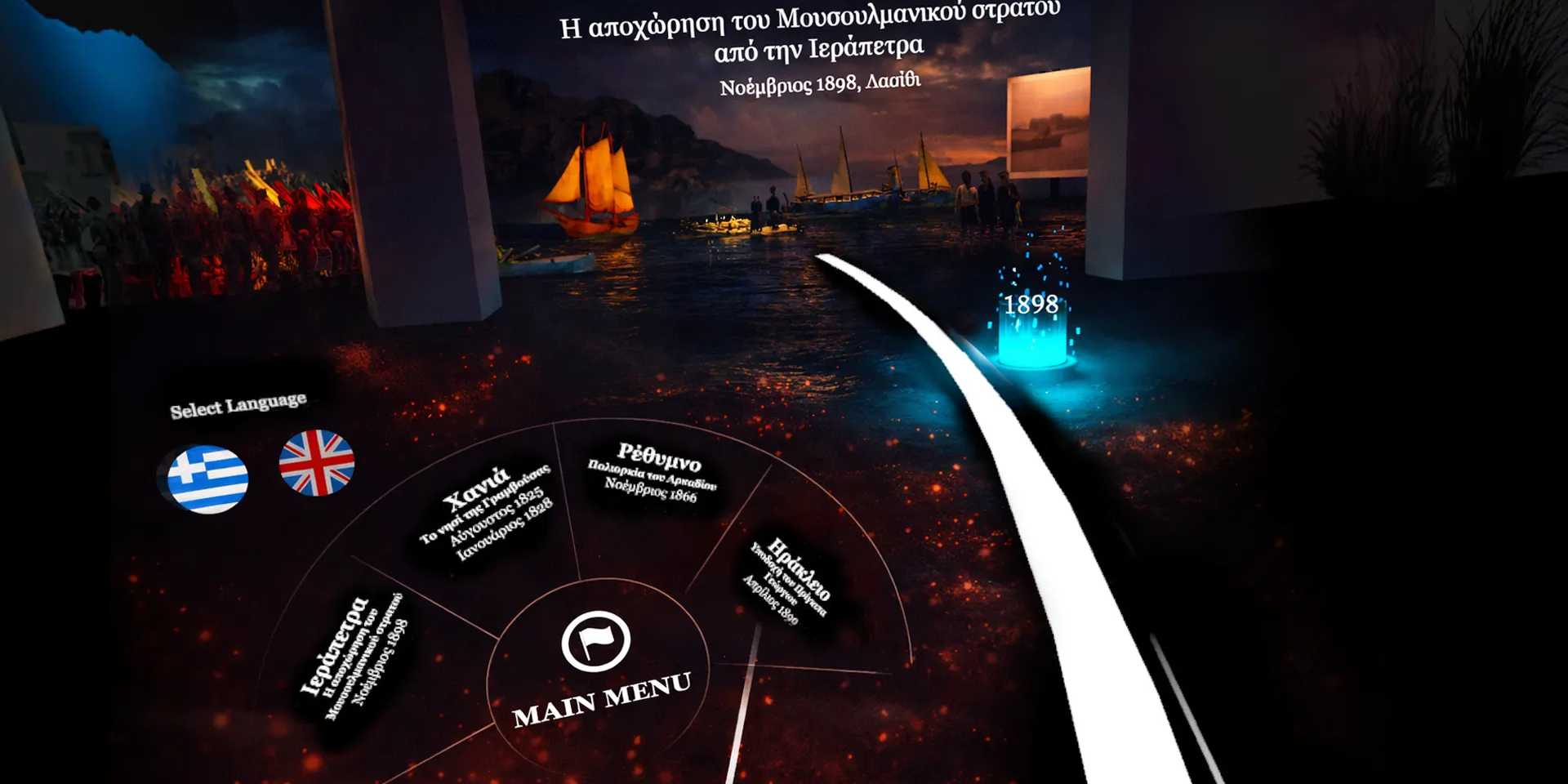
02
Story selection
Users choose which historical environment to enter through a clear interactive VR menu designed for museum visitors.
03
Historical scene
The visitor enters a specific historical moment with its own architecture, atmosphere, narrator character, and visual language.
04
Guided narration
The protagonist delivers synchronized narration while the visitor explores the environment and follows key story points.
05
Free exploration
Interactive teleport points allow users to move naturally between selected locations and understand the scene at their own pace.
Visual direction
A theatrical VR language built from history, image, and space.
The visual style balances historical accuracy with the technical realities of real-time rendering. We used a theatrical scenography approach, combining 3D environments with layered historical references and image-based compositions.
Archival imagery, period-aware environments, lighting, material texture, costume design, and character animation were refined to feel authentic without becoming a static documentary reconstruction.
Technical stack
Real-time cultural VR built for headset deployment.
Historical chapters
Modern Cretan history presented as a sequence of immersive scenes.
The experience includes multiple chapters from modern Cretan history, each built as a self-contained environment with its own protagonist, mood, and visual identity.
This makes the platform flexible for different cultural institutions: it can be presented as a complete journey or as selected scenes depending on visitor flow, exhibition time, and educational goals.
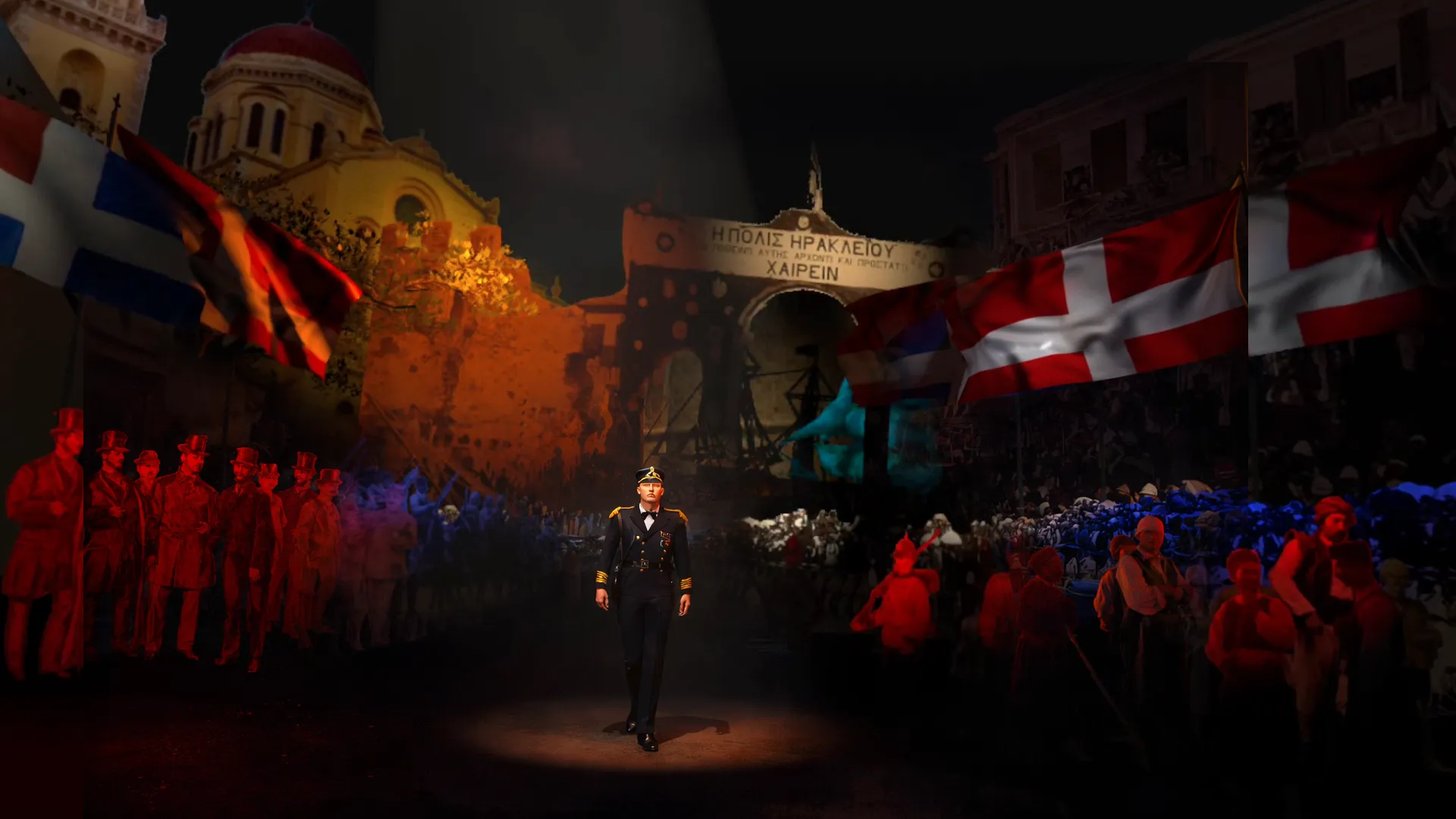
The result
A four-scene VR journey through modern Cretan history, designed for museums, cultural institutions, and public exhibitions.
What this demonstrates
Cultural heritage VR works best when immersion serves meaning.
Museums and heritage sites across Greece and Europe are increasingly investing in VR and interactive media as tools for visitor engagement. Projects like this show the technology at its most purposeful: not spectacle for its own sake, but immersion in service of history and meaning.
For museums, cultural foundations, municipalities, and heritage organizations, this project is a reference point for how VR can bring complex historical narratives to life.
Fourthedesign is a VR/AR and 3D animation studio based in Heraklion, Crete, Greece. We build immersive experiences for cultural heritage, education, industry, and interactive storytelling across Greece and Europe.
