
VR, AR & Real-Time Services – FAQs | Fourthedesign (Greece)
Fourthedesign FAQs — VR, AR, Real-Time & 3D
We are based in Crete, Heraklion, working across Athens, Thessaloniki, Greece, Cyprus, EU, the Middle East, and America.
Below you can find quick answers to information regarding costs, timelines, devices, and deliverables.
VR Training & Experiences (Quest, Pico, PC-VR)
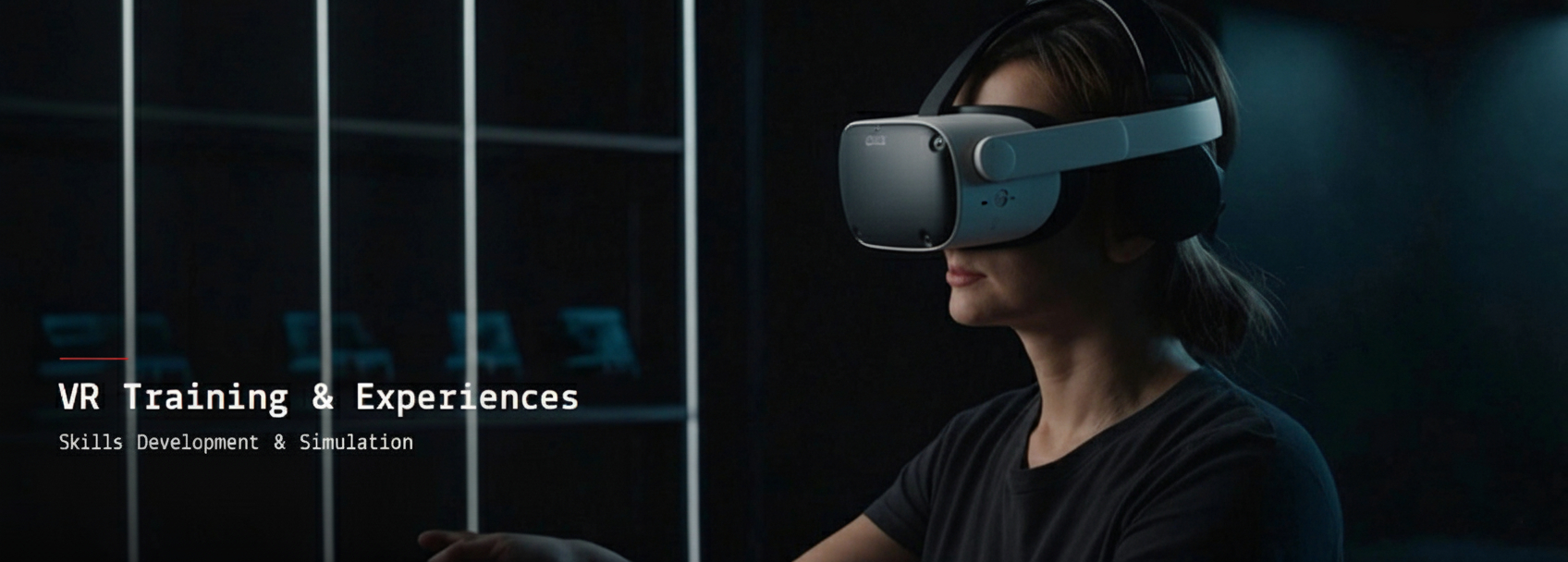
Do you build VR training simulators in Greece and the EU? Who are they for?
Yes. We deliver VR training for industry, museums, education, tourism, and brands—safety procedures, equipment operation, soft-skills role-play, museum tours, and product demos. On-site deployments in Greece (Athens, Thessaloniki, Crete) and remote rollouts across the EU, the Middle East, and America.
Which headsets and platforms do you support?
Meta Quest 2/3/Pro, Pico, SteamVR PC-VR, and Windows kiosks. Optional Magic Leap 2 for pass-through AR. We also integrate LMS (SCORM/xAPI) and MDM fleet tools.
How much does a VR training pilot cost?
Ballpark (ex-VAT): Single-scene pilot (Quest) €2k–€οοk; multi-scene or multi-user €10k–€οοk+; localization per extra language €1k–€2k; headset kit €400–€1,500; PC-VR rigs €1,500–€3,000. Final quotes follow a written scope and asset list.
How long does it take? What’s the critical path?
Typical 4–12 weeks. Path: discovery → script & task map → greybox prototype → content build → QA/pilot → handover. 3D complexity and multi-user add time.
How much space do we need and is it safe?
Room-scale sweet spot is 3×3 m per headset. Seated/standing modes work in smaller rooms.
We design for comfort (locomotion options, stable horizon) and provide safety briefs.
We design for comfort (locomotion options, stable horizon) and provide safety briefs.
Mobile AR & WebAR (Sites, Trails, Exhibitions)
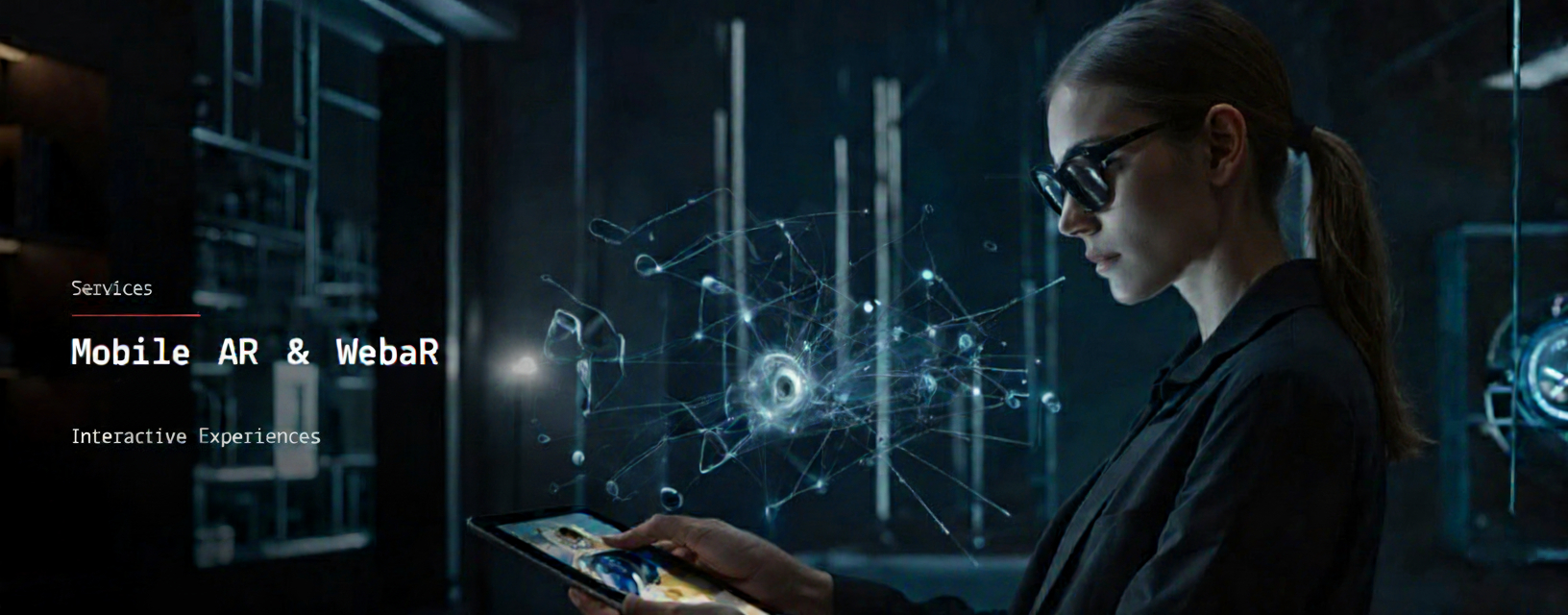
Mobile AR or WebAR—what’s better for cultural heritage and tourism in Greece?
Mobile AR = best performance & features. WebAR = fastest access via browser (lighter effects). For outdoor sites we mix GPS, image anchors, and plane detection.
Does AR work outdoors under strong sun and spotty signal?
Yes. We optimize materials for glare, add robust tracking strategies, and support full offline packages with later sync.
Costs & timeline?
Single-site AR story €6k–€20k.
Multi-stop trail €20k–€60k+.
Typical delivery 4–10 weeks depending on content and mapping.
Multi-stop trail €20k–€60k+.
Typical delivery 4–10 weeks depending on content and mapping.
Real-Time Visualization (Unity/Unreal) & Interactive Kiosks
Why use real-time instead of traditional renders?
Instant interaction. Change materials, lighting, or configurations live. Great for sales rooms, fairs, and stakeholder reviews.
What files can you import and optimize?
FBX/OBJ, CAD/BIM (STEP/IGES, Revit exports), 3ds Max/Blender scenes. We retopo, decimate, and bake for high FPS.
Hardware and venues?
Windows kiosks/touchscreens, Android players, and multi-display video walls. We support show control (OSC/DMX) for synced exhibits.
3D Animation & Explainers (Product, Medical, Industrial)
What’s the workflow and ideal length?
Brief → script → storyboard → look-dev → animation → VO/music → master. Sweet spot: 30–90 seconds for explainers.
Pricing?
Explainer €70–€180 per finished second.
Μodel build €300–€1,000+ per asset.
VO €300–€900 per language (AI €100 per language).
Deliver 1:1, 16:9, 9:16, or transparent background.
Μodel build €300–€1,000+ per asset.
VO €300–€900 per language (AI €100 per language).
Deliver 1:1, 16:9, 9:16, or transparent background.
Can assets be reused in AR/VR later?
Often yes. We plan topology/materials for reuse across channels.
Cultural Heritage & Museums
What is VR Cultural Heritage production?
VR Cultural Heritage production uses virtual reality to bring historical sites, artifacts, and stories back to life. Instead of just reading about history, people can walk inside it, explore it, and interact with it. Like visiting an ancient site… without the heat, crowds, or “do not touch” signs.
Why is VR Cultural Heritage important for Greece?
VR helps preserve that history digitally, protect fragile sites, and make culture accessible to everyone. Schools, museums, and tourists can experience Greek heritage anywhere in the world, even if the real site is closed or damaged. Think of it as a digital time machine that never breaks.
How does FOURTHEDESIGN produce VR Cultural Heritage experiences in Greece?
We combine historical research, 3D digitization, real-time engines, and immersive storytelling. We recreate environments with accuracy, add interaction, and turn them into engaging VR experiences. The goal is simple: respect the past, use modern tech, and make history feel alive.
Who can use VR Cultural Heritage productions by FOURTHEDESIGN?
Pretty much anyone who wants culture to feel exciting again. Museums, cultural institutions, municipalities, tourism organizations, and educational bodies use our VR experiences to engage visitors and learners. From exhibition spaces to VR headsets and interactive installations, the content adapts easily-like a good guide who speaks every language.
How do you ensure historical accuracy?
Research briefs, archives, expert reviews, and a change log of assumptions. We separate “known facts” from “best-fit reconstructions.”
Can it run fully offline for remote sites?
Yes. We package content for offline use and sync usage data later if needed.
Typical budgets?
€2k–€30k depending on assets and devices.
What makes VR Cultural Heritage in Greece different from other VR experiences?
VR Cultural Heritage in Greece focuses on historical accuracy, 3D reconstruction, and interactive storytelling. Unlike generic VR, it recreates ancient sites, artifacts, and environments with attention to Greek culture, history, and archaeology.
How does FOURTHEDESIGN ensure the accuracy of VR heritage projects?
FOURTHEDESIGN works closely with historians, archaeologists, and cultural institutions. They use original architectural plans, photographs, and 3D scanning to create digitally precise models that match real sites and artifacts.
What types of projects can use VR Cultural Heritage in Greece?
VR Cultural Heritage is ideal for museums, educational programs, tourism promotion, exhibitions, and cultural preservation initiatives. Projects can range from interactive museum tours to full-scale virtual reconstructions of archaeological sites.
Can VR Cultural Heritage experiences be accessed remotely?
Yes. VR experiences produced by FOURTHEDESIGN can be delivered through headsets, desktop apps, mobile devices, or web-based VR platforms, allowing users worldwide to explore Greek history without traveling to the sites.
What VR devices does FOURTHEDESIGN use for Cultural Heritage production?
FOURTHEDESIGN works with all major VR headsets and devices, including Oculus, HTC Vive, and other professional VR systems. We optimize experiences for each type, ensuring immersive, high-quality VR production that can be exported and deployed across different platforms.
Does FOURTHEDESIGN use Augmented Reality (AR) in Cultural Heritage projects?
Yes. FOURTHEDESIGN integrates AR technology to overlay digital reconstructions on real-world environments. This allows users to explore historical sites or artifacts through mobile devices or AR glasses, enhancing learning and engagement with cultural heritage.
3D Rendering & Visualization
What types of 3D rendering do you deliver (interior, exterior, product)?
Photoreal stills and animations for architecture (interior/exterior, landscape, urban), products, and exhibitions. Optional 360° panoramas, virtual tours, and real-time walkthroughs (Unity/Unreal) for sales or presentations.
What files do you need from us?
CAD/BIM (DWG/DXF, Revit/IFC), SketchUp, Rhino, or OBJ/FBX + a brief (views, mood, time-of-day). If you have none, we can model from PDFs, measurements, or references. Brand colors/fonts and material schedules help us nail the look fast.
How does the workflow run from start to finish?
Discovery → camera studies & clay previews → materials/lighting pass → draft renders → review rounds → final high-res exports. We share low-res tests early so you can lock views before we polish.
Which engines and quality levels do you use?
Offline photoreal: V-Ray / Cycles. Real-time: Unity/Unreal (for walkthroughs and interactive). We balance realism vs. speed based on your deadline and budget.
How long does it take?
Typical: 2–5 working days per still (once inputs are final). Small sets (3–6 views): 1–2 weeks. Larger sets/animation: 2–4+ weeks. Rush delivery is possible when we pre-agree scope and slots.
What are your prices for 3D renders and animation?
Indicative (ex-VAT): Interior still €350, Exterior still €400. 3D model build from plans: €300–€1,000 (complexity-based). Animation: €50–€150 per second. Packs and repeat angles are discounted; final quotes follow a written scope and asset list.
How many review rounds are included?
Usually 2 review rounds per view (materials/lighting, then fine polish). Extra rounds or late scope changes are billed fairly, with a short impact note (cost + time).
What do we receive at the end?
High-res PNG/JPG (up to 4K+), print-ready on request (A3/A2), optional EXR for grading, and a short usage guide (color profile sRGB, recommended sizes for web/print). For animation: MP4 (H.264/H.265), ProRes on request.
Can you help us choose the best camera angles and mood?
Yes—camera study previews (day/night, golden hour, overcast) and composition notes. We can match real-world orientation and sun path for planning realism.
What’s the difference between photoreal stills and real-time walkthroughs?
Stills = maximum realism for marketing. Real-time (Unity/Unreal) = interactive navigation, instant variants, and fast reviews. Many clients use both: hero stills + a lightweight walkthrough or 360 tour.
Do you add people, furniture, vegetation, and brand details?
Absolutely. We use high-quality libraries and custom assets. Send style references (Pinterest/Behance) and we’ll align to your brand and audience.
Who owns the images and can we reuse them later?
You receive usage rights for the project’s marketing (web, print, tenders). Wider reuse (stock/resale, third-party campaigns) can be licensed—just ask. Source files can be transferred by agreement if needed for future edits.
Do you work on-site in Greece and abroad?
Yes—Crete, Heraklion, Athens, Thessaloniki, Cyprus and remote delivery across the EU. We can visit sites for photo/scan references when helpful.
What’s the fastest way to get a quote?
To get a quick quote, send us your plans (PDF/DWG), the number of views, desired mood/time-of-day, resolution, and deadline. We’ll reply with a short scope, timeline, and fixed quote. You can email us directly at: info@fourthedesign.gr
Training Simulators & Serious Games
What makes a simulator effective (and measurable)?
Clear objectives, step-by-step tasks, feedback, progression, and metrics: time-to-complete, errors, hints, pass/fail. Export xAPI/SCORM to your LMS.
Do you support roles and multi-user?
Yes—trainee/trainer/observer roles, synchronized tasks, and optional voice chat.
What about hazardous scenarios?
We simulate hazards safely with instructor controls and resettable states.
Interactive Installations, “Holograms” & Projection
Are these real holograms?
Usually Pepper’s Ghost, LED tricks, or volumetric displays. Looks magical and is reliable for events/museums.
What sensors do you use?
Depth cameras, UWB/RFID, beacons, IMUs, and camera tracking—selected per venue and crowd flow.
How do you ensure reliability at events?
We harden apps, add watchdogs, provide remote support, and offer on-site operators for key days.
Process, Timelines & What We Need From You
What’s your standard delivery process?
Discovery → scope & quote → prototype (1–2 weeks) → production → QA/pilot → launch → support. We plan 2–3 review rounds per phase.
What do you need to start fast?
Goals, audience, dates/venue, brand kit, CAD/BIM/assets, reference links, languages, and IT constraints.
How does acceptance and handover work?
We run an acceptance test with checklists, deliver build artifacts, manuals, and (if used) MDM profiles.
Budget & Contracts
How do you price projects, and what drives cost most?
Fixed price from an agreed scope. Biggest drivers: 3D complexity/asset count, number of scenes, custom interactions, multi-user features, localization, analytics/integrations, on-site services, and timeline urgency.
What payment schedule do you use and how do you handle VAT?
Typical 40/60 (or milestone-based for larger builds). We’re a Greek LP; invoices are EU-compliant with VAT or reverse-charge where eligible.
Who owns the IP and can we access source files?
You own the agreed deliverables for the defined uses. We retain reusable pipeline/tools. Source files can be licensed or transferred by agreement (often with a surcharge for maintenance handover).
How do you handle change requests and scope creep?
We price changes with a short impact note (cost & timeline). To stay smooth, we include 2–3 review rounds per phase and suggest keeping 10–15% contingency for late-stage ideas.
Do you include a warranty period after delivery?
Yes—bug fixes for an agreed window (e.g., 30–90 days). New features or platform changes are quoted separately or covered by a support plan.
Support & Maintenance
Do you offer ongoing support and update plans after launch?
Yes—tiered support (email/phone/remote), scheduled updates, content refreshes, and optional on-site coverage for events and openings.
What response times can we expect for issues (SLAs)?
Clear response/resolution targets per tier. Critical issues during exhibitions get priority windows and escalation paths.
Do you train our team to operate devices and apps safely?
Yes—hands-on sessions plus simple runbooks covering daily operation, charging, updates, hygiene, and troubleshooting.
Can we receive usage analytics and periodic reports?
From basic usage stats to training performance dashboards. We export xAPI/SCORM and deliver monthly/quarterly summaries—GDPR-compliant.
EU Projects, KPIs & Funding (EIT RawMaterials, Horizon Europe, Interreg)
Do you participate as partner or subcontractor, and what’s typical?
Both—partner, subcontractor, or supplier depending on the call and coordinator guidance. We’ll flag the cleanest eligibility path early.
What evidence do you provide for reporting and audits?
Builds/APKs, screenshots, videos, tagged commits, change logs, xAPI/SCORM exports, attendance sheets, and user feedback forms—bundled per WP/milestone.
How do you track KPIs and impact metrics across sites?
KPI dashboards (participants, learning outcomes, gender ratios, innovation counts) with anonymized exports (e.g., BlueBook-style summaries) and coordinator-ready spreadsheets.
Can you structure budgets by period and eligible cost type?
Yes—quotes by year and cost category (personnel, travel, other goods & services, indirects) with time-tracking and acceptance docs for each reporting period.
Hardware Procurement & Rentals (Headsets, PCs, Kiosks)
Can you supply and pre-configure headsets, PCs, and kiosks (GR/EU)?
Yes—Meta Quest/Pico kits, PC-VR rigs, touch kiosks, peripherals. We pre-install apps, configure MDM, label gear, and provide spares for events when needed.
What hardware budgets should we expect?
Headset kits €500–€1,500 each; PC-VR rigs €1,500–€3,000; 43–55″ touch kiosks €1,200–€3,500. We’ll size specs to your content and venue.
Do you rent equipment for short events and exhibitions?
Yes—short-term rentals with delivery/collection, pre-config, operator options, hygiene kits, and backup units for peace of mind.
Can you be on-site for setup, testing, and live support days?
We handle installation, rehearsal, and live-day coverage. We bring spares and a runbook to minimize downtime.
Service Areas & On-Site Work
Do you work on-site in Athens, Thessaloniki, and Crete (Heraklion/Chania)?
Yes. We’re based in Heraklion (Crete) and regularly work in Athens, Thessaloniki, and Chania. Travel and logistics appear clearly in our proposals when relevant.
Do you deliver remotely to EU/MENA clients and partners?
Absolutely—discovery/reviews online, test builds shipped for feedback, and focused on-site visits for key milestones or openings.
How do you plan travel timing and equipment shipping?
We schedule visits 2–3 weeks ahead, ship hardware with tracking, and arrive early for setup and rehearsal when an event is involved.
What languages do you support for training and support calls?
English and Greek by default; Arabic for select projects. Localized operator guides available on request.
